The report suggested that global climate inaction would mean total UK food supply faced an extra £2.6 billion of costs by 2050, caused by weather-related food inflation and volatility.
That’s the price tag returned by the modelling from The Institute of Grocer Distribution, and consultants EY, across ten food categories under a 2.5 degrees Celsius rise in global temperatures by 2050, and a ‘business as usual’ approach.
“We continue to face huge challenges, from volatile prices and vulnerable global food supply chains to extreme weather events.”
NFU President Tom Bradshaw
A ‘delayed transition’ to net zero added £1.4bn of extra costs, with the impacts of water scarcity making up £464m of that, while achieving net zero would save the UK food chain £23m, the research says.
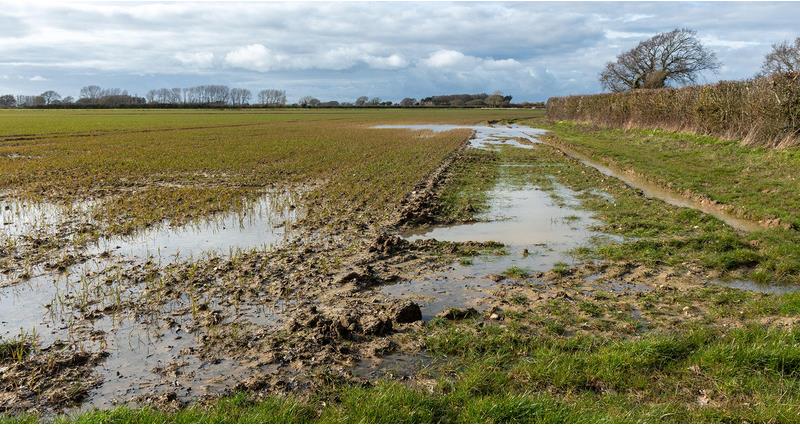
UK wheat in a net zero scenario delivered cost savings to 2050 from improved yields – but will be £481m more expensive to produce by then under a 2.5-degree temperature increase, due to more frequent droughts, the report says.
The opportunities
While making a business case for cutting emissions, the research also highlights opportunities for UK producers from adaptation, with some of the biggest hits to the food bill in the report coming from increased costs for imports in categories such as fruit and veg from Spain.
‘Future sourcing and investment strategies must be developed to mitigate risk and over-reliance on exposed regions,’ the report says, adding that this ‘validates the growth opportunity for UK horticulture’. And, echoing NFU lobbying, the research says that domestic food capacity must be maintained.
‘Progress to net zero would make UK production more competitive as it benefits from improved growing conditions for wheat,’ its authors say. ‘UK productive capacity must be maintained to realise these benefits.’
NFU President Tom Bradshaw said: “Britain’s farmers are making huge strides in adapting to climate change and reducing emissions while producing affordable, climate-friendly food, energy and fibre. Yet we continue to face huge challenges, from volatile prices and vulnerable global food supply chains to extreme weather events, which are limiting our ability to deliver these crucial products.
“To be successful, we need government to back British farming with action, ambition and policies that will help to build business resilience, profitability and productivity into the sector, that reduce costs, increase market access and allow our farmers to invest.”