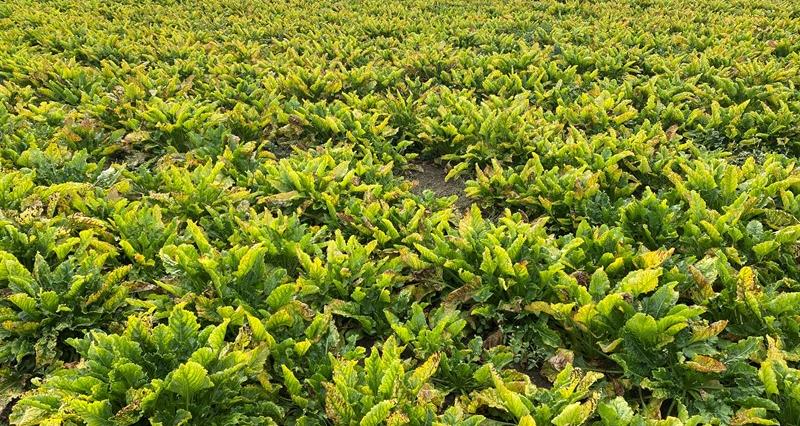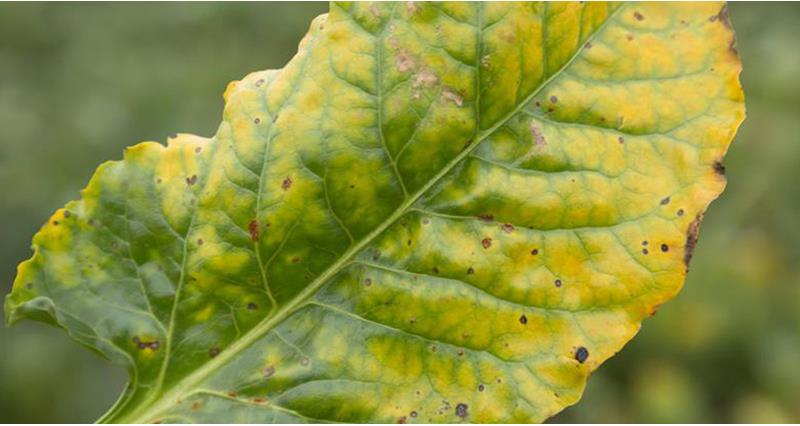
With the impact of climate change bringing warmer and wetter winters, this is providing a breeding ground for aphids over the winter months, enabling earlier spread and infection of spring-sown sugar beet crops.
State of play: the Virus Yellows challenge
The UK sugar beet industry continues to pursue its broad portfolio of work, led by the Virus Yellows Taskforce, to develop long-term, sustainable solutions to the threat posed by Virus Yellows. This work, outlined in the Virus Yellows Pathway, involves exploring solutions in gene editing, seed breeding, integrated pest management, and sustainable spray programmes.
We welcome the Government’s adoption of implementing legislation which will bring the opportunities presented by precision breeding one step closer from the lab to the field. British Sugar's work alongside the UK’s world leading biotechnology sector to develop a viable transformation platform remains key.
With strong cross-industry collaboration, and positive signs across the breadth of the Pathway, we remain hopeful that solutions to Virus Yellows disease will be available in the coming years.
Finding solutions update
Enhancing grower practices
The Virus Yellows Taskforce has been working on trials to explore novel integrated pest management (IPM) practices and their impact on the sugar beet crop, its seed germination and speed of establishment.
Trials which have shown potential to reduce Virus Yellows incidence include:
- Use of companion crops, beneficial hosts (wildflowers), camouflage and deterrents
- Application of coloured dyes, masking the colour distinction between plant and soil relied upon by aphids in flight to recognise a host crop.
- AgriOdorTM pellets which repel aphids through scent.
- Over-sowing endophyte grasses, which produce alkaloids to protect its host, transferring the protective benefits into the sugar beet
An integrated approach to Virus Yellows control will be important moving forward with stacked IPM controls supporting genetic tolerance/resistance and aphicide sprays to mitigate the threat posed by the disease.
Progress in breeding
Breeders continue to make progress through traditional breeding techniques - identifying tolerant genetics amongst wild species and cross-germinating them into commercial lines. The 2026 Recommended List for sugar beet seed featured three varieties with partial tolerance to Virus Yellows. Significantly, new tolerant varieties also yield better than first generation disease-tolerant varieties in the absence of disease.
Sustainable spray programme
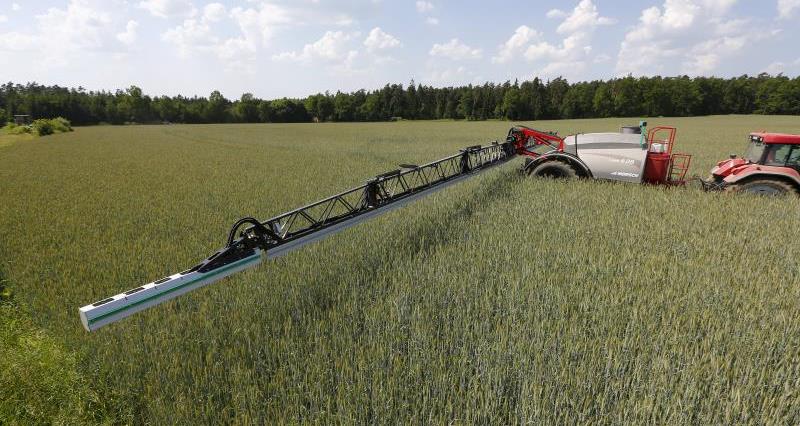
Work continues in trials to test new aphicides for the sugar beet crop, with the aim to work towards full approval of a 3-5 established sustainable spray programme from 2027 onwards.
Next-generation aphicides are integral to a sustainable control programme moving forward.
Genetic editing research update
British Sugar has entered a collaboration with the agriculture biotechnology company Tropic, to explore how to genetically edit sugar beet to confer resistance to the three yellowing viruses that make up Virus Yellows disease.
The project makes use of Tropic’s Gene Editing induced Gene Silencing (GEiGS®) technology platform, to make minimal and precise gene edits in sugar beet enabling durable resistance to Virus Yellows.
In 2024, the project received £660,000 of grant funding from Innovate UK’s Farming Futures R&D Fund, jointly awarded to British Sugar, Tropic and world-leading plant science institute The John Innes Centre (JIC). The British Beet Research Organisation (BBRO) is also supporting the project.
Work to date has focussed on developing the sugar beet transformation platform at the JIC, and successfully generating Gene Editing DNA solutions (GEiGS®) and testing their efficiency in cells. Multiple solutions with high silencing efficiencies are available for testing in plants. This piece of work, scheduled to begin in 2026, will determine a shortlist of solutions to take forward for the generation of plants later in the project.
By the end of the decade, it is hoped that the project team will have confirmation of Virus Yellows resistance in gene edited plants in the lab, which can then be assessed in field trials.
To find out more about the specific industry strategies for the control of Virus Yellows in sugar beet, see our pathway document.
What is gene editing?
Gene editing sees precision plant breeding techniques used to change a selected, very specific sequence within the genome of a crop.
It is different from genetic modification because no new genes from other species are incorporated into the plant; instead, changes are made to the plant’s own DNA. This process can and does happen in nature, but gene editing speeds up the process to deliver results faster.
Impact on growers
The disease is actually a complex of three viruses, spread by aphids and therefore very difficult to control. During 2020 UK growers suffered yield losses of up to 80%, making Virus Yellows disease the biggest current threat to the UK’s sugar beet sector.
With the impact of climate change bringing warmer and wetter winters, this provides a breeding ground for aphids over the winter months. Enabling early spread and infection of spring-sown sugar beet crops in the growing season.
NFU Sugar Board member Alison Lawson said Virus Yellows is “one of the biggest risks” to her sugar beet growing business.
“The perfect storm of 2020 was devastating – we suffered yield losses of 30% across our planted area as well as drastic reductions in associated sugar content.
“We continue to battle against infection and crop losses, but with Virus Yellows representing a complex of three distinct viruses, this fight remains extremely challenging,” she said.
“Virus Yellows continues to constitute one of the biggest risks to my sugar beet growing business.”
NFU Sugar Board member Alison Lawson