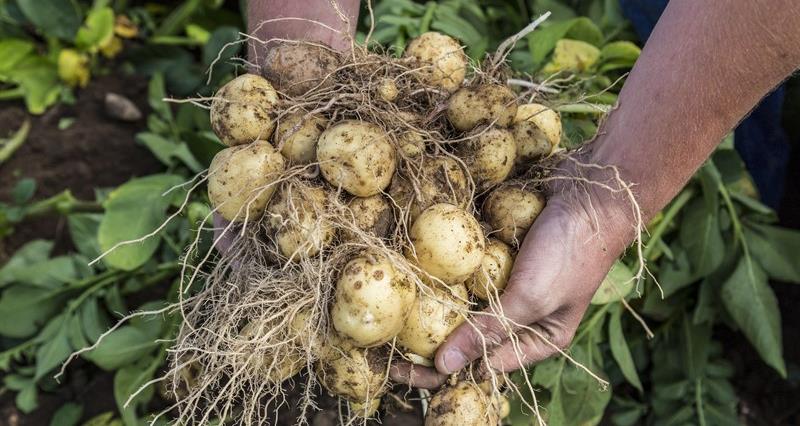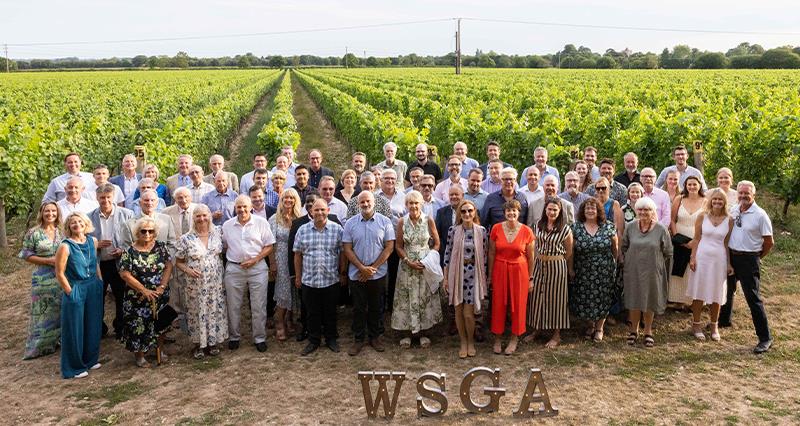
When the WSGA (West Sussex Growers’ Association) was established, workers transported their crops by horse and cart and long winter days at plant nurseries were often finished working by candlelight.
Now, as it celebrates its 100th year, the WSGA is widely recognised as a vital driver of the horticulture sector and is inspiring future generations of growers and sector leaders to safeguard the industry’s future.
It represents more than 50 businesses which employ, in total, more than 10,000 people, contributing more than £1bn a year to the economy.
WSGA Chair Richard Hopkins said: “I am proud to see the WSGA reach its 100th anniversary milestone.
“The WSGA is an active and engaged association, in a stronger position now than it has been for many years.
“With a very local focus we can build strong relationships with local policy makers and schools and colleges to deliver a bright future for horticulture in West Sussex.”
The WSGA is formed
The WSGA was established after growers recognised the need to modernise the industry.
Grower organisations were formed after the war, all working to promote homegrown produce and drive improvements in the industry.
The NFU and the FBG (Federation of British Growers) came together in 1925 to form a central committee for fruit, vegetables and glasshouses.
West Sussex and Lea Valley Growers joined the NFU in 1927 and in 1966, it officially became the West Sussex Growers’ Association, as it is known today.
“This specialist branch of the NFU provides a unique focal point, enabling collaborative action between different sectors of horticulture.”
NFU Horticulture and Potatoes Board Chair and WSGA member Martin Emmett
The LSA
The WSGA steered its members through some of the biggest events in history and helped them be at the forefront of major technological advancements that have changed the world as we know it.
The LSA (Land Settlement Agreement) changed the landscape of West Sussex forever, with many WSGA members able to trace their family ancestry to settlers who arrived in the county thanks to the government initiative.
Established in 1934 during the Great Depression, the initiative resettled and trained unemployed workers from industrial areas. This helped aspiring growers to gain access to land and resources that would otherwise have been out of reach and was instrumental in shaping the county into the centre of horticultural excellence that it is today.
Innovation of the 1960s
The 1960s was a decade of optimism, innovation and entrepreneurial spirit.
The industry was characterised by community spirit and camaraderie among growers and, for the Worthing and West Sussex branch of the NFU, it was a highly social era.
While the Big Freeze of 1963 proved catastrophic for many growers, with glasshouses completely buried in snow, 1965 saw the launch of the NFU’s annual British Growers Look Ahead Conference.
The conference grew over the years and served as a catalyst for growers to come together to discuss new ideas around issues including growth, education, research, marketing and innovation.
Innovation arrived in a big way in 1967 when the first computer ever to be used in European horticulture made its debut at Frampton’s Nurseries in West Sussex.
A state-of-the-art IBM computer was purchased to record and categorise cuttings, oversee the production schedule and log the ordering and delivery of products to customers.
The computer at Frampton’s was later used to trial the new VAT system before it was launched, leading to adoption of the system we have today.
Trade wars
The horticulture sector was significantly hit by trade wars with the Netherlands in the late 1970s and early 1980s.
The slogan ‘If it’s Dutch, don’t touch!’ was born and the movement, led by former WSGA President Anthony Mitchell, travelled as far as Brussels with placards demanding action.
Over time, the subsidies from the Dutch government began to diminish, but this came too late for some British growers, who were forced to close.
The Great Storm
The Great Storm of 1987 was one of the most significant moments of the WSGA’s history.
WSGA members saw entire crops destroyed. Glasshouses lay in ruin. Telephone pylons were smashed to pieces and left lying in roads – catastrophic for businesses in a pre-internet era.
Grower John Hall, who became WSGA chair in 1991, recalls having to install a state-of-the-art car phone to communicate with Dutch contractors and suppliers in order to continue operations.
Several businesses were forced to close, while other nurseries collaborated to survive.
WSGA meets with the Prime Minister
Another landmark day for the WSGA came on 15 November 1991 when WSGA Chair John Hall met with Prime Minister John Major and Agriculture Minister John Gummer at 10 Downing Street.
It was the first time the WSGA had been invited to discuss a major political issue directly with parliamentarians.
Mr Hall recalled: “I was fortunate enough to sit directly opposite the Prime Minister. He was engaging and we talked about all aspects of the industry.
“The WSGA is an active and engaged association, in a stronger position now than it has been for many years.”
WSGA Chair Richard Hopkins
“It was a great opportunity to remind the government of the important contribution growers in our area were making.
“Although I was a tomato grower, I was there to represent the views of WSGA and the wider horticultural industry.”
The WSGA today
The WSGA continues to work with the NFU in promoting horticulture, representing a wide range of businesses involved in crop protection, ornamental horticulture and food production.
With a particular focus on seasonal labour, energy efficiency and sustainability, the WSGA continues to be a crucial advocate for its members.
A forward-thinking organisation, the WSGA is supporting automation in horticulture through government-backed 5G and digital innovation projects, collaborating with technology firms and educational organisations to implement smart technologies.
Inspiring the next generation
WSGA Chair Richard Hopkins said inspiring and supporting the next generation of growers is vital to ensuring a bright future for horticulture in West Sussex.
He said: “Working closely with the NFU, we have a clear vision on what we want to achieve.
“Our goal is to ensure that every secondary school child in West Sussex is aware of the major industry that exists on their doorstep and the wide range of exciting career opportunities in the horticulture sector.
“We have members in front of more than 5,000 school children every year and, last year, we launched a new pilot apprenticeship scheme, which has potential to expand and make a real impact.”
The WSGA has had a major role in ensuring that, today, West Sussex is home to a quarter of the nation’s glasshouses.
NFU Horticulture and Potatoes Board Chair, and WSGA member, Martin Emmett said: “From its origins in the early development of the greenhouse sector around Worthing to the progressive businesses now operating on the Sussex coastal plain, the WSGA has always represented growers in the vanguard of UK horticulture.
“This specialist branch of the NFU provides a unique focal point, enabling collaborative action between different sectors of horticulture on issues of local and national importance.
“I have personally benefited from the comprehensive discussions at the executive committee and enjoy seeing the next generation of professionals now becoming more engaged.”
126235,126234,126228,126229,126231,126232,126233
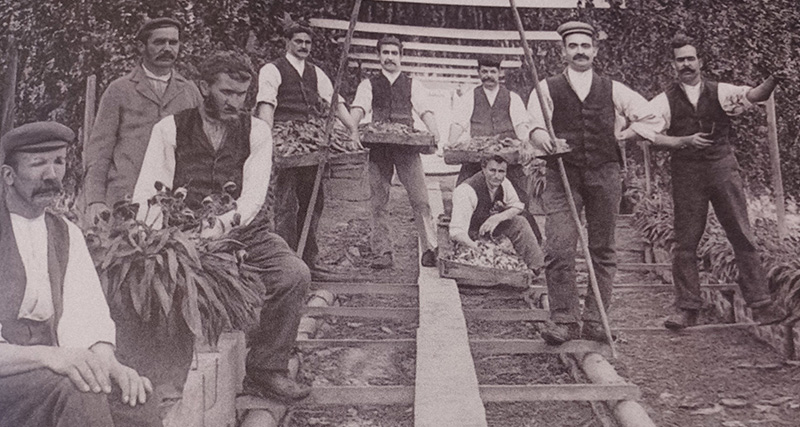
Arthur Linfield and his nursery workers inside one of the vineries packing late season grapes (c.1893)
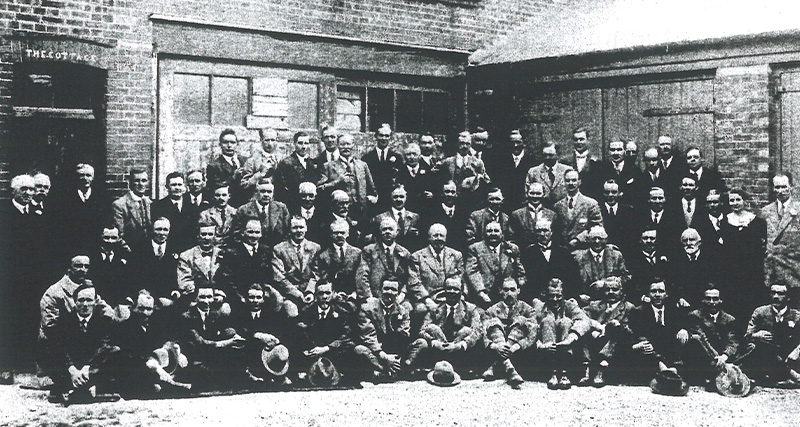
Home Counties Market Growers Association (c.1921)
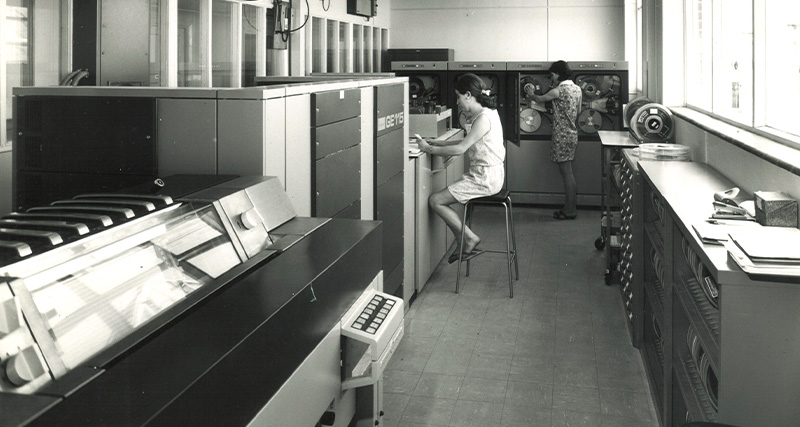
One of the very first computers used in horticulture at Frampton's Nursery (c.1969)
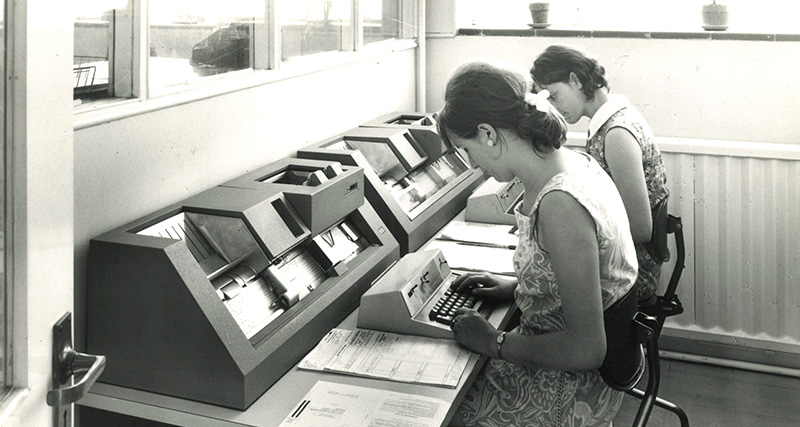
One of the very first computers used in horticulture, at Frampton's Nursery (c.1969)
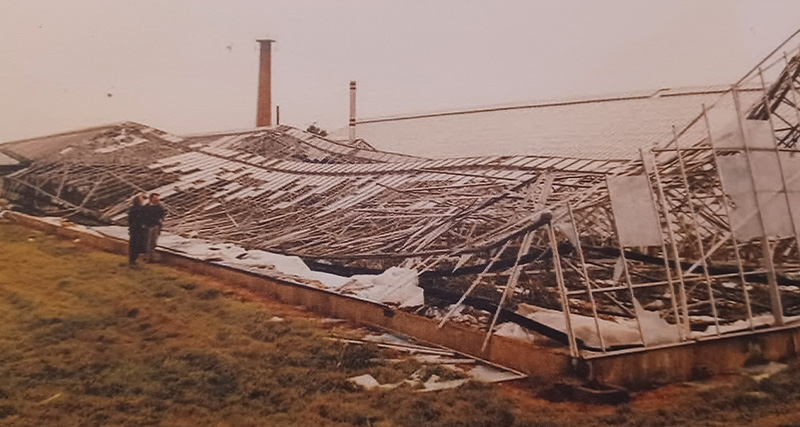
A glasshouse at Pollards Nursery, destroyed by the Great Storm of 1987

Prime Minister John Major wih participants at the Food Security Conference at 10 Downing Street in November 15, 1991
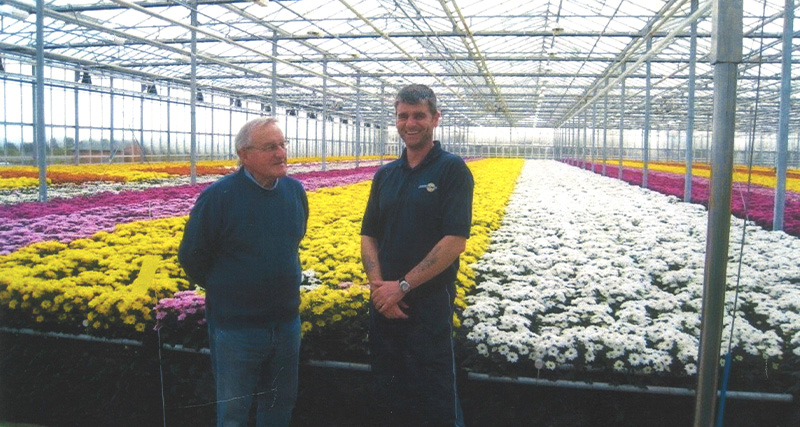
Former WSGA Chair David Abbott, left, with nursery worker Andy Cooke at Donaldsons Flowers
Photographs: West Sussex Growers' Association