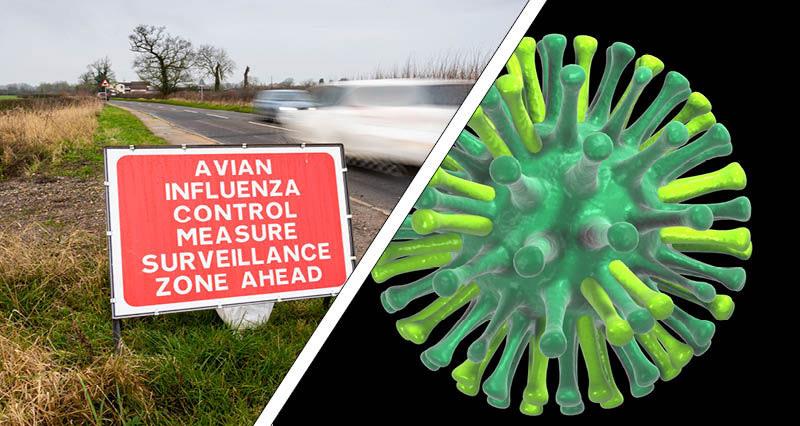
When disease control zones are confirmed around an infected premises (for example a 3km Protection Zone and 10km Surveillance Zone), APHA is legally required to carry out surveillance activities within those zones before they can be merged and lifted.
Any delays to these surveillance visits will mean disease control zones and related movement licensing requirements remain in place for longer.
These activities are undertaken to detect disease spread, prove disease freedom and provide evidence for requests to trade partners for recognition of disease freedom in the relevant zones.
Surveillance visits
APHA must visit every poultry premises (both commercial and non-commercial) inside a 3km Protection Zone within 21 days from the date of completion of effective preliminary disinfection of the infected premises that gave rise to the zone.
Depending on the type of premise a further visit or phone call will be required.
APHA use the GB Poultry Register to identify where poultry premises are located and will arrange for a VI (Veterinary Inspector) to visit every poultry keeper inside the zone to check the birds for any signs of disease. The VI will need access to every poultry building to visually assess all of the birds on site.

In a 10km SZ (Surveillance Zone), APHA will contact poultry keepers with 50 or more birds of poultry species (both commercial and non-commercial) to conduct a health assessment over the telephone. In-person assessments will take place within the SZ if APHA can’t contact the poultry keeper by telephone, or if any potential signs of disease are identified during their telephone conversation with the poultry keeper.
In addition to the above requirements, APHA will also visit a predetermined number of premises within the Enhanced Surveillance Zone (this is a 10km zone around the infected premises).
These sites are randomly selected – 75% of the visits will be to sites with more than 250 birds and the remaining 25% will be to sites with fewer than 250 birds. This is required under our trading agreement with the European Union.
Until these visits have taken place, export of any live poultry, poultry meat, or eggs originating from the zone to the EU is prohibited.
Wherever possible the APHA tries to minimise surveillance visits or phone calls – for example if a site is in two overlapping zones. However, due to the legislative time limits this is not always possible.
Refusing an in-person surveillance visit
Under Section 64 of the Animal Health Act 1981, APHA has a legal right to enter and inspect poultry buildings.
Surveillance visits are an essential part of the process for lifting disease control zones and refusing APHA visits will delay the merging and lifting of these zones. This is likely to cause further disruption, administration and cost burden to all of the poultry businesses within the zones.
Should the VI be prevented from entering a poultry site, APHA can reserve the right to apply for a court warrant to access the premises to check the health of the birds kept there.
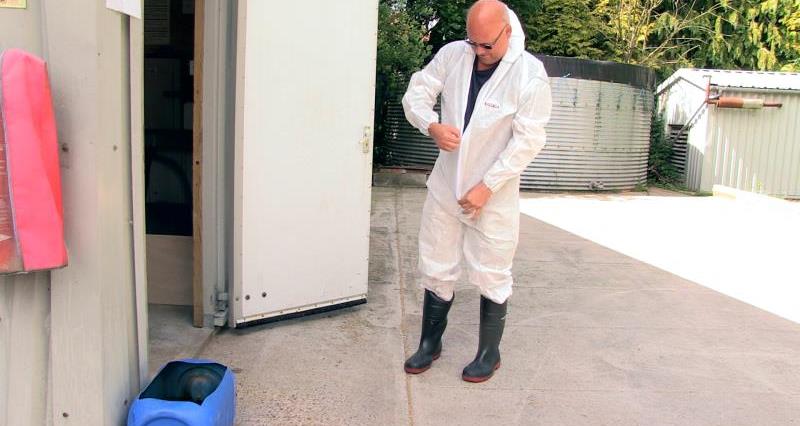
APHA’s rules on biosecurity for Veterinary Inspectors
All VI’s (Veterinary Inspectors) should practice stringent biosecurity and hygiene when visiting poultry premises, including wearing appropriate PPE and using approved disinfectants at the correct concentration to disinfect footwear and any equipment entering the biosecure areas of a site.
If you have specific biosecurity requirements for your business, then you should discuss these with APHA when they contact you to arrange a surveillance visit.
Where possible, APHA will endeavour to meet your biosecurity requirements. Where this is not possible, APHA will provide an explanation as to why it is unable to meet your specific requirement, and clarify what biosecurity measures the VI will be taking.
Private veterinary surgeons and surveillance visits
If you have arranged for your PVS (Private veterinary surgeon) to carry out a pre-movement inspection of your birds as part of an avian influenza movement licence it may be possible for them to carry out a surveillance visit at the same time, thereby reducing the number of visits taking place.
Veterinary Inspectors and visit scope
The purpose of APHA surveillance visits is for a qualified VI to look for signs of notifiable disease in poultry and captive birds. However, veterinarians have a professional responsibility to act if they have concerns about bird health, welfare or biosecurity and may recommend additional actions that need taking if they identify these issues during a surveillance visit.