Farmer Ian Wilkinson might initially seem an unlikely poster boy for the benefits of agricultural learning, after leaving school ‘with only a CSE woodwork and a poor grade in geography’. But Ian had been bitten by the farming bug as a child, working on a local tenanted farm from the age of 13, and that’s where he returned after leaving school, to start a three-year apprenticeship, studying for his Agriculture City and Guilds one day a week at Henley-on-Thames Technical College.
Training on the job
“This was a 300-acre farm with probably a dozen employees,” said Ian.
“We had dairy, pigs, chickens, arable crops, beef animals – we had everything apart from vegetables and fruit. It was brilliant training for me as a newcomer to farming and I wouldn’t change it for the world because it was principally training on the job, working with people who really knew what they were doing.
“Mr Martin Johns was the tenant farmer – ‘the old man’ we used to call him. He was strict, a taskmaster really, but we loved it. He was a nice man and we really enjoyed being there. As a result of the apprenticeship, I went to agricultural college and I then realised why the apprenticeship was necessary because it gave me a really good, broad overview of working in farming.”
Building a business
After studying Farm and Grassland Management at Berkshire College of Agriculture, Ian worked at FBC Ltd (formed by the merger of Fisons Agrochemicals and Boots Farm Sales), before joining the team at Cotswold Seeds.
“There were three people, and I joined as the junior. I was the young one with all the energy but no real experience, and I joined two people that were going to retire in the next 10 or 20 years,” said Ian.
“And so they stepped out after 20 years and I stepped in and bought the business.”
During those early years, Ian helped to build the company’s reputation for developing forage, herbal leys, green manures and complex seed mixtures, along with a personal service to its customers, who now number 20,000 farmers and landowners across the UK.
“My agricultural education has made me into what I am, and my apprenticeship was the start of it.”
First-generation farmer Ian Wilkinson
Demonstration farm
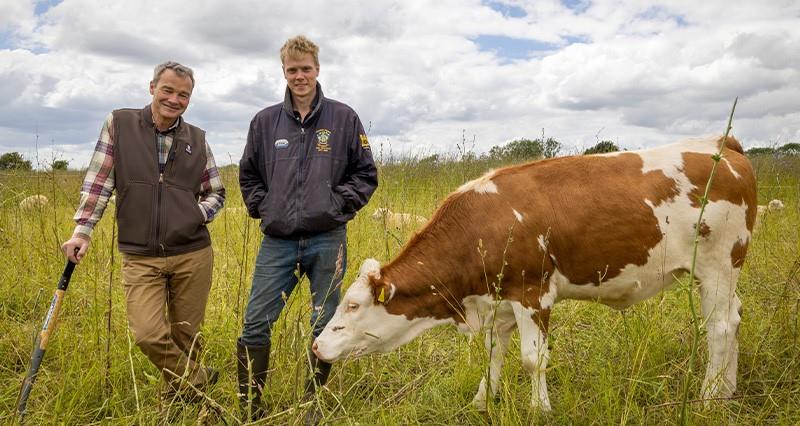
Ian always envisaged that Cotswold Seeds would have a demonstration farm one day, and in 2013 with his wife Celene he bought Honeydale Farm, at Shipton-under-Wychwood in the Cotswolds, realising his dream of becoming a farmer.
Honeydale became the base for FarmED, a 107-acre regenerative agriculture and sustainable food demonstration farm featuring a conference barn and café.
FarmED hosts a range of courses and events from weekly farm walks to in-depth courses focusing on aspects of food, farming and climate change.
The café features seasonal produce from Honeydale Farm and local producers.
The farm also offers informal year-long paid internships to young people looking to increase their agricultural knowledge, allowing them to work at FarmED then spend three months in another farm or agricultural environment.
‘Education is so important’
Ian said: “With the help of Cotswold Seeds and a like-minded and generous donor, it’s something we’ve done off our own bat and it’s been great. Education is so important. We have about 30,000 people a year coming to FarmED and I’m now in a position where training and education and knowledge transfer are very much front and centre for me.
“My agricultural education has made me into what I am, and my apprenticeship was the start of it. If I hadn’t have done that, I wouldn’t have gone to agricultural college, and I wouldn’t have met my wife, who I met at college. I’m still married 40 years later. Secondly, I wouldn’t have been exposed to the broad range of opportunities in farming because I didn’t farm back then, and it enabled me to get a better job with more prospects, and as those prospects opened up it completely changed my life.”
Taking on apprentices and offering other avenues for training is vital to the future of farming, Ian believes.
“It’s absolutely essential, I would say. We’d be foolish not to. If you can bring people through your agricultural business, whether it’s a farm or otherwise, they often end up being lifers, and that’s what we’re after, really – and they don’t have to be from farming families.”
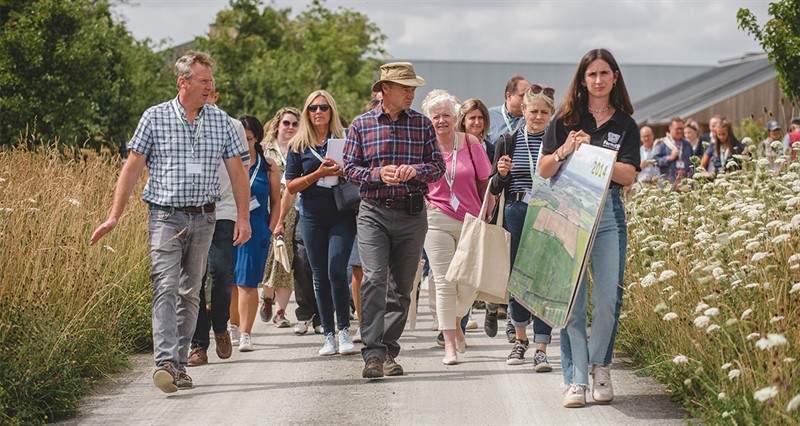
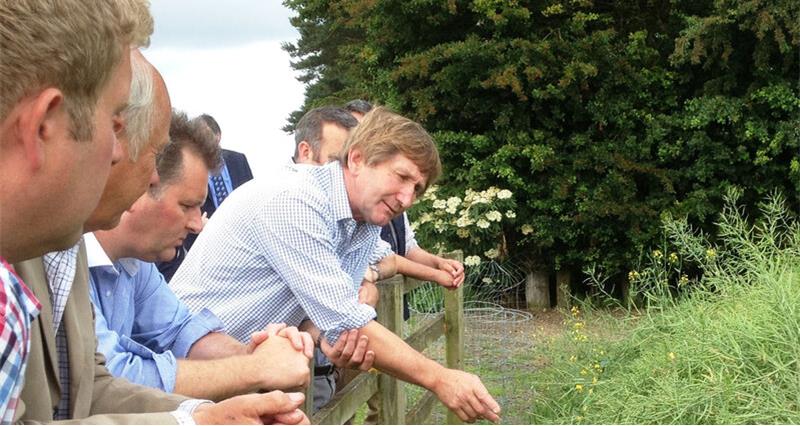
Ian Wilkinson (left) shows FarmED visitors around the farm. Photograph: Ian Wilkinson.
Different perspectives
Ian continued: “Sometimes it’s really healthy to get different perspectives coming in. We had an engineer here from Mercedes. He was career changing and he came here for a year, and he came at it completely differently from us. He brought skills onto the farm that we wouldn’t have had, and ideas that we wouldn’t have thought about.”
Ian advised that farmers need to be prepared for a candidate to fail sometimes, while remembering that for every failure, you’re closer to the person that’s going to really succeed and be a rising star in the industry – and perhaps a game-changer for your own business succession.
“I’ve seen lots of young people on farms who started out as youngsters fresh out of either school or college and if they’re the right person they are just brilliant,” he explained. “They’ve got energy and inquisitiveness, and what they lack the older farmers can teach them.”
‘Providing succession’
Ian Wilkinson said: “Those of us who have jobs where we make decisions have the responsibility to bring new blood in, otherwise what’s going to happen? We’re all 60-odd-year-olds running farming businesses. When I started, I was 20, one of those new ones, and over time I’ve become one of the old ones. I feel really grateful for the opportunity I’ve had and feel a responsibility to provide succession for the next incomers.
“When you get older in life you learn to play to your strengths. I can’t run as fast as I used to. I don’t want to chase sheep around, I don’t want to physically mix grass seed every day, even though I just loved all that. But there are things I can do better now, and they include mentoring and bringing on the next generation. And I think that’s really important and as older farmers we should do that.”