Why this matters now
Bluetongue is a real and immediate risk for farmers in England and Wales, not a distant concern.
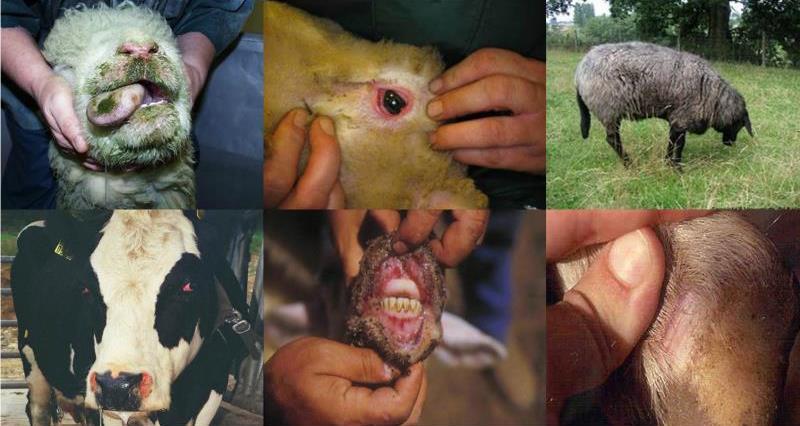
Confirmed BTV-3 cases have been reported in both countries in the 2026 season, with clinical disease being seen in sheep and cattle, including fever, lameness, mouth and muzzle lesions, lethargy, milk drop, abortions, stillbirths and weak or deformed newborns.
Vaccination should be treated as an essential part of bluetongue control. Bluetongue is spread mainly by biting midges, which means disease can move before farms realise it is nearby. Movement restrictions and official surveillance have a role, but they cannot protect every holding at the point of exposure.
A farm-level vaccination plan, agreed with your vet, is one of the most practical ways to reduce the impact of infection on animal health, productivity and business continuity.
Disease versus vaccination at a glance
| Bluetongue infection | Approved vaccination | |
| Fertility impact | There is known reproductive harm: abortions, stillbirths, foetal abnormalities, impaired semen quality. | No evidence that approved BTV vaccines reduce fertility in ewes or cows. |
| Timing risk | Can arrive before disease is obvious locally, since midges spread infection ahead of visible signs. | Vaccination is best used proactively, timed with your vet before breeding or peak risk periods. |
| Outcome | Clinical disease and production losses already being reported in infected animals. | Vaccination is one of the few practical farm-level tools to reduce the impact of infection. |
The fertility question
Understandably, some farmers have concerns about vaccination and fertility.
However, veterinary guidance from the Sheep Veterinary Society and British Cattle Veterinary Association states that there is no evidence that approved BTV vaccines reduce fertility in ewes or cows.
In contrast, natural bluetongue infection is known to cause serious reproductive impacts, including reduced fertility, impaired semen quality and temporary infertility in rams, abortions, foetal abnormalities and stillbirths.
The risk to fertility from the disease is real and already being reported. The alleged risk to fertility from vaccination is not supported by evidence for approved vaccines.
Farmers should be reassured that vaccination is not the bigger gamble.
Leaving animals unprotected during a period of active bluetongue spread is the greater risk, particularly for breeding stock, bulls, rams, pregnant females and replacement animals.
Protective immunity takes time to develop, so vaccination should not be left until disease is on the doorstep. Farmers should speak to their private vet about which animals to prioritise and when to vaccinate, especially ahead of tupping, bulling or other key breeding periods.
Where possible, vaccination should be completed far enough in advance to allow protection to develop before animals face the highest midge challenge.
“Vaccination, used correctly and discussed with your vet, is a responsible and proportionate step to protect livestock. For farmers in England and Wales, the question should not be ‘Can I afford to vaccinate?’ but ‘Can I afford not to?’”
NFU Senior Veterinary Adviser (Animal Health and Welfare) Dr Claire White
Vaccination is not a stand-alone measure
Farmers should continue to monitor animals closely, report suspect signs immediately, review livestock movements, avoid unnecessary mixing, and reduce midge exposure where practical. Bluetongue is notifiable, so suspicion must be reported straight away.
In England, suspected cases should be reported to the Defra Rural Services Helpline – 03000 200 301, and in Wales to the relevant Welsh reporting line.
The myths around the impacts of bluetongue vaccines on fertility must not distract from the evidence.
Bluetongue infection can damage fertility, cause clinical disease and lead to serious losses.
More on bluetongue

Sources used:
- Defra/APHA, “Bluetongue: latest situation”, GOV.UK, updated 29 July 2026.
- AHDB, “Bluetongue virus latest news”, including reporting advice, clinical signs and vaccination information.
- Ruminant Health & Welfare, “Battle Bluetongue campaign”, updated June 2026.
- Defra/VMD, “Bluetongue serotype 3 (BTV-3) vaccination”, GOV.UK, updated 17 March 2026.
- Sheep Veterinary Society and British Cattle Veterinary Association, “Bluetongue Vaccination & Fertility: an overview for vets”, updated January 2026.