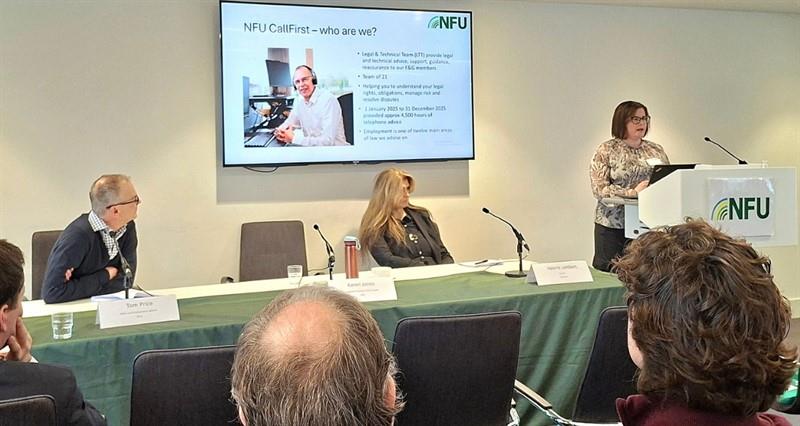
Held at the NFU’s Westminster office in London at the end of January, the event provided an opportunity for NFU East members, businesses within the area, and young people working in the sector to network and share ideas about the future of farming.
More specifically, the day’s programme looked at ways of attracting talent to the industry, retaining good people and developing people management skills.
The event comprised a series of presentations, followed by a lunch and networking opportunities, and finished with a regional skills workshop.
The room heard from a range of speakers, including NFU President Tom Bradshaw, and the high volume of questions asked throughout the morning session was very encouraging.
Addressing the big issues
As part of the morning session, Tom Price, NFU policy adviser, and NFU CallFirst’s Karen James were on hand to speak about the organisation’s efforts in tackling challenges raised by its members.
Mr Price outlined the NFU’s work to promote farming as an exciting and rewarding career. This includes outreach through the Farmers for Schools programme and NFU Education live lessons, which attracted over 400,000 participants last year.
He said the NFU is urging government to include more UK focused farming content in the national curriculum, arguing that students should learn about domestic food production, not just systems abroad.
Ms James summarised the role of the NFU’s CallFirst service, encouraging members in the room to contact the team for professional advice on a range of issues, including employment and legal concerns.
“We need farmers, but we also need scientists, agronomists, and rural accountants... We've got to shout about the opportunities if we genuinely believe they're there.”
Tom Bradshaw, NFU President
Also on the morning’s panel, Valerie Lambert, partner at HCR Law, provided a valuable roundup of the changes to employment law that farmers should be aware of.
The Employment Rights Act 2025, which received Royal Assent in December, has brought about reform in areas such as zero-hours contracts, ‘fire and rehire’, and unfair dismissal rights.
Read what the reforms could mean for farming businesses at: The Employment Rights Act | 6 key reforms you need to know about
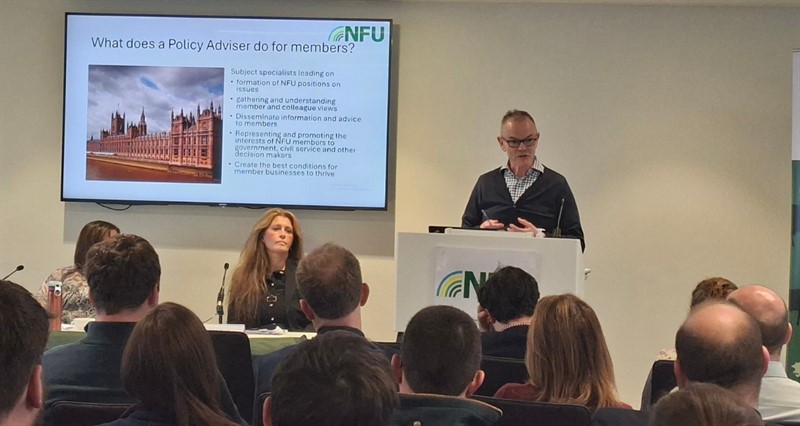
Policy adviser Tom Price spoke about the NFU's work to engage with government on training and skills in agriculture.
Telling a positive story about farming
The conference also heard form NFU President Tom Bradshaw, who discussed the need to inspire young people to pursue careers in farming.
Mr Bradshaw stressed that negative narratives and “doom and gloom” on social media discourage new entrants, and that the industry must instead promote the many opportunities it has to offer. Although acknowledging the real challenges facing different sectors, Mr Bradshaw urged the room to continue to counter inaccurate narratives about farming and actively tell the positive story of why farming is important and rewarding.
He said: “We need farmers, but we also need scientists, agronomists, and rural accountants. We need people in those allied industries, which are such a critical part of rural life and supporting the farming industry.
“If all people are seeing on social media is a ‘doom loop’ of how dreadful everything is, why are young people ever going to want to come into our industry? We've got to shout about the opportunities if we genuinely believe they're there.”
Opportunity for apprenticeships
Rethinking the hours expected of employees on farms should also be a top priority, said Mr Bradshaw.
Expecting people to work 70–80 hour weeks is “unrealistic” and will not attract the next generation into farming. To make roles appealing, Mr Bradshaw argued that farms must offer higher hourly rates while recognising that the whole food chain needs to create the space for equitable returns so that businesses are profitable enough to support fair pay. This, he said, would be a significant challenge because for too long ‘family labour’ has subsidised food production and often results in wages below the national living wage for those family members.
“We're going to have to look at how we incentivize workers,” Mr Bradshaw argued. “Some of this is going to be about partnerships, about profit shares, about real incentivisation to motivate the generation that are going to come into these businesses in the future.”
He added that the farming industry is in a strong position to offer apprenticeships. Mr Bradshaw said there was an opportunity to further develop apprenticeship roles, so they provide “realistic, attractive opportunities for new entrants of any age.”