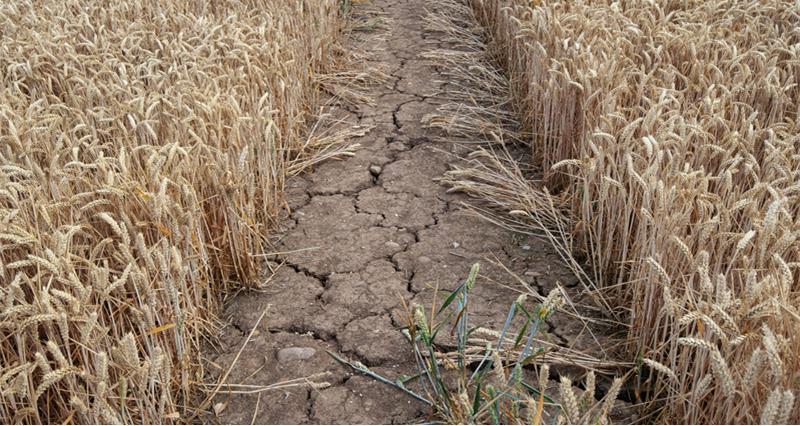
The House of Lords’ Environment and Climate Change Committee published its report ‘Surviving drought reclaim the rain’, warning that England’s water supply is under increasing pressure from climate change, population growth, leakage from public water systems, and the demands of water-intensive industries.
It is clear that drought is no longer a rare event, but a chronic, systemic risk that must be managed alongside growing demands.
The committee says that the UK is not short of rainfall, but is failing to capture, store and reuse water effectively. Improving how water is managed will be essential not only to reduce drought impacts, but also to help reduce flood risk.
The report’s publication follows the committee’s inquiry into drought preparedness, launched in October 2025. As part of that inquiry, NFU National Water Resources Specialist Mark Betson gave evidence, raising concerns that drought is now a long-term risk for farming, with future productivity relying on better water access through more flexible abstraction and on‑farm water storage.
Key recommendations
The report sets out several actions for the government to improve England’s water security:
- Understand the problem through improved data, drought monitoring, and a full assessment of the environmental and economic impacts of drought, including the cost of inaction versus investing in resilience.
- Balance supply and demand by promoting a whole society approach to drought, including public awareness campaigns, improving household water efficiency, and promoting greater water reuse and rainwater harvesting.
- Improve drought resilience for abstraction-dependant sectors by prioritising changes in regulations to make it easier to build on-farm reservoirs, and increasing the flexibility of abstraction licensing.
- Publish a prioritisation plan for an emergency drought by autumn 2026 to strengthen planning and response, and use nature-based solutions more widely.
A growing risk
Last year saw the driest spring in 132 years, leading to prolonged drought across England.
The report recognises agriculture as one of the sectors most exposed to drought, with serious implications for farmland viability and long-term resilience. This echoes NFU concerns that farming businesses experience the impacts of dry weather early and severely, often before public water supply restrictions are triggered.
Despite farmers being particularly vulnerable, the report notes that most agricultural businesses are still not formally engaged in drought planning.
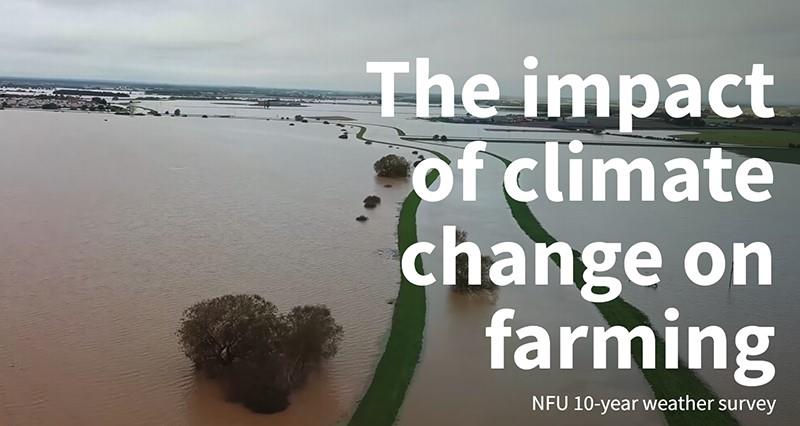
Data from the NFU’s 10-year weather survey revealed that 68% of respondents have seen an increase in drought, with many mentioning the need for easier rainwater harvesting and reservoir storage.
In line with this, the report calls for more flexible abstraction licensing to support catchment-scale water sharing and storage and greater support for on‑farm storage, including reservoirs.