See also:
Or, download this guide as a PDF: The ‘purple book’ – AI, what you need to know
What happens on your premises while an investigation is carried out?
APHA will undertake an investigation and if avian influenza cannot be ruled out on clinical grounds, it will take samples from birds for testing. It will also put disease control measures in place until the results are known.
Measures include:
- Placing the site under restriction – this prohibits the movements of poultry, other captive birds, eggs, other livestock species, vehicles and people to and from the premises. Although some essential movements may be licensed subject to certain conditions (e.g. people off the premises, feed deliveries).
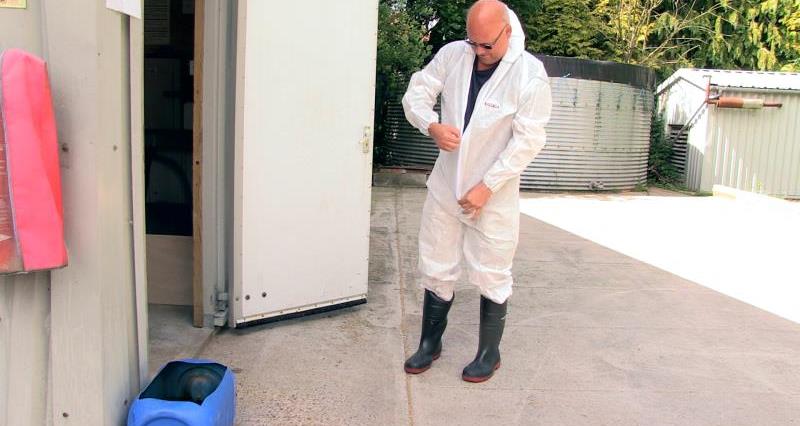
- A means of C&D (cleansing and disinfection) using an approved disinfectant must be provided at the entrances and exits of the premises and of buildings which house poultry or other captive birds.
- Warning signs must be erected at appropriate places on the premises.
- Examination of production records.
- Housing or isolation of poultry and other captive birds.
- Following an epidemiological assessment of the site, other livestock species on the same holding may also be tested for AI on a case-by-case basis.
Things to think about
- Location for vehicle washing?
- Have you considered the welfare of birds if they have to be housed, or are held on farm longer than expected?
- Is your visitor book up to date and capturing the right information?
- If you live on site, is there an alternative access route you and your family can use if disease is suspected or confirmed?
Disease control zones
If AI is confirmed, disease control zones will be declared around the infected premises.
Depending on the virus strain and the type of premises, these zones may include movement restrictions and enhanced biosecurity measures for all poultry premises within those zones.
If any part of your holding falls within a zone under restriction then you must follow all restrictions applied to that zone across the whole site.
If parts of a single holding are in two separate zones then the whole of the site is considered to be in the zone with the highest level of restriction.
Within the zones, there will be a ban on bird gatherings and a ban on the release of gamebirds.

HPAI in captive birds and poultry
A 3km PZ (Protection Zone (PZ) and 10km SZ (Surveillance Zone) will be declared around the infected premises and movement licences will be required for certain activities within those zones.
In some cases, where the premises is non-commercial and/or classified as non-poultry, Defra or Welsh Government may declare a 3km CBMCZ (Captive Bird (Monitoring) Controlled Zone) instead of a PZ and SZ and movement restrictions won’t apply within the zone.
LPAI in captive birds and poultry
A 1km LPAI RZ (Restricted Zone) will be declared.
For more information on zone restrictions, see our guide on What to do in an avian influenza disease control zone
Things to think about
- Consider the implications of an outbreak at different stages in the cycle, eg, feed requirements, storage of eggs, live poultry or egg movements on or off site.
- Is your processor/packing centre/hatchery designated to receive poultry or eggs from within AI disease control zones?
- Do you have a separate CPH for your poultry business?
- Are your visitor records up to date?
- Do you have other enterprises on the farm, eg, livestock, farm shoots?
Lifting zones
Before disease control zones can be merged or lifted, APHA have to carry out surveillance and disease control activity.
The minimum time period before a PZ can be merged with an SZ (surveillance zone) is 21 days from the date preliminary disinfection is carried out on the IP (infected premises), with the SZ able to be lifted after a minimum of 28 days.
This can take significantly longer if there are delays to disease surveillance activity or if further AI cases are confirmed within the zones.
AIPZ (avian influenza prevention zones)
During AI outbreaks in poultry and captive birds, the UK government and devolved administrations may introduce an AIPZ on a regional or national basis which requires all poultry keepers to exercise stringent biosecurity measures and record keeping.
Depending on the current risk level to poultry and captive birds, this can also be amended by the government to include mandatory regional or national housing measures.
Housing measures
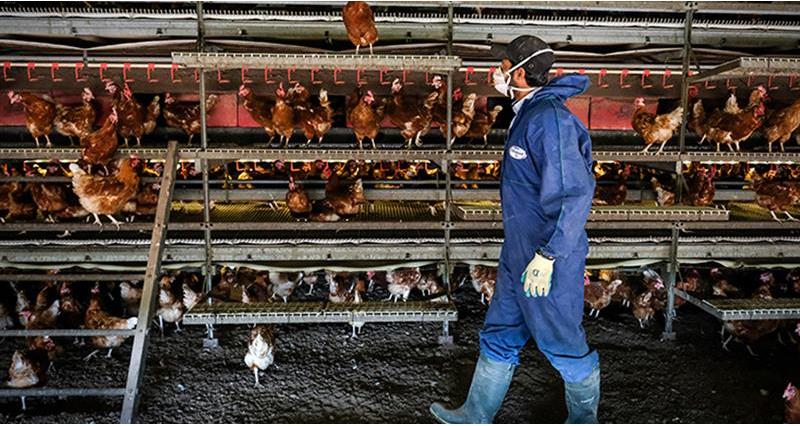
All poultry and captive birds within a 3km Protection Zone or Captive Bird (Monitoring) Controlled Zone must be housed.
The UK government and devolved administrations can also implement national or regional housing measures to help mitigate the risk of AI in poultry and captive birds.
When housing measures are declared, poultry and captive bird keepers must house their birds until such measures are lifted.
In England and Wales, the free range status of eggs and poultry meat from temporarily housed birds which would normally be free ranging is protected for the duration of any mandatory housing measures.
This means producers can continue marketing their produce as free range until housing measures are lifted again.
If poultry keepers choose to house their birds outside of any mandatory housing measures, they may not be able to market their eggs or poultry meat as free range.
The exact restrictions imposed will depend on the strain of AI confirmed and will be detailed within the declaration for each disease control zone.
Certain activities, including (but not limited to) movement of live poultry and other livestock, as well as on-farm slaughter will require a movement licence from APHA.
Licences are only available if the government is content that allowing the movement will not put disease control at risk and there are legal provisions to issue licences.
Movements of poultry and poultry products (including eggs) starting or ending in a PZ or SZ will need to be licensed by a veterinary inspector. For examples of when movement licences have been required, see: Managing AI – movement licensing guidance
APHA requires at least 5 working days notice to issue licences so plan ahead and apply in good time to avoid issues. When disease control zones are first declared it may not be possible to give five days notice for urgent movements, in which case make sure you highlight the reason for urgency of the movement in your application.
There are two categories of licences – general licence and individual licence. More detail on both of these categories, plus top tips for applications, can be found a: Managing AI – movement licensing guidance
What happens if my premises has had contact with an IP (Infected Premises)?
To find where disease may have come from or gone to, APHA will trace all poultry, eggs and litter that have been moved off an infected premises. All people, vehicles and equipment that have visited an IP within the tracing window will also be traced.
The tracing window will be defined for each outbreak but is expected to be at least 21 days prior to the date that disease is likely to have been first present on the IP. These traced premises will be placed under restriction to prevent the spread of any undetected disease pending a more detailed epidemiological investigation. Movements of poultry, eggs, litter and other products of animal origin will be prohibited.
The length of time restrictions will be in place depends on whether the birds at the IP have HPAI or LPAI, however they could last for at least 21 days. Testing may also be carried out.
After initial veterinary assessments have been carried out by APHA, producers may be able to apply for a licence to allow low risk movements to take place. However, such moves will only be allowed if government are content that it will not put disease control at risk and there are legal provisions to issue a licence.
Things to think about
You need a valid biosecurity report (EDO338) to receive day old chicks or live birds moved under a specific movement licence. You must get a new report every six months. Find out more on gov.uk: GOV.UK | Get a biosecurity report to receive poultry from or to a premises in the bird flu disease zone