Food system under attack, but action now can secure Britain’s productive capacity, says NFU
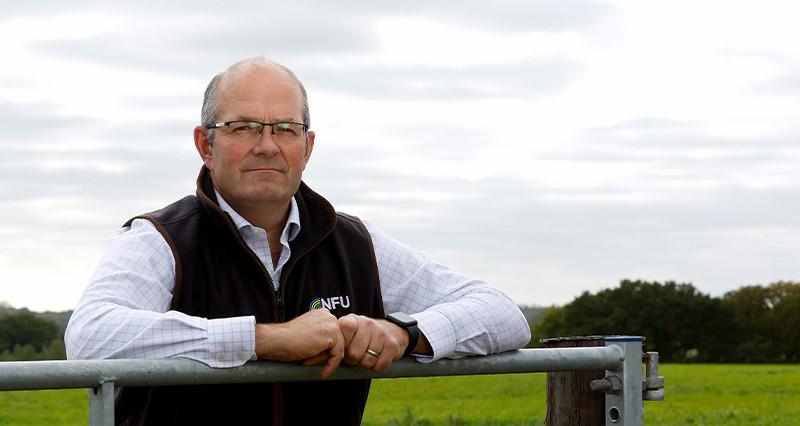
Speaking at a national security conference, NFU President Tom Bradshaw urged decision-makers from across the political and military spectrum to invest in homegrown food production and ensure its inclusion in the Prime Minister’s 10-year plan.
The NFU is warning that Britain’s declining domestic food production is weakening the country’s ability to withstand conflict and other serious disruption.
In a keynote address at the RUSI (Royal United Services Institute) Long War Conference, NFU President Tom Bradshaw set out how Britain can strengthen its national resilience by investing in domestic food production, supporting profitable farm businesses and embedding food and farming in the Prime Minister’s forthcoming 10-year plan.
“Food forms part of our national security. The government now says the same. Food security is national security. But, we do now urgently need to move beyond saying it.”
NFU President Tom Bradshaw
Food system under attack
Addressing defence experts, senior members of the armed forces and politicians, NFU President Tom Bradshaw said: “The food system is already under attack. In the last few years, we have seen food used as a weapon of war.
“For many years, food security has been treated, by governments of all colours, as something we don’t need to worry about – we’ve taken it for granted. Those assumptions have shaped the UK’s food policy for decades. They are no longer fit for purpose.”
“Food forms part of our national security. The government now says the same. Food security is national security. But, we do now urgently need to move beyond saying it.”
Ready to Grow
Tom cited the NFU’s Ready to Grow report on the state of domestic food production which the NFU drew on to reinforce its calls for a more resilient and ambitious future for domestic food production.
Tom said: “The direction of travel is clear. Britain is becoming more reliant on food produced elsewhere at the same time as the world is becoming less stable.
“Britain cannot simply assume that food will always be available from somewhere else, in the quantities we need, at a price we can afford.”
“Above all, we need a long-term partnership between government, farmers and the wider food supply chain.”
Tom Bradshaw on the PM’s 10-year plan
Losing productive capacity
Tom continued: “There is a deeper problem too. As we produce less at home, we lose the capacity that makes production possible in the first place. We lose farming businesses. We lose processing facilities. We lose skills, infrastructure and generations of knowledge.”
“Maintaining strategic capability requires long-term investment. Food production is no different. And that is why the way government supports and invests in British agriculture matters to national resilience.
“Farmers need to know what government is asking them to deliver. And they need a stable framework which gives them the confidence to invest.”
10-year plan must include food production
Tom’s attention then turned to the Prime Minister’s highly anticipated 10-year strategy for Britain’s future, stating that it was “unimaginable” that the food system would not be included.
Tom urged government to assess the food production capacity needed for Britain to endure sustained disruption and the investment required, before setting “clear targets” for domestic food production.
Tom added: “Above all, we need a long-term partnership between government, farmers and the wider food supply chain. Because government cannot create the resilience I’m talking about today all on its own. It relies on farm businesses being profitable now, rather than expecting them somehow to reappear when the country needs them.
“Britain’s farmers and growers have sustained this country through conflicts and crises before. They stand ready to do so again.
“But maintaining that capability requires action now. The Prime Minister’s 10-year plan will provide the framework for those decisions.
“Having food production and our productive and processing capacity embedded within that plan alongside other critical infrastructure such as energy security and defence gives us all the whole-of-nation response we all need.”