NFU joins call for urgent action to protect Britain’s local abattoirs
The NFU has signed a joint letter calling on the government to recognise local slaughter capacity as essential national infrastructure and take urgent action to secure a sustainable network of small and medium-sized abattoirs.
The NFU has joined more than 150 organisations, businesses and individuals in calling for urgent government action to protect Britain’s rapidly declining network of local abattoirs.
The joint letter warns that the number of abattoirs in the UK has fallen from around 2,500 in the 1970s to approximately 200 today. It calls for local slaughter capacity to be recognised as essential food and economic infrastructure, reflecting its importance to British food production, livestock farming and rural communities.
The NFU is supporting calls for the government to work with the industry to:
- urgently review regulation and charging, including the cost of Official Veterinarians and inspection arrangements;
- establish targeted funding for existing and prospective local abattoirs, including support for feasibility work; and
- ensure local slaughter capacity is considered alongside transport, energy and skills in economic planning.
The letter also highlights opportunities to develop locally appropriate solutions, including co-operatives, mobile facilities and public-private partnerships.
“Small and medium-sized abattoirs are a vital part of the UK's food supply chain. They provide essential processing capacity for livestock farmers, support local food businesses and sustain jobs and economic activity in rural communities. ”
NFU Livestock Board Chair Clare Wise
Protecting essential food infrastructure
The NFU has consistently warned that the loss of small and medium-sized abattoirs reduces competition and removes important services for livestock farmers.
These facilities can provide private kills, cutting, packing and specialist processing, enabling farmers to sell high-quality British meat through farm shops, butchers, hospitality businesses and local markets. Their closure can leave farmers facing longer and more expensive journeys to access processing facilities, while limiting opportunities to add value to their produce.
A 2025 survey of 850 farmers and land managers found that two-thirds had experienced difficulty accessing suitable abattoir services. One-third had seen an abattoir they used close, while 43% said they would no longer be able to sell meat locally if their current facility closed.
“By reducing unnecessary burdens and supporting a sustainable abattoir network, we can help ensure farmers can continue to provide consumers with safe, high-quality and affordable British food while maintaining the resilience of our domestic food supply chain.”
NFU Livestock Board Chair Clare Wise
Significant pressures
“Small and medium-sized abattoirs are a vital part of the UK's food supply chain. They provide essential processing capacity for livestock farmers, support local food businesses and sustain jobs and economic activity in rural communities.
“Yet these businesses continue to face significant pressures from the rising cost of official controls, higher energy bills and ongoing recruitment challenges. As more abattoirs close, many livestock farmers are left with no local processing facilities, forcing them to travel longer distances at greater cost and limiting opportunities to add value.
“We need a more proportionate and efficient regulatory system, alongside a fair and transparent charging structure for official controls. By reducing unnecessary burdens and supporting a sustainable abattoir network, we can help ensure farmers can continue to provide consumers with safe, high-quality and affordable British food while maintaining the resilience of our domestic food supply chain.”
NFU action on abattoir pressures
The NFU’s decision to sign the letter builds on its sustained work to ensure the concerns of abattoirs and livestock farmers are heard by policymakers.
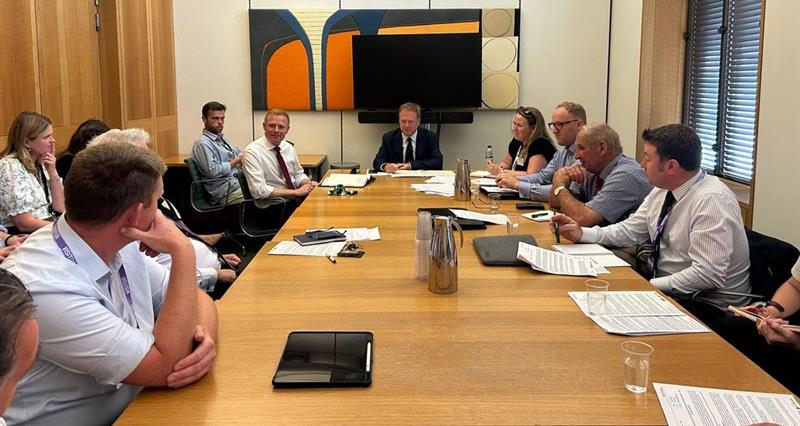
In July, the NFU hosted a parliamentary roundtable bringing together cross-party MPs and industry representatives to discuss the pressures facing small and medium-sized abattoirs. NFU representatives called for a more streamlined regulatory system and for abattoirs to be treated as critical food-system infrastructure.
At a Public Accounts Committee session last week, Professor Neil Ward (Professor at School of Environmental Sciences, University of East Anglia) highlighted that abattoirs should be included in critical national infrastructure.
The NFU has also called for an independent review of the Food Standards Agency’s cost structures, workforce management and use of third-party contractors, to ensure official controls are delivered efficiently and provide fairness and value for money.
Earlier this year, it raised serious concerns about increases in official meat-control charges. For the 2026/27 financial year, the hourly rate for Official Veterinarians increased by 20.8%, from £65.90 to £79.60, while the rate for Meat Hygiene Inspectors rose by 12.3%, from £43.20 to £48.50.
The NFU subsequently responded to the FSA’s consultation on a revised system of financial support for abattoirs. It stressed that any changes to the discount scheme must provide meaningful, long-term stability and must not place further pressure on small and medium-sized businesses already dealing with rising costs and regulatory burdens.
The NFU will continue working with government, regulators and the wider industry to seek a fairer regulatory environment and secure the resilient network of processing facilities needed by Britain’s livestock farmers.