New powers to tackle fly-tipping should not replace prosecution, says NFU
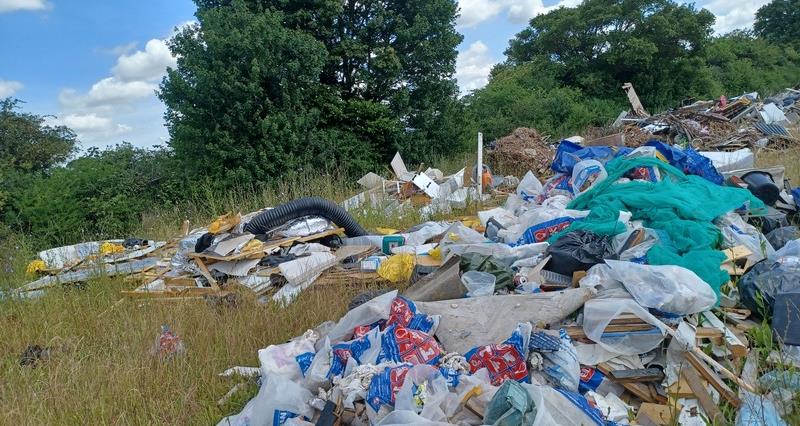
The NFU has submitted a response to Defra and the Welsh Government’s joint consultation seeking views on giving conditional powers to local authorities for fly-tipping offences following member feedback.
The NFU supported the proposal of local authorities using conditional powers to help deal with fly-tipping offences but stressed that cautions need to be used to complement other forms of punishment such as prosecution.
The new powers need to apply to both public and private land and work for the victims, including making the swift removal of the fly-tip a priority.
To be a credible deterrent, a robust and consistent sentencing framework must be in place to ensure the conditional cautions don’t become an ‘easy way out’ of fly-tipping offences, which relies on local authorities having sufficient resources.
Public vs private land
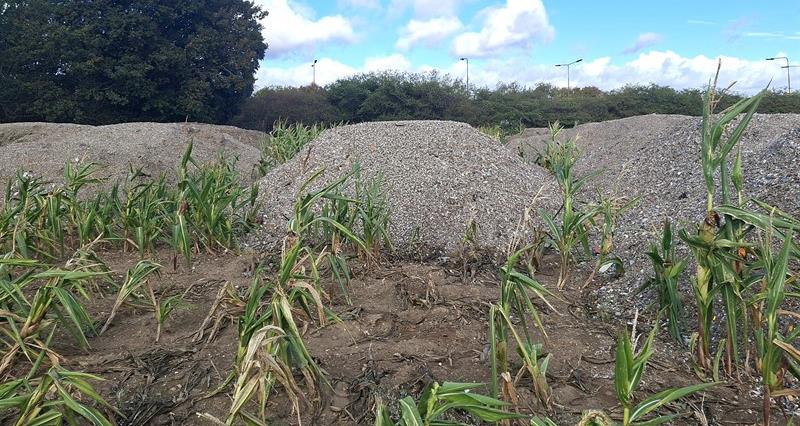
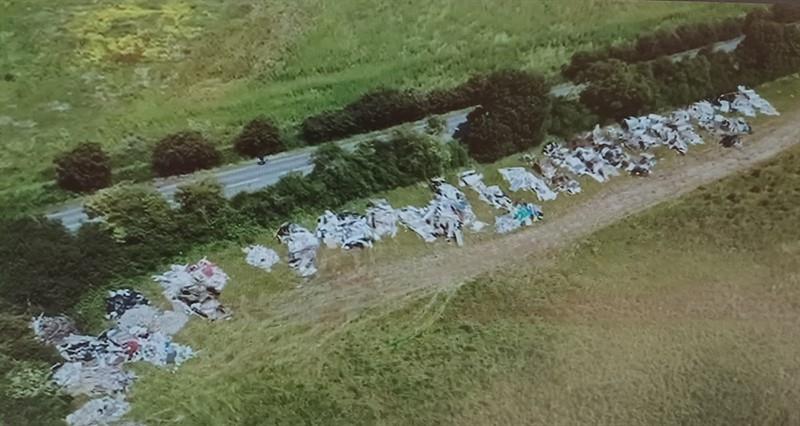
A main concern for the NFU is the ‘gap in enforcement’ between public and private land, which is resulting in fly-tipping on private land becoming a ‘low-risk’ crime. Farmers and landowners receive little support with investigation or enforcement and end up footing the bill for the crime, making private land an enticing prospect for criminals.
The NFU questioned whether local authorities have the resources to accomplish their goal – the ‘gap’ risks being widened if the new powers are not applied fairly on both public and private land, making it worse for private landowners.
The NFU also highlighted that the new powers and penalty money could be shared, assisting with investigation and clean-up of waste dumped on private land to assist landowners.

Case by case
The NFU acknowledged the potential benefits of the new powers, including settling low-level cases more rapidly, but strongly advocated for prosecution when necessary.
Incidents such as those involving large-scale or commercially motivated fly-tips, hazardous waste, or organised crime still warrant prosecution, the NFU argued, due to the environmental, financial and safety impacts on farmers, landowners and local communities.
Prolonging the impacts
The NFU has warned that there is a risk that the cautions could prolong the impacts of fly-tipping on the victims if offenders are given too much time to comply.
Prompt clean-up must be the priority of conditional cautions to ensure farmers are not left facing ongoing disruption and risks to livestock, wildlife, watercourses and biosecurity, as well as fire risk in periods of dry weather.
It could also encourage further fly-tipping if an area appears to be unmanaged and an easy target.
Resources and guidance
Consistent national guidance and adequate local resources will be essential to ensure fair and effective implementation.
The NFU has stressed that local authorities need to be properly resourced in order to handle the potential extra administrative burden that the new conditional powers would generate, while acknowledging the reduced pressure on courts.
Local authorities also need to be able to prosecute or impose further penalties on offenders who do not comply with the conditions of a caution to ensure the new powers act as a deterrent, the NFU has said.
The effectiveness of the powers should then be reviewed by Defra within their fly-tipping statistics.
Clear proportionate guidance on what to do when offenders fail to comply with these conditions depending on the severity of their crime are also necessary to ensure consistency across local authorities.
Taking the opportunity to highlight that there is also ‘far too much’ disparity between local authorities in how they assist farmers and landowners, the NFU has stressed the need for equity across the guidance, training, funding and resources they receive – victims should not get more or less support depending on their postcode.
On a local level, the NFU has called on local authorities, police, land managers and the EA (Environment Agency) to work together to tackle this issue through prevention, intelligence sharing, best practice, clean-up and enforcement.
The NFU also asked for greater investment in investigation, intelligence sharing and enforcement activity, including the trialling of enhanced enforcement in heavily affected rural areas to see if it has an impact.
Developing a reporting platform
While the NFU agreed that adequate resources need to be given to priority areas, it argued that Defra’s annual fly-tipping stats should not be used solely to assess this – not all incidents are reported for various reasons, from frustrations with the reporting system to larger cases being dealt with directly by the EA.
The NFU has also taken the opportunity to highlight ‘unhelpful’ local authorities who choose not to report fly-tips on private land.
The NFU has suggested the development of a ‘simple and efficient’ multi-agency reporting and intelligence-sharing platform to solve this issue.
A joined-up approach for a national issue, the digital platform could provide support for victims, improve the accuracy of Defra’s fly-tipping data and assist in facilitating cautions and prosecutions.