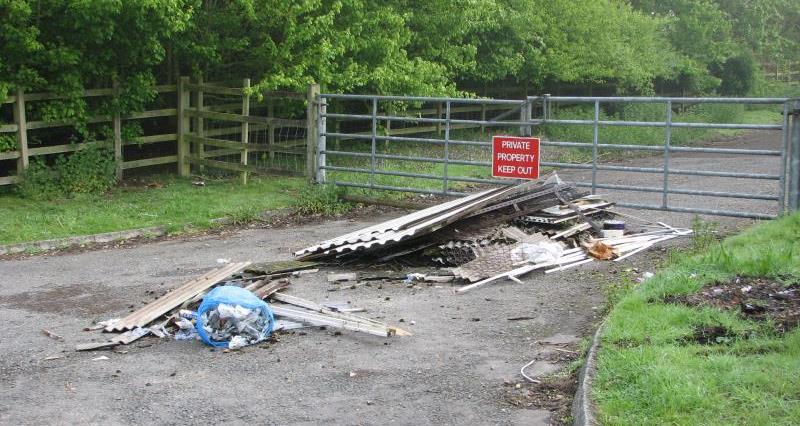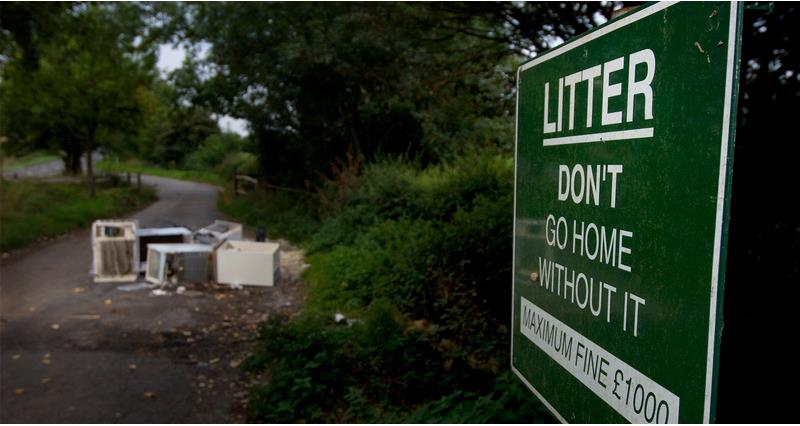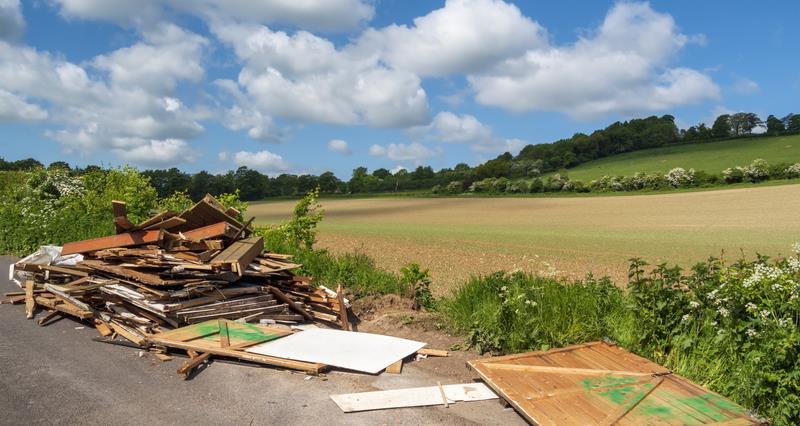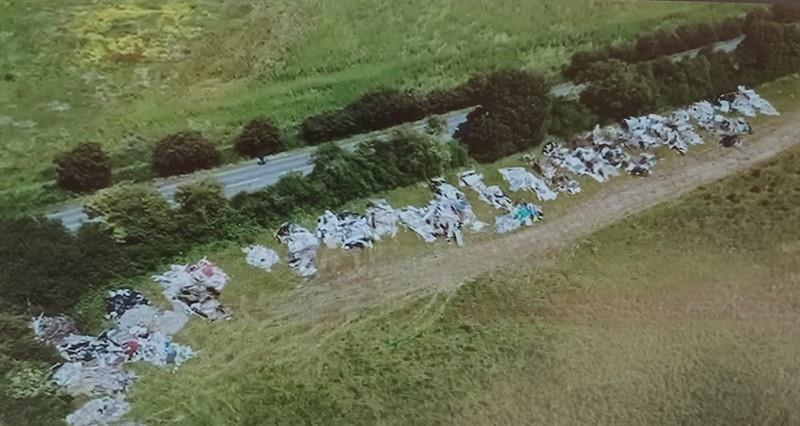
The NFU has long campaigned for tougher penalties for those responsible for fly-tipping, and rural communities could now benefit from stronger enforcement action after the government announced a significant increase in fines for fly-tipping and littering offences.
Under new legislation due to come into force this summer, the maximum FPN (fixed penalty notice) for fly-tipping will rise from £1,000 to £5,000, while the maximum fine for littering will increase by 50% to £750.
The government says the changes are designed to provide a stronger deterrent against waste crime and better reflect the harm caused to local communities, businesses and the environment.
“It vital that local authorities are properly resourced and a simplified reporting system is implemented to catch, deter and put a stop to these dangerous criminals.”
NFU Vice-president Robyn Munt
NFU Vice-president Robyn Munt said the fines should act as a deterrent, but stressed the need for local authorities were equipped to tackle the scale of the problem.
“Fly-tipping disrupts working farms, takes valuable food-producing land out of use and places an unthinkable emotional and financial burden onto British farmers and growers,” she said.
“The increase of maximum fines for fly-tippers will hopefully serve as active deterrent to waste criminals who are placing a blight on our countryside and farmland. Yet with only 1 in 1,000 fly-tipping incidents prosecuted by the police,1 1it is vital that local authorities are properly resourced and a simplified reporting system is implemented to catch, deter and put a stop to these dangerous criminals.
Package of measures
The increase in penalties forms part of the government's wider Waste Crime Action Plan, which aims to tackle illegal waste activity ranging from littering and small-scale fly-tipping to organised waste crime.
Fly-tipping remains a major concern for farmers and landowners, who are often left to cover the costs of removing illegally dumped waste from their land. Incidents can also create risks for livestock, damage crops and habitats, and disrupt farm operations.
Local authorities will retain discretion over the level of fines issued, allowing councils to decide penalties based on the severity of each offence. The government says this will ensure sanctions remain proportionate while allowing tougher penalties for the most serious offenders.
The latest announcement builds on a series of recent measures aimed at tackling waste crime, including the launch of a digital waste tracking service, tougher court powers that could lead to fly-tippers losing their driving licences, and enhanced background checks designed to prevent rogue waste operators from exploiting regulatory loopholes.
As a key member of Defra’s National Fly-tipping Prevention Group, the NFU has worked alongside the government to help issue updated guidance to local authorities on identifying and seizing vehicles used in fly-tipping offences. The guidance includes advice on gathering evidence, taking cases to court and securing convictions against vehicle owners involved in illegal waste disposal.
Reporting incidents
Anyone who witnesses fly-tipping or suspects illegal waste activity can report concerns anonymously through Crimestoppers: Give information | Crimestoppers or by calling 0800 555 111. If you witness fly-tipping actively occurring and there is a threat to your safety call the police on 999, or 101 for non-urgent active reports.
You can call the Environment Agency Incident Hotline at 0800 80 70 60 only for large-scale dumping, such as a lorryload (20 tonnes or more) of waste, hazardous or industrial materials, or organized criminal waste operations.
Share your fly-tipping incident
Completing the NFU's incident form will help us to show both local and national government the scale of the issue and strengthen our case for tougher action, so we can continue to work with the Environment Agency, national and local government, to make tackling waste crime a priority.