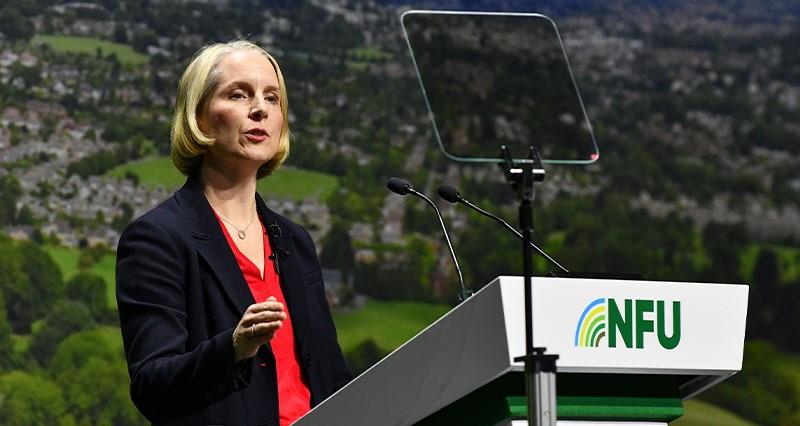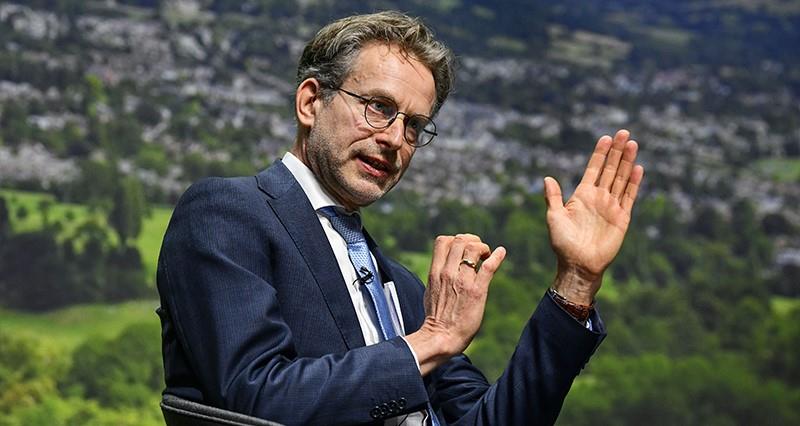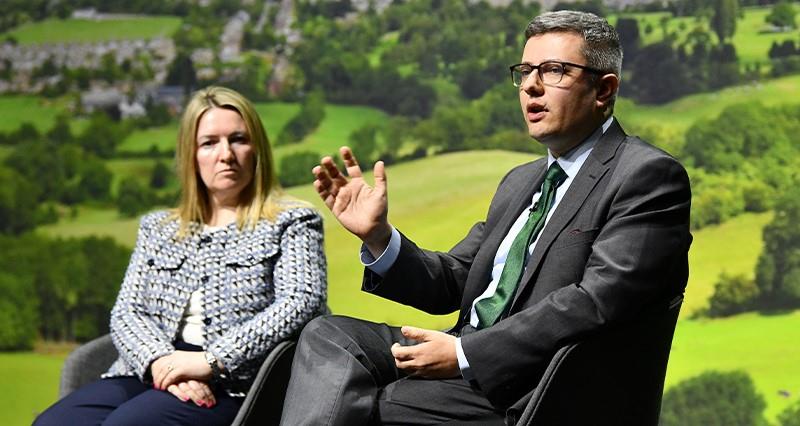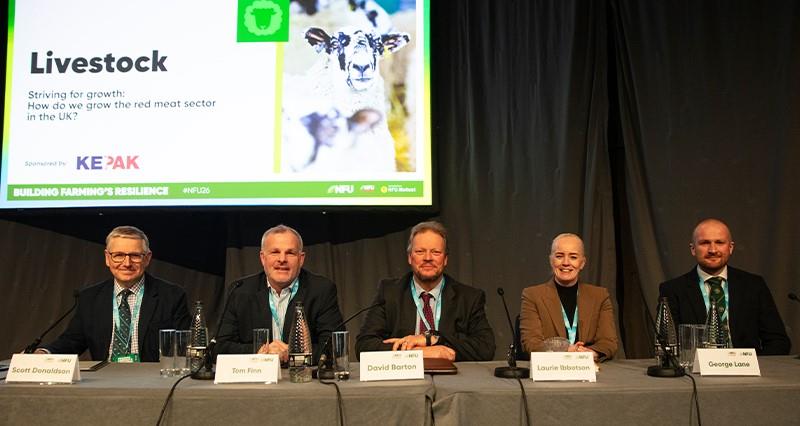
The room heard from a variety of speakers from across the red meat supply chain, from farm to fork, which included the NFU’s Regional Board chairs, who all attempted to answer the central question: how do we grow the red meat sector in the UK?
Getting rid of uncertainties within farming businesses and wider market underscored many of the panel’s responses.
Key positive messages were that consumer demand for British food remains strong, the domestic market is in a favourable position, and there are growth opportunities, especially for suckler cows.
Livestock auctioneer Scott Donaldson, director of farmstock business Harrison & Hetherington, expressed his concern at declining cattle numbers, which he said were in part down to the market for suckler cows.

He stressed that sustained financial pressures on suckler producers has discouraged new entrants. This means that rebuilding herds is now difficult due to high purchase costs.
Minimum stocking rates to ensure farmers are supported for keeping cattle and sheep on the land, Mr Donaldson said, was a potential solution.
Positive indicators for future trade
Market volatility and declining livestock numbers have “not helped” in making long-term contracts across the supply chain, said Laurie Ibbotson, assistant managing director of independent beef processor Dovecote Park.
Ms Ibbotson outlined the risk that farmers currently face when buying store cattle, unable to know finishing prices because of current instability. Declining cattle numbers, both in the UK and globally, are only adding to existing challenges.
Despite this, there are several positive indicators for future trade, Ms Ibbotson claimed. For instance, last year’s beef prices and consumer demand for British beef products remain strong.
She explained: “Looking ahead, there’s uncertainty in terms of livestock numbers, there's uncertainty around price. We need to try and make some certainty for farmers.
“When it comes to the positives, the British consumer wants British beef, and we can't be more confident in that. We are also trading globally. We know the price can stand where it needs to be as long as we can produce for that price. The market for our product is there; we need to keep using it.”
Understanding cost of production
CEO of Kepak Meat Division UK, Tom Finn agreed that more needed to be done to reduce risk within farming, calling for long term legislation to secure food security. He explained: “We need to have legislation… until you have food security written into law, you're not going to have production at the forefront.”
Mr Finn said that high beef prices and shrinking herd sizes proved that the current pricing framework is ‘broken’. Moving towards a more integrated system that accounts for cost of production and offers farmers fixed margins could be the solution, he argued. Regardless, the sector must shift away from the ‘gambling’ approach to business that has become the norm.
On finance, George Lane, senior agricultural relationship manager at Oxbury Bank, explained that lenders tend to prioritise attention to detail and a knowledge concerning cost of production when assessing applications from farming businesses.
“If you know what your costs are and you know where your margin could be at today's price or potentially further down the road, that's a really good indication that you're going to be able to manage your business if there are any pullbacks on the market, which does happen, just look at history,” George explained.
“Certainly, those people who know their cost of production, are measuring and monitoring, they are the ones that are leading the charge.”
“When it comes to the positives, the British consumer wants British beef, and we can't be more confident in that. The market for our product is there; we need to keep using it.”
Laurie Ibbotson, Dovecote Park Assistant Managing Director
Lamb tail docking and castration practices
Questions from the floor through the session explored concerns about illegal imports, bovine tB and how retailers can support domestic producers. And topics such as environmental commitments and animal welfare were thoroughly discussed by the NFU’s Regional Board chairs.
On the latter, Livestock Board Chair David Barton expressed his frustration at Defra’s recently launched consultation on lamb tail docking and castration practices.
The proposed changes to current legislation suggest routine castration and tail docking should be minimised and carried out with pain relief if employed.
The NFU is currently urging members to respond to the consultation, and has warned that the proposals, while well-meaning, could be detrimental to animal welfare if implemented.
Speaking at the Conference session, Mr Barton took particular issue with the terminology used in the consultation to describe the welfare procedures, stating: “I find the use of the word ‘mutilation’ deeply offensive, as do our members… it's unnecessary.”
NFU Livestock Board Vice-chair Oli Lee emphasised that the NFU continues to work with Defra on issues of animal welfare, adding that the “door is always open” for conversation about the industry’s challenges.
“We want to be progressive. We want to find different strategies to enhance welfare within our systems,” Oli said.
“We very much maintain the highest welfare systems in the world in terms of beef and sheep. All I can say to farmers, government officials and other industry bodies, is to engage with us on these issues – please keep that dialogue going.”
Meet the speakers:

Scott Donaldson
Director, H&H Group Plc
Aged 17, he joined Perthshire’s Macdonald Fraser and Company, now UA Ltd, as a trainee auctioneer, quickly progressing to become the youngest auctioneer to sell pedigree cattle at the renowned Perth Bull Sales at age 21.
His working life has included liaising with livestock farmers, major processors, meat wholesalers and family butchers, and his own father and grandfather were family butchers.
Scott has held a number of prominent industry positions, including senior auctioneer at Hexham & Northern Marts, chairman of Cumbria Association of Livestock Auctioneers and President of the Institute of Auctioneers and Appraisers in Scotland. He is currently a member of the AHDB Beef & Lamb Sector Council.
When away from H&H, Scott can be often found behind the bar at his family pub, The Milecastle Inn, on the edge of Northumberland National Park.

Tom Finn
CEO, Kepak Meat Division UK
With more than 28 years at Kepak, he has held several senior roles, including site manager, sales director and chief commercial officer, and played a key role in integrating the St Merryn and McIntosh Donald businesses into the group.
Coming from a family background in farming, Tom works closely with UK farmers, with Kepak partnering with approximately 3,000 farmers across the UK.
He brings a strong perspective on beef and lamb processing, championing sustainable supply and collaboration across the industry.

George Lane
Senior Agricultural Relationship Manager, Oxbury Bank Plc
George covers the central region of the UK for the bank, supporting a wide range of farming and rural businesses.
Alongside this, George is an activate partner in the family farm, which is based in South Leicestershire.
It is a mixed arable and beef farm, with the cattle enterprise centred around a commercial herd of pedigree South Devon cattle.

Laurie Ibbotson
Assistant Managing Director, Dovecote Park Ltd
Starting as a Harper Adams graduate, she had her first role as a livestock fieldsperson. She then moved around the business into new product development and commercial roles.
With her passion for livestock farming and working at home in the Peak District as an eighth-generation suckler and sheep producer, she is very practically minded and focused on consumer requirements and linking the supply chain for a long-term profitable future.

David Barton
NFU Livestock Board chair
Cereals grown on the farm are also used to feed his stock, allowing David to use the two businesses to support each other and provide sustainable produce. He also has a very small flock of pedigree poll Dorset sheep.
He has also previously stood as the NFU South West Livestock Board chair and has worked with AHDB as a strategic farm to improve profitability and efficiency.