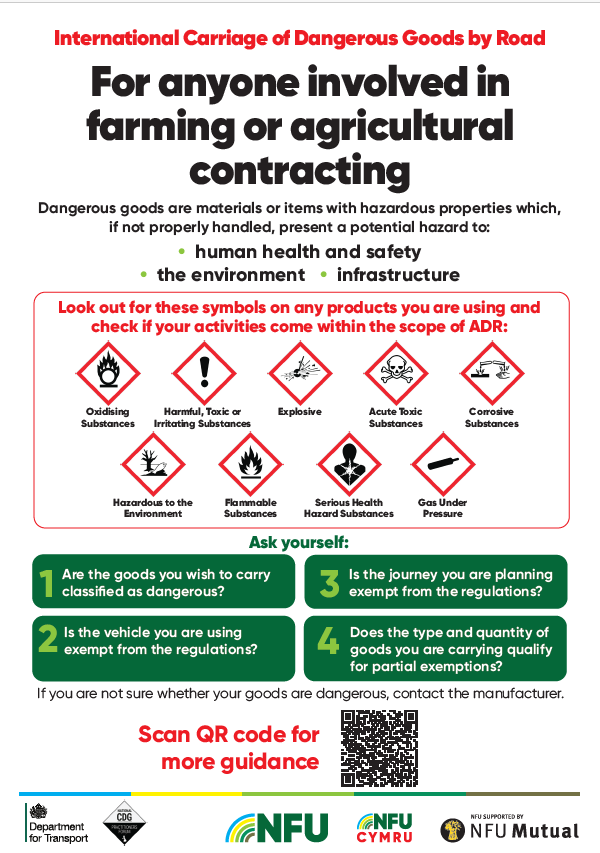
The NFU has joined forces with the National Police Chief’s Council, National Carriage of Dangerous Goods Practitioners forum, and Department for Transport to remind NFU members of the key legislation around the CDG (Carriage of Dangerous Goods) to be aware of, as well as the importance of load security when transporting such goods.
Please note, this article is for agriculture, forestry and horticulture only.
What are dangerous goods?
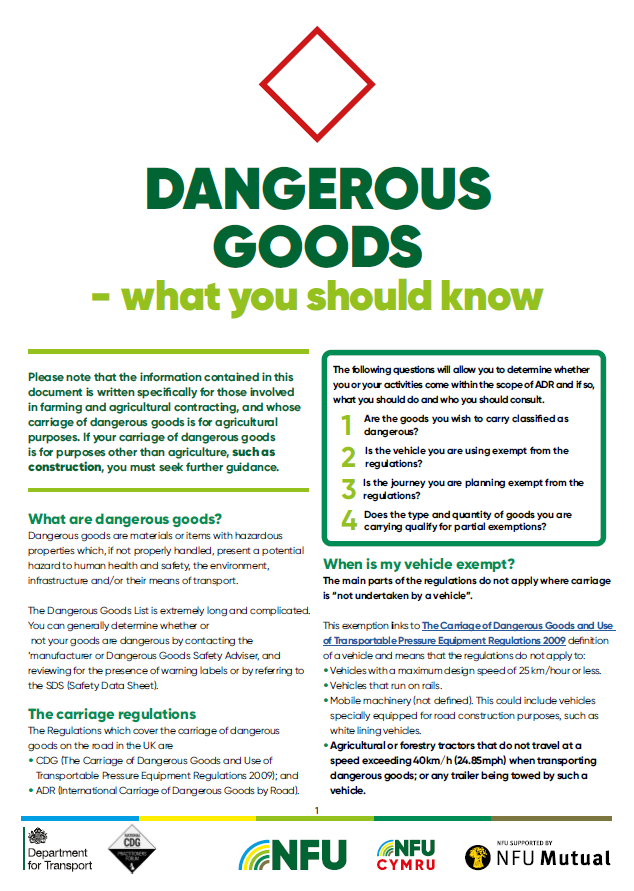
Dangerous goods are materials or items with hazardous properties which, if not properly handled, present a potential hazard to human health and safety, the environment, infrastructure and/or their means of transport.
The Dangerous Goods List is extremely long and complicated. You can generally determine whether or not your goods are dangerous by contacting the manufacturer, checking the label on the goods in question (eg, the pesticide label) or by referring to the Safety Data Sheet.
Regulations – the basics
The regulations covering the CDG are:
- The Carriage of Dangerous Goods and Use of Transportable Pressure Equipment Regulations 2009 (CDG); and
- International Carriage of Dangerous Goods by Road (ADR).
ADR provides a classification for each substance. From that classification comes legal requirements for packaging and tanks, consignment procedures (including documentation), loading and unloading and crew and vehicle requirements for the transportation of each “dangerous good”.
Driver and vehicle requirements
Generally, the following is a minimum requirement, even if full ADR compliance is not mandatory;
- General training for the driver, which must be recorded.
- A 2kg dry powder fire extinguisher or equivalent must be carried and be compliant with ADR, such as yearly testing, correct pressure and intact seal.
- The dangerous goods must be stowed properly.
Roadworthiness
Any vehicle, trailer or trailed appliance used to transport dangerous goods must be in a roadworthy condition each time it is used on a road. For example, working brakes that meet legal requirements, rearview mirrors which don’t hinder vision, and suitable tyres which exhibit no signs of balding, to name a few. If any vehicle, trailer or trailed appliance is stopped, any defects found would leave the driver and owner liable for prosecution by road law enforcement agencies or the police.
Checking machinery before use for any signs of faults and potential hazards is critical, allowing you to identify defects before they become significant and a potential danger to yourself and other road users.
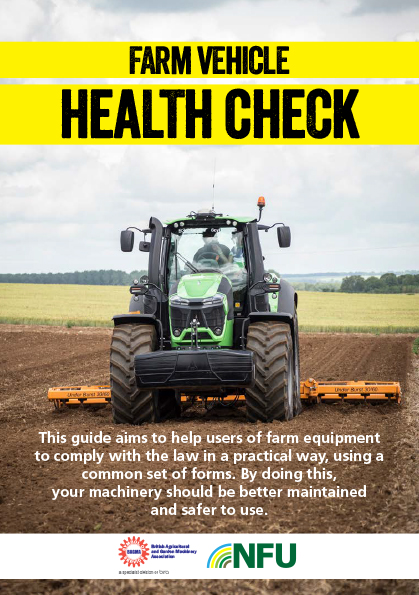
The NFU has produced a Farm Vehicle Health Check booklet which outlines some key components to check before use, helping you ensure the vehicle is correctly and safely maintained.
Diesel and small load exemptions
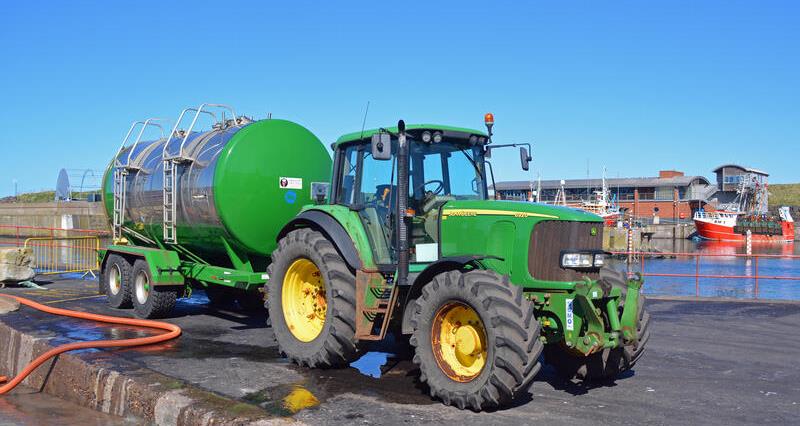
If you are using agricultural tractors to move fuel bowsers, the following conditions apply to ensure the combination is exempt from ADR regulations:
- Both the tractor and bowser must be roadworthy.
- They must be limited to a maximum speed of 25mph.
- The loaded weight of the bowser must not exceed 18.29 tonnes.
Note, this only applies to use for agricultural, forestry or horticultural purposes.
If moving fuel in bowsers with a road vehicle, such as a 4x4, and you are exceeding speeds of 25mph, ADR regulations apply. However, if you are travelling at less than 25mph, ADR small load exemptions apply:
- Basic dangerous goods training. A record of this must also be kept.
- Limited to a capacity of 1,000 litres (if 1,000 litres is exceeded, full ADR regulations apply).
- A fire extinguisher that complies with ADR chapter 8.1.4 must be carried in the car / driving cab and labelled accordingly.
The HSE has produced a CDG manual, providing further detail on small load exemptions, the main exemptions, and general information on the CDG.
Load security
Load security is a vital part of safe and legally compliant practice. Properly securing loads reduces the chance of movement during transit, which could otherwise create risks for the driver, other road users, and the environment.
Regular checks of ratchet straps, chains and other securing equipment are essential; straps should be inspected for wear, fraying or damage, and replaced when necessary to maintain reliability.
Containers such as IBCs (Intermediate Bulk Containers) or fuel tanks must also be carefully examined before transport to ensure they are in good condition and free from leaks. Even small spills can cause environmental harm or create hazards on the road, so prevention is key.
Ensuring loads are stable, evenly distributed, and secured with the correct equipment helps to safeguard everyone involved and aids legal compliance.
Working with young people
Extra care should be taken when having a young person undertake a task involving dangerous goods. The young person should have received the necessary dangerous goods training, including what to do in the event of an accident eg, use of spill kit, as well as be competent at handling the vehicle and/or machinery used to undertake the task.
For more information on young people at work, visit: HSE.GOV.UK | Young people at work.
Ensure you’re compliant
In summary, the transport of dangerous goods by agricultural machinery requires careful attention to safety as there’s potential dangers involving the driver, other road users and the environment.
For the driver, ensuring loads are well secured and machinery is in good working order helps maintain safe operation during transport. Other road users may be affected if an accident occurs, so roadworthiness and regulatory compliance are important in preventing risks.
Spillages or accidents involving dangerous goods also have the potential to significantly damage the environment.
By following best practice in machine maintenance and compliance with safety regulations, the industry can play a vital role in reducing the likelihood of an accident occurring.
For more a more detailed breakdown of the regulatory requirements and associated best practice read our resource document.
You can also download our poster as a handy visual guide on what to look out for and where to go for further information.