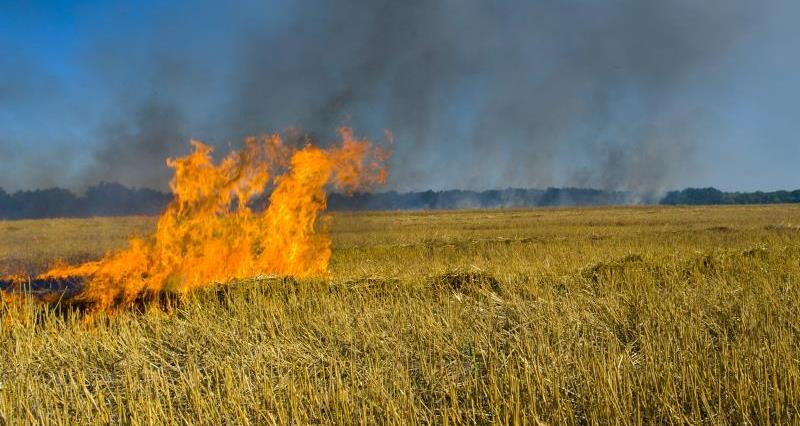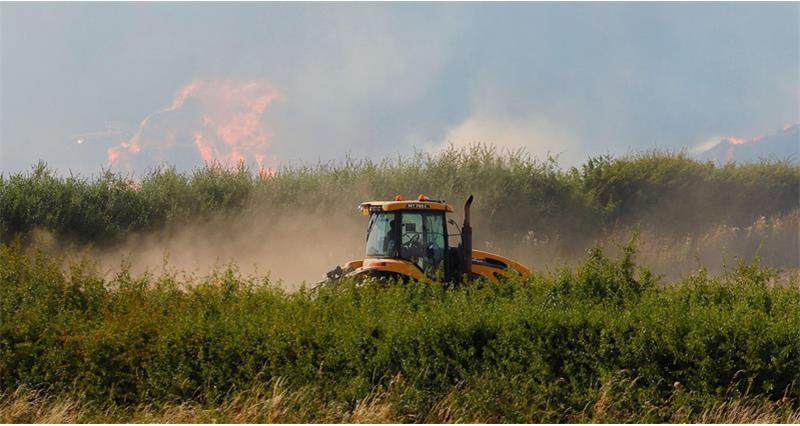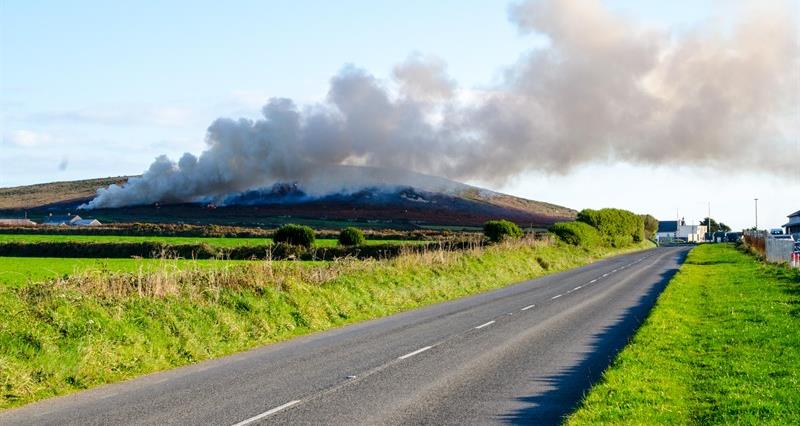
Wildfires are becoming more frequent in England and, as well as fears they will continue to increase unless policy changes are made, there are concerns about the danger they pose to life in rural areas.
During the past six years, they have become more prevalent, as predicted by some organisations, with several factors thought to have led to this upward trajectory.
“Firstly, climate change is a factor,” explains Henrietta Appleton, policy adviser at the Game and Wildlife Conservation Trust. “We are seeing problems with warmer and wetter winters contributing to vegetation growth, meaning there is more fuel available, followed by hot, dry summers.
“Secondly, government policy is playing its part. Along with restrictions on prescribed burning and grazing, there is a growing trend to utilise newer methods of management such as cutting – which can increase the fuel for fires if the brash is left behind – and relying on rewetting to mitigate wildfire risk.
“We have also seen increased levels of access to these moorland areas for recreational use by the public, which has brought with it some cases of anti-social behaviour and incidents of arson.” See how the NFU is working to remind the public to act responsibly and follow the Countryside Code.
Threat to human life
Wildfires not only have a detrimental impact on the habitats they engulf, but also have associated costs and present a rising threat to human life.
“Our real fear is that sooner or later a wildfire is going to lead to the loss of life,” says Henrietta. “If we are not managing the vegetation, once a fire starts you are relying on suppression and the Fire and Rescue Service.
“Allowing the vegetation to grow intensifies the fire, helping it to spread. They are getting to a point that they are beyond control. Some of the flame lengths we have seen in recent wildfires are beyond suppression from the ground and have had to rely on aerial intervention, which is expensive. Also, taking into account that many of these areas are remote and inaccessible to some of the equipment makes it even harder to control.”
A report by the National Fire Chiefs Council shows that 380 wildfires were recorded between January 1 and April 11, 2025 – significantly more than the 188 in the same period in 2022, a year which saw record-breaking temperatures and then-unprecedented wildfire activity in the UK.
Further research by the Moorland Association revealed that wildfires cost the UK more than £350 million last year alone. Data in the paper shows that more than 35,000ha of land burned across the UK in 2025, with an average cost of £10,000 per ha.
Flaws with the licensing system
Despite these alarming numbers, little appears to be changing. While not all influencing factors are controllable, there are concerns that some policy changes by the government could further compound the issue.
The Heather and Grassland Burning Regulations 2021 banned burning to control vegetation on peat at a depth of 40cm in Sites of Special Scientific Interest, Special Protection Areas and Special Areas of Conservation without a licence.
A new proposal last year extended the ban to peat more than 30cm deep, as well as increasing the zones into Less Favoured Areas, meaning a large increase in the hectarage of areas where a licence is required to conduct a controlled burn. Additionally, there are flaws with the licensing system.
“Currently if anyone wants to burn on these areas they have to apply for a licence from Defra,” says Henrietta. “The process to get a licence is stopping many people from applying as it is time consuming and not always successful, so the system isn’t delivering for either Defra or land managers. There needs to be better confidence in the process to ensure vegetation is being managed correctly.”
Process discouraging applicants
Richard Bailey from the Peak District Moorland Group tackled several wildfires last year. A former gamekeeper and member of the Peak District Fire Operations group, he sees first-hand the barriers to proper land management.
“We’ve been told if it is a genuine issue to apply to Defra for a burning licence,” he says. “But it is not so straightforward as there are extra folds to the licence application process. We are practical people who have hands-on experience of managing moorland. It is very disheartening to have to go through this process and not always get a licence to enable us to do the management.
“There have only been three successful licence applications out of six made, so this will make Defra and the government think it is not an issue, but in reality all the hoops that need to be jumped through to get the licence are putting people off.
“We have already seen some huge fires in the Peak District and the season is starting earlier in recent years, from around February/March, so it’s important something is done.”
Further collaboration needed
Scientific research at the University of York suggests that prescribed ‘cool’ burning on peat supports active growth and long-term net carbon uptake, with negative impacts being short-term and less severe than often claimed.
“A lot of policy direction is a drive by government towards net zero and looking towards protecting carbon storage,” Henrietta continues.
“There are carbon emissions at the point of a fire being lit but when the habitat grows back it offers more carbon capture. We need to have a genuine conversation about managing semi-natural habitats in the best way that is in the interest of all parties, as well as benefiting a whole suite of public goods such as wildlife and carbon capture.”
Henrietta adds: “There is evidence that the best management of moorland areas supports at-risk birds like curlew and merlin and reduces the risk of wildfire and flooding.
“It’s important we act now to try and address the issues being caused or the worst-case scenario is that we are going to end up contributing to the nature crisis rather than supporting its recovery.”