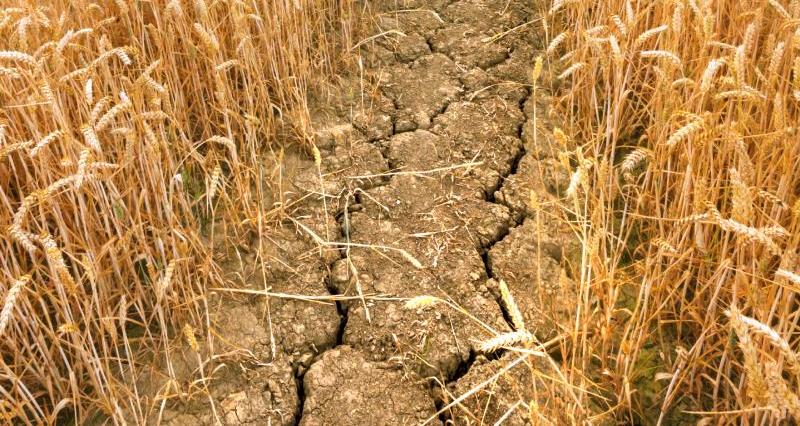
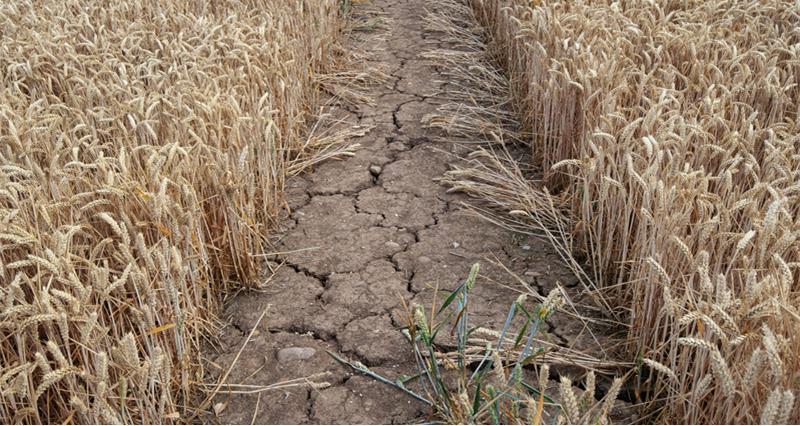
East Anglia, Hertfordshire and the whole of London, Thames Valley, Hampshire and the Isle of Wight, Devon and Cornwall, the West Midlands and Wessex (covering Dorset, Somerset, Wiltshire, and south Gloucestershire) are now officially in drought.
Kent and East Sussex, Cumbria and Lancashire, Greater Manchester, Merseyside and Cheshire, the East Midlands, Lincolnshire and Northamptonshire and the rest of Solent and the South Downs are now in prolonged dry weather status.
As drought grips parts of the country after a third heatwave, the NFU warns that farmers and growers urgently need secure, reliable access to water if they are to keep producing food for 29 million households.
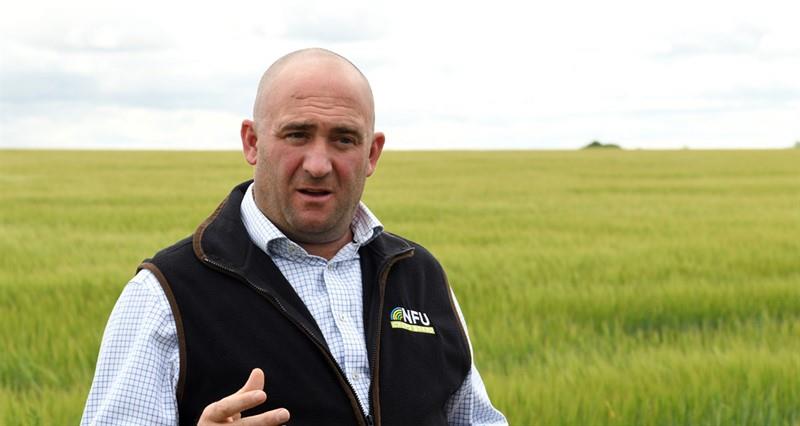
NFU Deputy President Paul Tompkins said: “Farmers and growers have always had to contend with the weather, but what they are experiencing now is climate change in action. Across every sector and every part of the country, farmers and growers are seeing first-hand the impact of dry weather and drought, with more extreme conditions making it harder, riskier and more costly to produce the nation’s food.”
Immediate action to take now
“Water is a vital ingredient in food production, and without a secure supply, we cannot build resilient farm businesses or strengthen the country’s food security.”
NFU Deputy President Paul Tompkins
Paul continued: “There are practical steps government and the water supply chain can take now. That means creating a risk register for vulnerable farm businesses, improving local communications, being adaptable as possible with abstraction so farmers can access water when it rains and unlocking the investment and planning changes needed to build more reservoirs.
“With joined-up government, this can be achieved. Securing water for farming means securing the food on the nation’s plates.”
Immediate actions that can be taken to make growing the nation’s food easier and bolster water resilience now and in the future are:
- Streamline the planning system – making it quicker and easier for farmers and growers to build water storage to prepare for future dry periods.
- Government, EA (Environment Agency) and water companies to create a risk register for vulnerable business water users – critical farm businesses such as livestock, poultry and high-value horticulture need access to water to support animal welfare and business viability.
- Continued improvement to local EA communications – this includes bringing together water companies and WAGs (Water Abstraction Groups) to provide clear, timely information on water levels, likely cessation notices, restriction timelines and when water may be available again.
- Flexible abstraction licences to reflect our changing climate – so farmers can take and store water when it rains.
- Trigger opening the Water Management Grant – which will provide specific support for investment in on-farm reservoirs.
NFU working for you
The NFU addressed the acute pressures facing farmers across the sectors at the latest National Drought Group meeting – a meeting chaired by Minister Hardy and attended by Deputy President Paul Tompkins alongside NFU experts.
The NFU translated these pressures into key actionable asks built around increasing coordination, support and flexibility for farmers, which Paul presented to a receptive Minister Emma Hardy.
Following this meeting, Minister Hardy asked Defra, the NFU and water companies to work together on immediate resilience measures to support vulnerable businesses, including exploring options such as a livestock register.
Extreme weather ‘frequent and intense’
Today’s drought announcement comes as the country marks 50 years since the worst drought on record.
The Met Office’s recent report shows that extreme weather has become more frequent and intense over the past decade, while the NFU’s own 10-year weather survey found that 70% of farmers reported an increase in heatwaves and heat stress, making farming riskier and more difficult.
Paul added: “This should matter to everyone. Water is a vital ingredient in food production, and without a secure supply, we cannot build resilient farm businesses or strengthen the country’s food security.”
For the latest information and advice, visit our dry weather information page.
For more information, visit: Drought declared in half of England | GOV.UK
Impact across the sectors
Although farmers and growers continue to do all they can to mitigate the impacts of the drought, the NFU is aware of the following issues across our farming sectors and is actively working with government, regulators, water companies and the supply chain in the National Drought Group to identify solutions.
Overall, high demand on public water supply due to several heatwaves and continued hot weather is increasing the risk of low pressure and water outages for businesses. Private supplies, such as boreholes, remain at risk while water levels drop potentially adding to the demand on public supply if they fail and producers switch to mains sources.
Fresh produce
Dropping water levels mean the Environment Agency has had to bring in cessations to abstraction in some areas which has had an immediate impact on sectors that depend on irrigation, and where there are limited stocks of stored water, such as for fresh produce production.
For those with stored water early irrigation means stocks of water are rapidly depleting.
Poultry
Poultry producers and processors continue to need access to water to maintain the health of their flocks and movement of birds in the supply chain.
Livestock and dairy
Livestock and dairy businesses will see an increase in demand for water from animals in hot conditions and an increased risk of heat stress in cattle already leading to a reduction in milk volumes with 18.5 million litres wiped off yields in recent weeks.
Read more: How have the recent heatwaves impacted GB milk production? | AHDB
The ongoing lack of rainfall combined with high temperatures is hampering grass growth with livestock and dairy farmers noting that the quality of forage is affected and some turning to feeding winter forage and concentrates.
Arable
Arable farmers are reporting an impact on yield and quality. High temperatures and low crop moisture levels have meant much of this year’s combining has taken place at night or in the early hours.
Members can help the NFU gather data via the harvest snapshot survey ahead of the AHDB’s 2026 Harvest Progress report to create a clear picture of yields, crop quality and the impacts of this year’s weather.
Looking ahead, the challenge for many growers now is drilling next year’s crop. With low soil moisture levels and continued heat, drilling is unviable for both arable crops and SFI seed mixes, meaning delays to establishment and further stress for growers who are already under significant pressure.
Sugar
For sugar beet, while generally quite resilient to drought, the prolonged dry period has put the crop under increased stress which has in turn impacted emergence, development and yield as well as the increased threat from pests and disease.
A lack of moisture may lead growers to consider irrigation, which adds to the cost of production and is only possible where water is available.
The NFU will continue to support members and explore the impacts of extreme weather on farm businesses to feed into our conversations with government.