Once again, harvest has arrived early, following weeks of prolonged hot and dry weather.
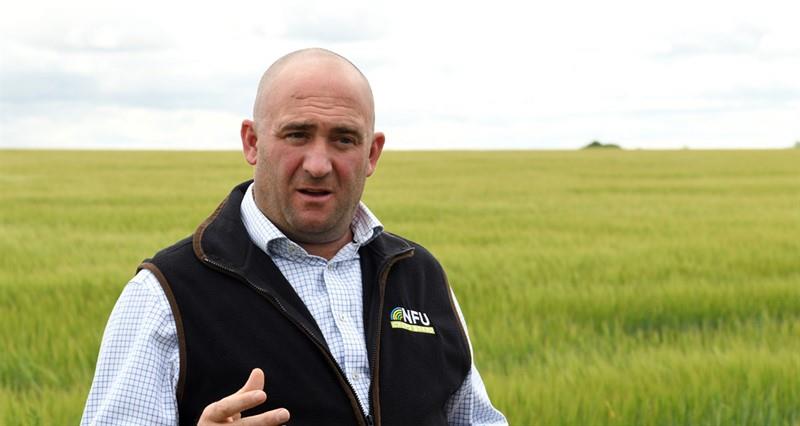
As the NFU Combinable Crops Board Chair, I want to use this piece to take a first look at how the 2026 season is unfolding, and to ask you, our members, to help me build a clearer picture of what's happening on your farms.
I'd encourage every grower to complete our short harvest snapshot survey. Giving us a picture of your yields, crop quality, and what you're seeing from this year's extreme weather all help us build an accurate national picture, one that strengthens our case when we take these issues to government.
Harvest should mark the culmination of a year's hard work, investment and risk taking, the point where we finally see a return on our commitment. Yet once again, many of us in arable businesses are facing serious challenges, from extreme weather and volatile input costs to further examples of unfairness within the supply chain.
Our short harvest snapshot survey is now closed.
A view from the field
The picture I’m seeing emerge from harvest 2026 is one of variability. Prolonged dry conditions have accelerated crop development and brought harvest forward across many areas, but results are differing significantly by crop, region and soil type.
As I speak to growers across the regions, I can see combines working through the small hours to avoid the worst of the heat. With many of us close to finishing winter barley, yields are generally ranging from 7.0 to 9.0 t/ha, averaging around 8.5 t/ha and typically slightly below last season.
Where oilseed rape has reached harvestable condition, I’m hearing yields between 3.5 and 4.75 t/ha, including around 4.5 t/ha in parts of the Midlands. That’s a positive sign for the crop, and it fits with the gradual recovery we’ve seen in the national area over recent years.
What’s become more apparent is that early wheat yields are far more variable. Some crops look excellent and are showing strong grain quality, with specific weights of 78 to 82 kg/hl and higher proteins than last year, yet yields can still fall below the five year average. I’ve heard of one first wheat that yielded just 7 t/ha, around 2.5 t/ha below the farm average, despite looking well and achieving 80 kg/hl.
The full picture of harvest 2026 will only become clear as we go.
Government must take action
Britain’s arable farmers are facing a combination of rising production costs, increasing climate pressures and continued uncertainty across global markets. At a time when food security and domestic production have never been more important, government has a clear opportunity to demonstrate its backing for the UK combinable crops sector.
I’m calling on government to enact the recommendations set out in our Fertiliser Resilience Plan, ensuring farmers and growers have access to a stable, competitive and resilient fertiliser market. As a point of solidarity with growers and the wider agricultural supply chain, I also urge government to delay the implementation of the CBAM (Carbon Border Adjustment Mechanism) until there is greater certainty that it won’t create additional costs or distortions for UK food production.
We’re already adapting to a changing climate, but we need the tools to do the job. Having visited the NIFTYR programme at Rothamsted myself, I’ve seen the potential of this Defra-funded research and the positive step forward it could represent for UK arable farming. The programme is developing wheat with improved drought tolerance, stronger disease resistance and greater yield resilience, helping reduce our reliance on increasingly limited crop protection options.
The priority now must be to fast-track promising material through on-farm trials and into commercial breeding programmes, so growers can benefit as quickly as possible. This is exactly the kind of innovation that can deliver productivity, environmental outcomes and food security together, rather than forcing us to choose between them, building greater resilience in an increasingly challenging climate.
Just as importantly, government must now publish the findings of the Fairness in the Supply Chain Review for the combinable crops sector and move quickly to implement its recommendations. While I understand there have been delays, growers cannot afford for this work to drift further.
Market restrictions are already being imposed at the point of sale, with some mills indicating they won’t accept wheat below 12% moisture and advising growers not to wet grain, effectively shifting commercial risk further onto producers. Greater transparency, fairness and consistency throughout the supply chain are essential if we’re to have confidence in the market and the ability to invest in our businesses.
To deliver meaningful reform, Defra must reconvene and resource the team that led this work, so momentum isn’t lost.
We need a supply chain that rewards quality, shares risk more fairly and provides clear, transparent trading conditions. A resilient and competitive combinable crops sector depends not only on innovation and productivity but on growers receiving a fair return for the risks we take in producing food to increasingly demanding specifications.
It is more important than ever that government takes practical action to strengthen the resilience and competitiveness of the combinable crops sector. The challenges facing UK agriculture require urgent, coordinated action. Delivering on these priorities would send a strong signal that government recognises the strategic importance of home-grown food production, and is prepared to support the long-term resilience and competitiveness of British arable farming.