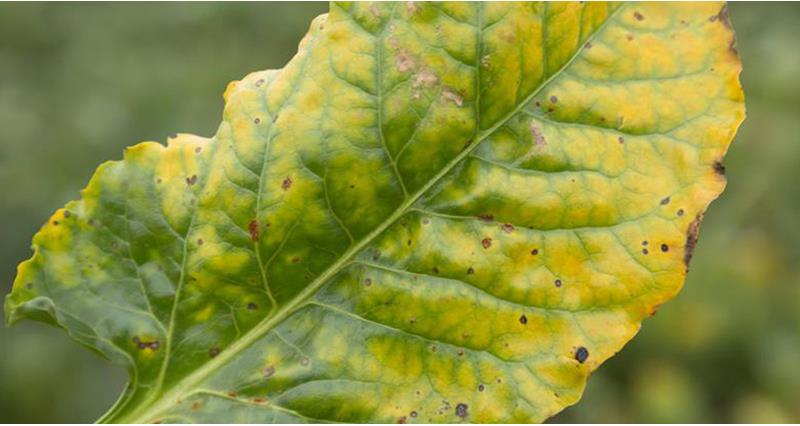
The first aphid is forecast to fly on 22 April.
Run independently by the Rothamsted Research Institute for more than 60 years, the Rothamsted model produces a scientific, statistically robust forecast of aphid pressure each March based on weather data from the preceding winter.
Despite the January frosts, warmer than average temperatures, particularly through February, are likely to have provided suitable conditions for the overwintering of aphid populations.
“We continue to call on government to adopt an enabling, science-led, risk-based approach to plant health.”
NFU Sugar Board Chair Kit Papworth
NFU Sugar Board Chair Kit Papworth said that Virus Yellows remains “the single biggest threat to the homegrown sugar beet sector”, adding that the forecast is “particularly concerning”, given the limited toolbox of control options available to UK growers and the increasingly wider complex of novel pest and disease pressures.
Remain vigilant
It is important to note that 59.15% will be the highest level of projected Virus Yellows pressure that the UK sugar beet sector has faced without neonicotinoid seed treatments since the Virus Yellows pandemic of 2020. That year, 38% of the crop was infected nationally with total yields down 25%. Some individual growers suffered infection levels of up to 80%.
With this in mind, growers are urged to remain vigilant this growing season. Timely and appropriate use of aphicides will be required if crops reach the spray threshold of 1 aphid per four plants (up to the 12-leaf stage). Growers will again have access to a three-spray programme in 2026 of acetamiprid, flonicamid, and flupyradifurone.
In season advice will be issued by the BBRO (British Beet Research Organisation) as aphid pressures build, with monitoring information made available via the CropWatch network.
Further information and regionalised forecasts are available on the BBRO website.
NFU Sugar Board Chair Kit Papworth added: “We continue to call on government to adopt an enabling, science-led, risk-based approach to plant health. And we remain opposed to granting preferential access to imported sugar deriving competitive advantage from having been produced in ways which simply wouldn’t be legal here in the UK.
“We need joined-up policy and a level-playing field for UK growers to protect the long-term viability of our sector.”