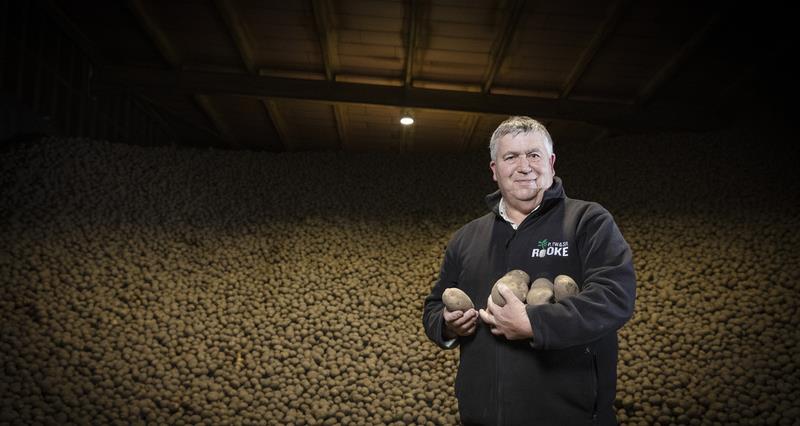
What do weight-loss drugs mean for the potato sector?

Tim Rooke
NFU Horticulture and Potatoes Board Vice-chair (potatoes)
As millions of consumers alter their eating habits through the use of GLP-1 weight-loss medications NFU Horticulture and Potatoes Board Vice-chair and Potato Policy Group Tim Rooke examines the risks and opportunities for the sector.
Why GLP-1 drugs matter to the food industry
Weight-loss medications such as Wegovy, Ozempic and Mounjaro are moving rapidly from a healthcare story to a food industry story.
While discussion has understandably focused on the public health implications, there is growing recognition that these medicines have the potential to reshape consumer food choices and, ultimately, agricultural markets.
Research suggests uptake is increasing rapidly. IGD found 3% of British adults had already tried weight-loss injections in 2025, with 11% expressing an interest in using them in the future.
Meanwhile, more recent research suggests millions of households are already being affected by changing purchasing habits linked to GLP-1 use. Worldpanel by Numerator found 6.3% of British households now include at least one GLP-1 user. That’s up from 2.3% in 2024.
The behavioural changes are significant.
Users report feeling fuller for longer, experiencing fewer cravings and buying fewer impulse purchases.
Studies have found reductions in purchases of confectionery, crisps and other snack foods, alongside growing interest in protein-rich, fibre-rich and nutrient-dense products.
Consumers are often opting for smaller portions, but they are paying closer attention to nutritional value.
At first glance, this could appear concerning for the potato sector.
What could this mean for potato demand?
If consumers eat fewer calories overall and reduce snacking, there may be implications for parts of the potato market, particularly products associated with indulgence, convenience or larger portion sizes.
Any reduction in demand for crisps, which are already among the categories most frequently cited by GLP-1 users as being consumed less often, could have consequences for processors and growers supplying that market. However, that is only part of the picture.
The same consumer trends could create new opportunities for potatoes.
Adapting to changing consumer habits
As shoppers seek nutritious, filling foods that support healthier lifestyles, potatoes compare favourably with many alternatives and deliver satiety at a relatively low-calorie cost.
The British Nutrition Foundation identifies potatoes as a source of potassium, thiamine (vitamin B), vitamin C and fibre. They also fit well with the growing focus on whole foods rather than highly processed alternatives.
In fact, if consumers become more selective about where they obtain their carbohydrates, potatoes could benefit.
A baked potato, boiled new potatoes or potatoes used as part of a balanced meal may become increasingly attractive to consumers looking for nutrient density, convenience and value.
UK potato consumption: the long-term picture
The trade-off for our sector may therefore be less about overall potato consumption and more about which potato products consumers choose.
We could see pressure on some processed categories while demand grows for fresh potatoes, smaller pack sizes, healthier meal solutions and products that clearly communicate nutritional benefits.
Retailers are already responding to GLP-1 consumers with more protein-rich, nutrient-focused and health-oriented ranges. Potatoes should be part of that conversation.
Ultimately, the rise of GLP-1 medications is another reminder that agriculture must remain closely connected to changing consumer expectations.
For potato growers, the challenge is not to resist these trends, but to demonstrate where potatoes fit within a healthier, more balanced diet. If we do that successfully, the sector can be well placed to benefit from changing habits rather than be threatened by them.
Some facts about UK potato consumption
According to Defra Family Food Statistics, UK potato consumption has been on a long-term downward trend over the past 50 years.
In 1974, UK households were purchasing around 1.4kg of potatoes per week, with the vast majority (1.3kg) being fresh potatoes.
This has steadily declined to 550g in 2024, with fresh potatoes dropping to around 330g per week, disrupted only by a notable spike in 2020 as the pandemic hit.
The proportion of processed potato consumption has risen steadily. Today processed products make up about 40% of purchases by weight. In 2024, households bought around 225g of processed potatoes a week, up from around 120g a week in the late 1970s.
This was a slight dip from 242g the previous year, but numbers have hovered around the 250g since the turn of the century.
Chips made up around half of all processed potato purchases in 2024, with crisps accounting for a further 27%. While fresh potato purchases continue to fall, processed potato products have remained resilient.
Vypr research for The Grocer, published in April, reveals that 69.5% of people tuck into a bag of crisps at least once a week, while 10.7% eat them every day and 23.2% most days, making them a major part of UK diets.