The report looks at how the EA (Environment Agency) works with the agriculture sector to improve the water environment in England.
For farmers, the report is a significant intervention. It recognises the work they are already doing to protect water quality, but it also makes clear that agriculture will remain a focus for regulation and inspection.
This matters across all sectors. Arable, horticulture, dairy, livestock, poultry and mixed farming businesses all have a role to play in nutrient management, soil health, water use, flood resilience and protecting watercourses.
Environment and farming not at odds
British farmers produce food to some of the highest standards in the world while caring for the environment they live and work in.
Farming and the environment are not at odds.
Farmers understand that a healthy soil and clean water are vital to their businesses, and while there are areas to improve, progress is already underway.
The NFU believes that farmers need targeted investment, proportionate regulation and practical support to go further.
Continuous improvement
The EA says approaching 20,000 improvement actions have been completed on farms since April 2021, ranging from fixing guttering to replacing slurry stores.
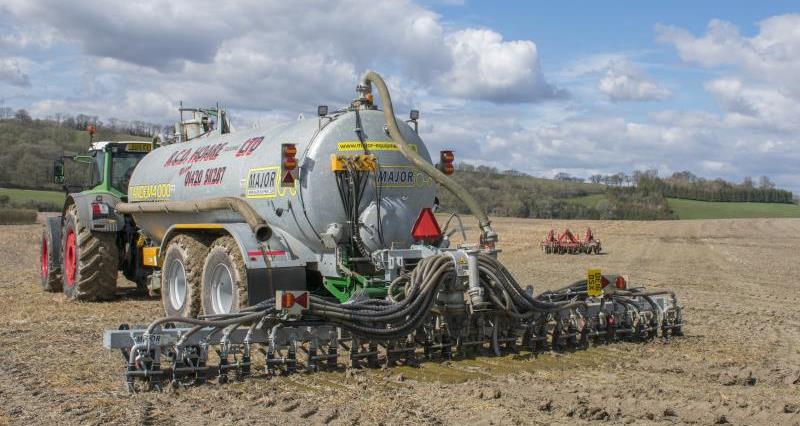
This is particularly relevant for dairy and livestock farms, where slurry, dirty water, silage effluent, yards, tracks and livestock access to watercourses can all increase pollution risk if infrastructure is under pressure.
Farmers in England must comply with the Farming Rules for Water when managing organic manures, manufactured fertiliser, soil and livestock.
These rules require farmers to take steps to prevent diffuse agricultural pollution from reaching inland freshwaters, coastal waters, springs, wells, or boreholes.
The report found that the top improvement actions over the 5 years were:
- Slurry and dirty water storage: stores, channels, reception pits and associated infrastructure must be fit for purpose and do not allow leaks or overflow.
- Yards and clean/dirty water separation: gutters, drains, and downpipes should be checked to keep clean rainwater out of dirty water systems where possible.
- Silage clamps and effluent systems: checks should be made after heavy rainfall.
- Nutrient planning: applications of organic manures and fertilisers should be planned to meet crop and soil needs and checked that they do not pose a significant pollution risk.
- Watercourses and field risk: consider slopes, ground cover, soil type, land drains, and proximity to ditches, streams, rivers, springs, wells or boreholes before spreading.
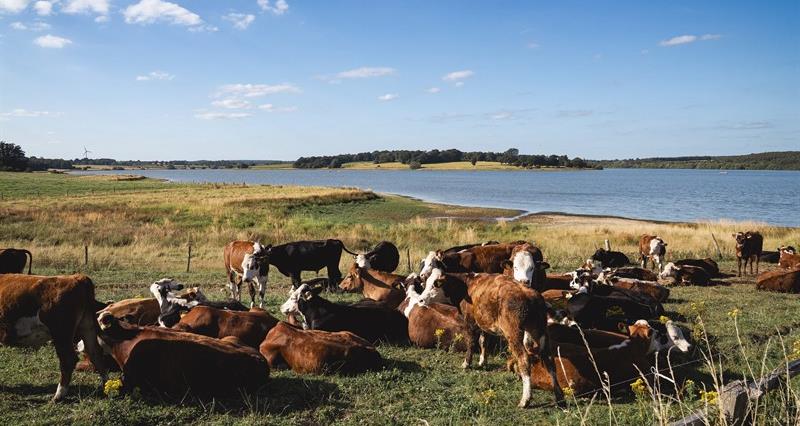
- Livestock access: look at gateways, tracks, poached areas and drinking points near watercourses where soil, manure or nutrients could run off.
- Records and paperwork: EA guidance says inspectors may look for evidence such as nutrient management plans, field application records, soil analysis, farm maps, risk maps, manure management plans and weather records.
“Targeted investment, advice and practical regulation will deliver the food the nation needs, as well as healthy waterways and an environment for all.”
NFU Deputy President Paul Tompkins
Read the Agriculture and the water environment: 2026 report on GOV.UK.
NFU response
NFU Deputy President Paul Tompkins explained: “Farmers and growers care deeply about the environment they live and work in. Producing high quality food and improving our water quality can and must go hand in hand.
“This report presents a picture of improving action on water quality, but it shows too the scale of the challenge remaining, as well as revealing that failures can be as simple as missing paperwork during an inspection.
“Across the country, farmers and growers are already taking practical, on-the-ground steps to protect and improve water quality. This includes working in partnership with environmental organisations and water companies through catchment-based initiatives, investing where possible in farm infrastructure, and participating in agri-environment schemes that deliver benefits for water, wildlife and the wider landscape.”
Increased inspections are an immediate priority
The report looks at permitting working alongside advice and inspections, but rather than expanding permitting straight away, the EA will scale up inspections and has committed to increasing the number of farm inspections from 4,000 to 6,000 by 2029. They plan to use remote sensing inspections to help achieve this goal.
Currently, permitting is focused on intensive sectors such as pig and poultry, and is not used for the livestock sector.
At present, permitting is positioned as part of a wider regulatory toolkit. However, the report makes clear that it is being considered where risks are greatest.
Moving in the right direction
Paul Tompkins said: “We’re pleased to see the report showing that farm businesses are already moving in the right direction, with a 5% decrease in non-compliances in the last year compared to the five-year average. This has been achieved by collaboratively working with farms. We urge the EA (Environment Agency) to continue to follow this path, rather than costly and bureaucratic permits which would stifle the very investment on farm to support the reduction of non-compliance.
“We are working with the dairy and beef sectors to develop alternative approaches that will deliver better outcomes for air and water quality. Our message to government and EA is that targeted investment, advice and practical regulation will deliver the food the nation needs, as well as healthy waterways and an environment for all.”
The need for practical support
The Agriculture and the water environment: 2026 report shows both the progress being made on farms and the scale of the challenge ahead. The NFU believes farmers need clear advice, proportionate regulation and targeted investment to help deliver further improvements.
Dairy farmers in particular face major infrastructure costs, especially when slurry or dirty water systems need upgrading. Regulation alone will not solve this. Farmers need practical support that helps them invest with confidence while continuing to produce high-quality food.
The NFU will continue to work with members, government, the EA and supply chain partners to make sure future regulation is fair, workable and focused on outcomes.