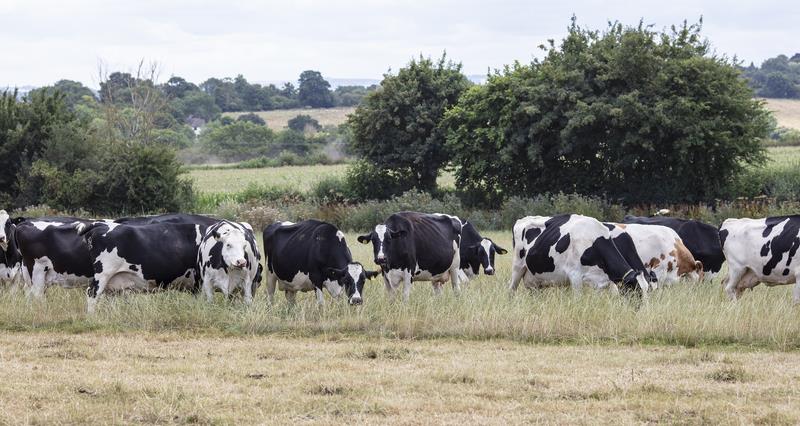
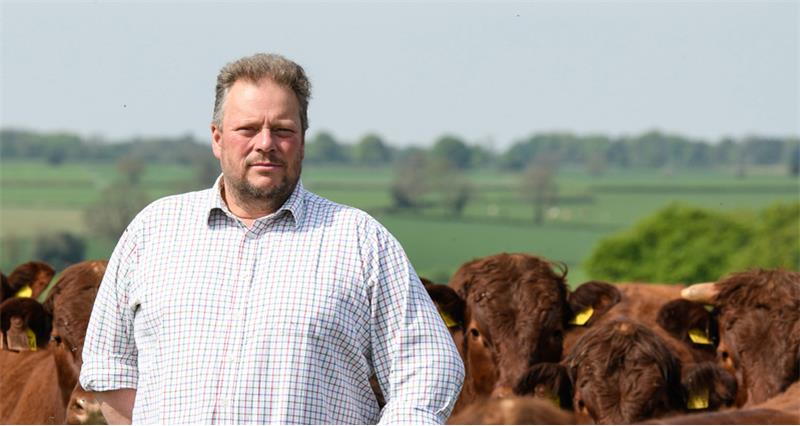
NFU Livestock Board Chair David Barton is among many farmers facing extreme pressures on farm due to the driest spring and summer in nearly seventy years.
Prolonged dry conditions mean that in some areas of the country there has been very minimal grass growth and livestock and dairy farmers are struggling to graze their animals and secure winter forage stocks.
On David’s farm, the ground is extremely dry and there has been no meaningful rainfall since February.
David has already been forced to start feeding his cattle winter fodder he had set aside. Normally he wouldn’t have started feeding his cattle fodder until October, but today his feed stocks are as low as they would look in December.
Last year, in response to extreme wet weather, Defra granted farmers derogations on land in agri-environment schemes without financial penalties, but this flexibility has not been offered again.
As a result, many farmers’ agreements prevent them from using that land to graze their animals without losing out on environmental payments.
This lack of flexibility in Defra policy means David is in the same situation as many farmers, where agreements don’t allow access to parts of their farms in agri-environment schemes, to feed their animals in times of serious need, without financial penalties.
“There’s a real disconnect between what’s happening on the ground and how government is responding. Farmers are doing everything they can to protect animal welfare and deliver environmental outcomes, but we must have some flexibility and support.”
NFU Livestock Board Chair David Barton
Disconnect in policy application
This is causing significant concern for the health and welfare of livestock and dairy animals across many parts of the country as feed supplies are simply not there.
“Not only is this costing me a significant amount to feed cattle that should be out enjoying the fresh grass at this time of year, but I am also really concerned about whether my supplementary feeding is giving my cows enough nutrients and subsequently calf growth rates are much lower,” said David.
“I’m also really concerned about what this will mean for the winter months, as the cost of having to buy in extra feed will be high because so many other livestock farmers will be in the same position.
“There’s a real disconnect between what’s happening on the ground and how government is responding. Farmers are doing everything they can to protect animal welfare and deliver environmental outcomes, but we must have some flexibility and support.
“Right now, confidence in the sector is already low, and the total lack of understanding and empathy or urgency from Defra is compounding an already difficult time for many farmers.”
“With increasingly extreme dry and wet periods, there must be greater flexibility in agri-environment schemes.”
NFU Deputy President David Exwood
‘Greater flexibility’
NFU Deputy President David Exwood is clear that future SFI design must address issues such as these to ensure farm businesses are resilient to climate pressures, deliver environmental targets, be rewarded fairly for the public goods they provide and safeguard our domestic food supply.
“We’ve consistently raised concerns with government this summer about the lack of flexibility to graze on land in environmental schemes without risking the loss of scheme payments,” he said.
“Some farmers have made applications for derogations yet received little consideration for the realities on the ground.
“Going forward the government’s core pillar of adapting to a changing climate must be reflected in future SFI scheme design.
“With increasingly extreme dry and wet periods, there must be greater flexibility in agri-environment schemes – to protect animal welfare, ensure farmers are paid fairly for the environmental work they deliver and safeguard our national food security.”
Minor and temporary agreement changes
It is important to contact the RPA as soon as possible if you are struggling to deliver on an agri-environment scheme due to dry weather.
The RPA will advise on the best way forward, such as a minor or temporary change to an agreement. The process varies depending on the scheme:
- Countryside Stewardship or HLS agreements – request a minor and temporary amend.
- SFI – use the change of circumstance process.
SFI requires you to email or write to RPA with details of the change you want to make. Find more information at: GOV.UK | SFI scheme information (section 13.2)
The RPA will deal with requests on a case-by-case basis. Please note that adjustments to agreements could lead to agreement values being amended.
Contact the RPA
- Email: [email protected]
- Phone:03000 200 301
Get more practical advice on dealing with dry weather conditions in our Dry weather information and advice