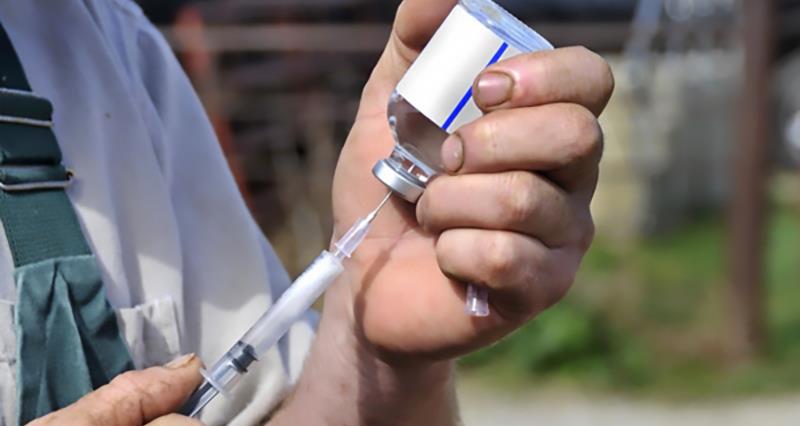
Sales of antibiotics for use in UK livestock remain at their lowest recorded levels, the VMD (Veterinary Medicines Directorate) has reported, continuing the success story of voluntary efforts under the industry’s RUMA (Responsible Use of Medicines in Agriculture Alliance).
The latest VMD monitoring report put overall sales in 2024 at 15.6mg/kg, down 0.3mg/kg on 2023 and amounting to a 57% reduction since 2014.
Farm sales of the most critically important antibiotics for humans (HP-CIAs) remained at the same exceptionally low level of 0.06mg/kg, making up less than 0.4% of total sales.
The UK remains one of the lowest on-farm users of antimicrobials in Europe, with rates lower than any EU country with a significant livestock farming industry, and has achieved some of the biggest cuts.
“This year’s report shows that through the ongoing hard work of vets and farmers across the UK we can make real progress,” said VMD CEO Abi Seager.
Your hard work paying off
The figures underpinned a broadly positive update from the taskforce of UK farmers and vets that has co-ordinated the sector’s response to AMR (antimicrobial resistance) – the rise of bugs in animals and humans that are unaffected by some of our most important medicines. RUMA’s latest progress report was also released in November. Read: RUMA.org.uk | Latest RUMA Agriculture Targets Task Force report released
RUMA chair and NFU Chief Adviser Animal Health and Welfare, Cat McLaughlin, said the “continued effort and commitment” from the UK livestock sectors was “clear to see”.
She noted: “While reductions in use have been significant during the past decade, we are starting to see a plateau and it is vital that sectors still have the ability to use antibiotics when it is appropriate – with a right time, right place and right situation approach.”
Drill-down ruminant stats needed
The overall picture again made for encouraging reading, but both the VMD and RUMA highlighted that drill-down figures for the beef, sheep and dairy sectors were limited by uptake of the Medicine Hub recording project.
That meant that the VMD did not include individual figures for antibiotic use in the beef sectors, while the data for dairy represented 39% of animals, and sheep 8%.
Both organisations said continued progress on those datasets was needed to drive home the high welfare standards in UK production.
However, the available reporting on antibiotic use in cattle, dairy and sheep was promising, reinforcing the view that use is low.
The dairy figures came in at 6.8 mg/kg and finished lambs at 6.3 mg/kg.
Sales of injectable HP-CIA products in 2024 were the same year-on-year, at 0.08 mg/kg (0.19 mg/PCU), and have now fallen by 81% (0.34 mg/kg) since 2014. That figure was well inside the RUMA target for2024, as was the use of tubes for dairy cows, which has seen a 98% reduction since 2014.
Other sectors
Poultry producers are often cited as having led the way on antibiotics and, despite low-level use in the sector for several years, the figures for broilers fell again by 0.92 mg/kg on 2023 (16%), representing a 77% cut since 2014.
After four successive reductions, layer businesses recorded a very small increase of 0.06%, with a metric of 0.28% of bird days equivalent to a 58% reduction on 2016. Antibiotic use in turkeys was up 19% between 2023 and 2024, from 16.6 mg/kg to 19.7 mg/kg – but still 82% down on 2014. All those figures were well inside RUMA’s targets for 2024.
Use in pigs saw a 2% increase to 50.0 mg/kg, a reduction of 69% since 2015, but short of a RUMA target of 42.7 mg/kg. However, the figure was achieved against the context of a removal of zinc oxide from wiener diets and continued swine dysentery and porcine reproductive and respiratory syndrome (PRRSv) pressures.