Bacterial Potato Wilt and Bacterial Vegetable Wilt, present in potatoes and other vegetable crops, are similar diseases to SBR.
There are two types of SBR caused by different pathogens, Candidatus Phytoplasma solani, also known as the Stolbur phytoplasma, and the Proteobacterium Candidatus Arsenophonus phytopathogenicus.
Both variants cause a significant reduction in sugar yield, and a reduction in sugar beet biomass. Decreased sugar content and increased impurities caused by SBR can make processing sugar beet more difficult and lead to economic loss for growers and processors alike.
What to look out for
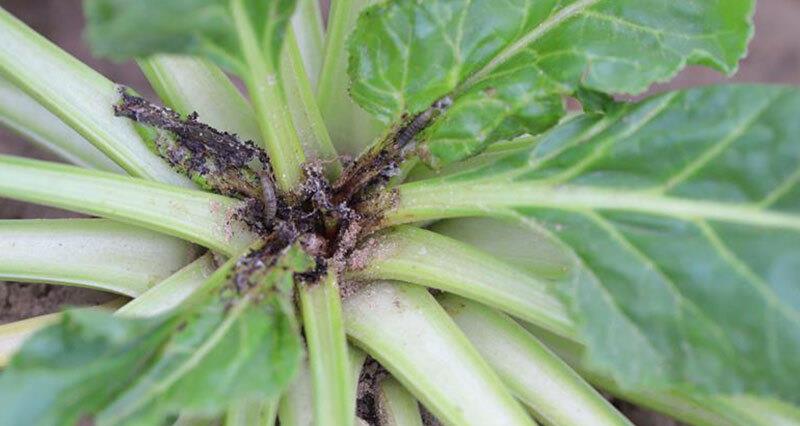
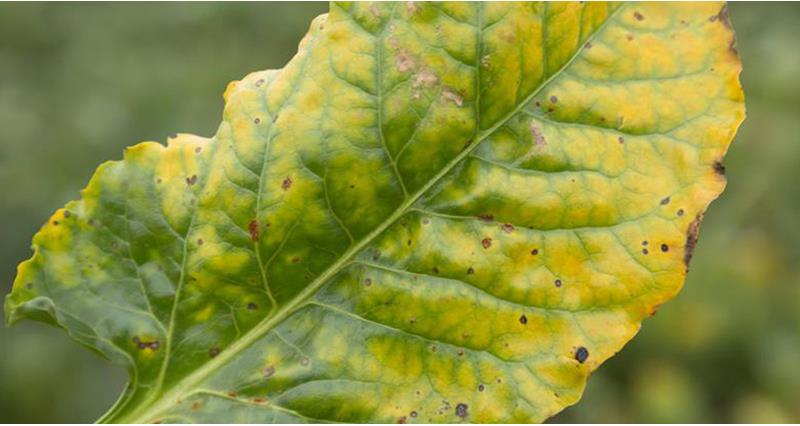
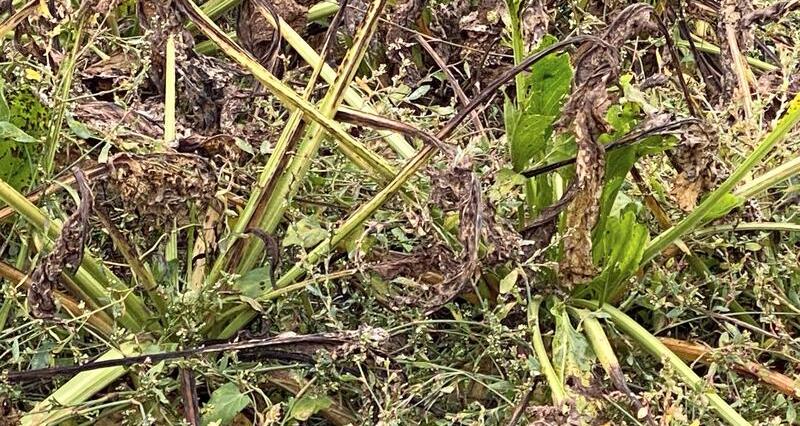
Signs of SBR depend on which pathogen infects the plant. Symptoms can include yellowing of the leaves, deformed lanceolate-shaped heart leaves, wilting leaves, browning of cell walls in the root, and a soft and rubbery taproot.
How widespread is SBR?
SBR is not currently present in sugar beet in the UK. However, there have been notable infections in France and Germany which led to significant yield losses and economic challenges.
Spread and infection
The Stolbur variant is more widespread across Europe although the Arsenophonus variant is also present across Western Europe including Germany, Switzerland and France.
SBR is caused by planthoppers (Pentastiridius leporinus) which transmit bacteria when they feed on the plant in Spring. Female planthoppers will also lay their eggs nearby. Once hatched, nymphs continue the transmission of the disease by feeding on the parts of the plant that are underground until harvest. After harvest, nymphs overwinter in winter crops, particularly winter wheat.
Planthoppers have a reproductive potential that allows for rapid population growth.
What can be done to treat SBR?
Currently, there are no farming practices or plant protection strategies that would be able to control significant infestations and disease infection below an innocuous threshold. There are management options which can help limit the buildup of the planthopper.
No resistant sugar beet variety has been identified, although partially tolerant varieties can, to a certain extent, help to lessen symptoms.
Crop rotation can also play a role in controlling planthopper populations. Following sugar beet with winter wheat proliferates populations more than following sugar beet with summer crops such as maize or fallow.
Harvesting earlier can help to disrupt the feeding of nymphs and interrupt their development cycle.
Research and development
The BBRO (British Beet Research Organisation) said: “Climate change is encouraging new pests and diseases further north across Europe and so it is critical that the BBRO continues to remain vigilant and keep a close watch on the UK crop for new threats, such as SBR, to ensure our sector is aware of any developing challenges.”
“Alongside intelligence from the mainland continent, the BBRO uses close surveillance to develop a better understanding of changes to pest and disease behaviour under our conditions. This supports the BBRO’s work towards identifying appropriate control strategies that will protect the future of our industry”
Regulatory environment
Farmers must be allowed a comprehensive set of tools to manage the pests and diseases that can cause serious damage to their crops.
Where effective crop protection strategies are established, the NFU continues to work with key stakeholders to lobby and ensure that the GB regulatory framework allows timely access for growers to the appropriate tools they need to tackle novel pests and diseases – whether that be biological or chemical controls, seed treatments or foliar sprays. This includes more effective and efficient implementation of risk-based pesticides regulation, driven by the robust and consistent application of scientific evidence.