The emergency authorisation for a single application of Coragen applies from 3 June to 30 September and requires growers to record:
- The date(s) and location(s) of any application of ‘Coragen’ and number of hectares treated in accordance with this Emergency Authorisation.
- The percentage of crop affected by beet moth.
- The fate of treated sugar beet tops (tops of Coragen-treated sugar beet must not be fed to or grazed by any livestock).
After the emergency authorisation expires, all growers will be required to submit information via My British Sugar regarding whether Coragen was used.
This information will then be submitted back to the regulator to evidence industry compliance. This is essential to support any potential future applications from industry for emergency authorisation.
Full details of the emergency authorisation including full terms of use and stewardship requirements can be found on the BBRO website.
“Looking forward, I urge government to work with industry to ensure the availability of viable controls in future seasons.”
NFU Sugar Board Chair Kit Papworth
When to treat
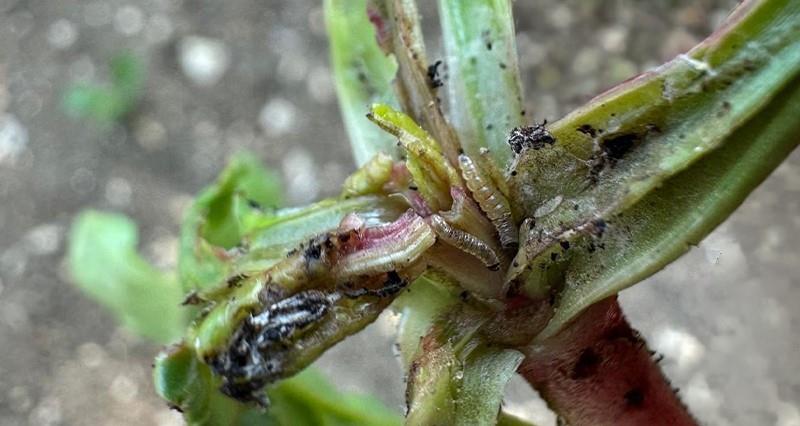
Growers are urged to check and treat with Coragen at the first signs of damage on plants. Growers should thoroughly inspect the heart leaves of multiple plants for signs of infestation, including feeding damage to petioles of emerging leaves, black frass (faeces) on the heart leaves, or silk spun by larvae.
To aid the active in reaching target caterpillars, high water volumes are required to penetrate the canopy.
In light of sustained high aphid pressure, the BBRO is advising against the use of pyrethroids as a means of caterpillar control at this time to negate any effects on beneficial insects. Growers can now access up-to-date beet moth monitoring data via the CropWatch section of the BBRO website, along with the latest guidance and information.
What is beet moth?
Beet moth (Scrobipalpa ocellatella) is not regarded as a regular pest in the UK. It is known to be more problematic in Mediterranean areas and across Eastern Europe and Asia with warmer and drier climates, where caterpillars tend to mine into the stems and crown causing damage to the heart of sugar beet.
However, hotter and drier conditions in the UK have supported increased reproduction and spread of beet moth populations in recent years with some growers citing 6-figure losses as a result of beet moth infestation in 2025. Increased numbers have already been trapped/detected this year, and populations may continue to migrate, dependent upon weather conditions, until October.
As in 2025, considerable drought stress puts this year’s crop at further risk of infestation, with crowns more exposed for moths to lay their eggs and for caterpillars to burrow into.
Chair’s view
NFU Sugar Board Chair Kit Papworth said: “Beet moth represents the latest troubling addition to the broad complex of pest and disease pressures facing the homegrown sugar beet crop.
“With many growers already suffering from severe infestation in 2026, we welcome the decision to grant emergency authorisation for the use of Coragen this growing season.
“The British Beet Research Organisation is leading the charge to better understand this novel pest and develop effective methods to mitigate the threat it poses. Looking forward, I urge government to work with industry to ensure the availability of viable controls in future seasons.”