Most people start a business by registering it online or applying for finance, but not Gruffydd (Gruff) Rees of Dryslwyn, Carmarthenshire. Gwenyn Gruffydd, Gruff’s honey farm that now spans three Welsh counties, began in the woods one night.
How Gruff Rees got started in beekeeping
One day, years ago, Gruff was chatting to a farmer friend when the man mentioned he used to keep bees on his land. It was 20 years ago and they’d long stopped production, but the man believed some of the hives were still standing. Gruff, who was a countryside ranger at the time, had always wanted to be a farmer and despite having little practical knowledge of beekeeping, was seriously considering getting his first hive. He’d mentioned the idea to practically everyone he knew, so he thought it was time to take action.
“You don’t have to be great to start, but you have to start to be great. That’s another of my mottos and it’s important to remember.”
Gruff Rees, bee farmer
What followed was something out of a fairytale. When Gruff asked about the hives, his friend, like a sage sending our hero on a quest, suggested that he should go into the woods and see what he could find – if there were any hives still intact, he could have them.
When Gruff went down to the woods that night, he was in for a big surprise. Every one of the hives he found had rotted away – apart from two.
These two were protected by a sheet of corrugated iron, which had sheltered them from the worst of the decay. However, when Gruff went to pick them up, he realised the abandoned bee homes were in fact still occupied, and the tenants did not take kindly to being evicted.
After negotiating the hives and their residents into the back of his dad’s truck, Gruff dropped them off in his garden. Stung ‘to hell’, looking at what was left of the hives, this is when our hero began to question everything. Had he bitten off more than he could chew? Could he really become a bee farmer with two hives and next to no experience?
Just when Cinderella believed she couldn’t go to the ball, her fairy godmother came to the rescue. Dorian, a bee farmer from the next village over, having heard through the grapevine about Gruff’s enthusiasm, arrived, as if by magic, on his doorstep to offer a helping hand. While he couldn’t turn pumpkins into carriages, Dorian did what any good fairy godmother would do – he offered our hero advice on what to do next.
“So, you want to keep bees, do you?” he asked Gruff.
“Yeah, I’ve got these two hives, and I’ve got no idea what I’m doing,” Gruff replied.
If Dorian had a magic wand, this is when he would have waved it; for it was agreed there and then that Gruff would spend the summer with him learning all about the trade – and that’s exactly what happened. Gruff spent every weekend that summer at Dorian’s farm, getting hands-on experience of beekeeping and mending his two old hives in the process.
Looking back on the whole thing, Gruff believes fate had its part to play in the outcomes of this story. He believes in what many of us would call ‘manifesting’; in other words, focusing your thoughts and actions on what you want and letting the universe answer your call. While Gruff calls it ‘destiny’, some might say it was meant to ‘bee’.
From two hives to a commercial beekeeping business
Gruff has come a long way since his two hives and now has around 400 across his ever-expanding enterprise. Not all are used for honey production; some are commercial hives that the business sells on to other farms and hobby beekeepers. As well as honey and hives, the business also sells beekeeping equipment and manufactures its own candles and beeswax wraps.
When we spoke to Gruff in October last year, he and assistant beekeeper Andy had just finished harvesting their crop, where they take the honey boxes from the hives, and were preparing their bees for winter.
What does a commercial beekeeper do?
“What we’re doing at the moment is getting the bees ready for a few months in the hives. We’ve got to treat them in a similar way to how you’d worm a cow when it comes into the shed for the winter. We kill all the mites off the bees, and then if they need feeding, we feed them. We feed them sugar syrup, so they’ve got enough reserves.
“This year has been pretty good to us. We haven’t needed to feed them that much. Last year was a terrible year. We had to feed them tonnes just to make sure they had enough feed to go into the winter.
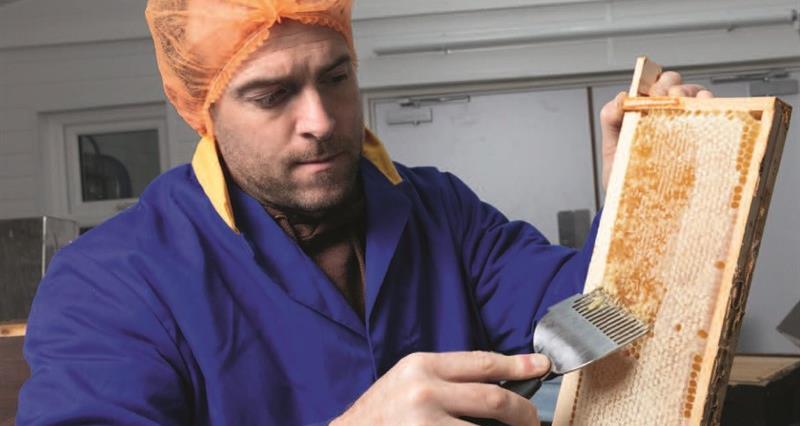
“Simultaneously, we’re now bringing the boxes into the honey house. We cut the wax off the frames to expose the honey. We spin that out using centrifugal force. That honey goes down into a sump, the wax is filtered out of it, it gets pumped into a tank, and then we store it in buckets for next year.
“It’s like any other kind of farming, like arable. If it’s the middle of summer, this year’s wheat isn’t here yet, so you’re eating last year’s wheat in the slice of toast you had this morning. It’s the same thing with honey; you’re always eating last year’s product.”
Is there demand for beekeeping in the UK?
“The demand for bees from the hobby sector is pretty strong. Commercial bee farmers don’t buy any bees, not unless they’re cheap, because they’ll just make their own, so that’s where the hobby sector comes in.
“It’s estimated that there are 80,000 beekeepers in the UK, but only 400 of them are commercial. Most beekeepers are at that scale. They don’t produce a lot of honey, but they certainly turn the wheel of beekeeping in the UK.”
Can anyone become a beekeeper?
“I think there’s been a big rise in beekeeping recently, and I think the internet has been a big factor in its development.
“We sell all our bees on the website. We ship our bees UK-wide, so you don’t actually have to come here to get them. That has made beekeeping way more accessible. If you were to go back when I started keeping bees, unless you knew a beekeeper, it was next to impossible to start beekeeping. Where would you go and buy bees? There wasn’t anywhere to go but to someone you knew personally.”
Beekeeping training and apprenticeships
“If you were lucky enough to know a beekeeper, they’d have to be willing to sell you a hive. You know, it was next to impossible. The knowledge wasn’t there either. If you wanted to learn about beekeeping, you physically had to go to an association and learn in a club environment. A lot of people haven’t got the time, or they feel that it’s a bit awkward to do that when you’re a bit older. It wasn’t ideal.
“Whereas now you can learn beekeeping off videos. These are the type of videos we create, and there are other people doing those sorts of videos too. You’ve got all this free content out there now that just didn’t exist before.
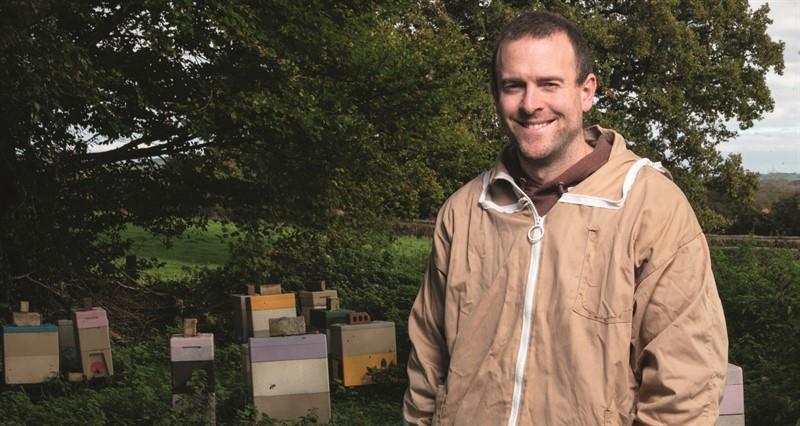
“If you had a big enough garden, you could keep bees. That’s not possible with other sectors of farming. You physically have to own or rent a few acres to be a sheep or cow farmer. So, you know, there’s a big barrier to entry there; whereas with beekeeping, that’s not really there anymore.”
Advice for starting a beekeeping business
“I would say a lack of options was a bit of a barrier for me. Most of the courses out there are about beekeeping as a hobby. If you want to be a bee farmer, doing one of these courses is a bit like having 500 acres and going to a smallholding association club, where they teach you how to farm one acre of land. It’s a different world altogether.
“Also, nobody in my area was operating on the scale that I am at now, so I didn’t have many points of reference. As I said, it’s part of the reason why I do what I do with my YouTube videos; I go around visiting big bee farms to show people what it’s like.
“I knew I needed to start somewhere so I went and did a course with the Beekeeping Association. It was six weeks total, two hours every Sunday. It was okay – not as good as the hands-on experience I had working with Dorian; and I do remember thinking, ‘well, this isn’t good enough for me’. I never wanted to be a hobby beekeeper. I wanted to be a bee farmer. That’s why getting practical experience was so useful.
“The best way to get into bee farming is, basically, by working at a commercial bee farm to learn the ropes. You’ll learn the way they do stuff, something the books don’t teach. The only issue is that the training opportunities in the sector are still pretty rare.
“We ran an apprenticeship scheme two years ago, and our apprentice is still with us now; and we’ve also got someone coming in soon to train as a beekeeper. We’re doing our bit.”
What advice would you give to anyone setting up a business in this sector?
“One of the biggest problems with farming is the risk you take. A friend of mine taught me this years ago: never have any one customer take more than 20% of your business. If 50% of your income is dependent upon one company or person – let’s say it’s a retailer – and something happens at that retailer, you’ve had it.
“That’s not the case with my business. If I lose a retailer, then it doesn’t matter. If you put your entire business in the hands of someone else, you might think you’re in control, but you’re not.
“You don’t have to be great to start, but you have to start to be great. That’s another of my mottos and it’s important to remember. I didn’t have much experience when I set up the business and look where we are now.”