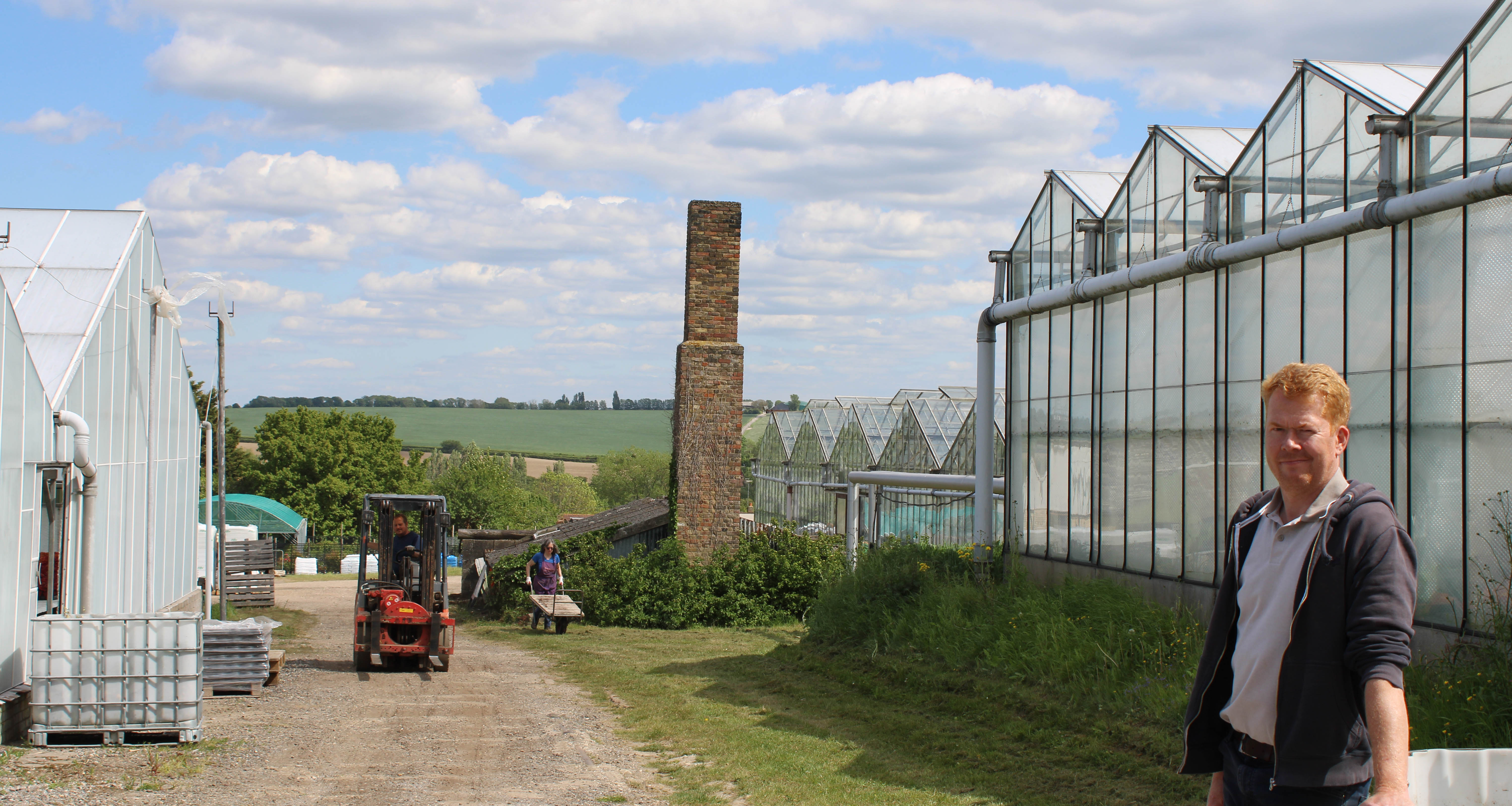
Late spring and Ian Mills’ Creswick Nursery, at Darenth, near Dartford, is at its busiest and most vibrant.
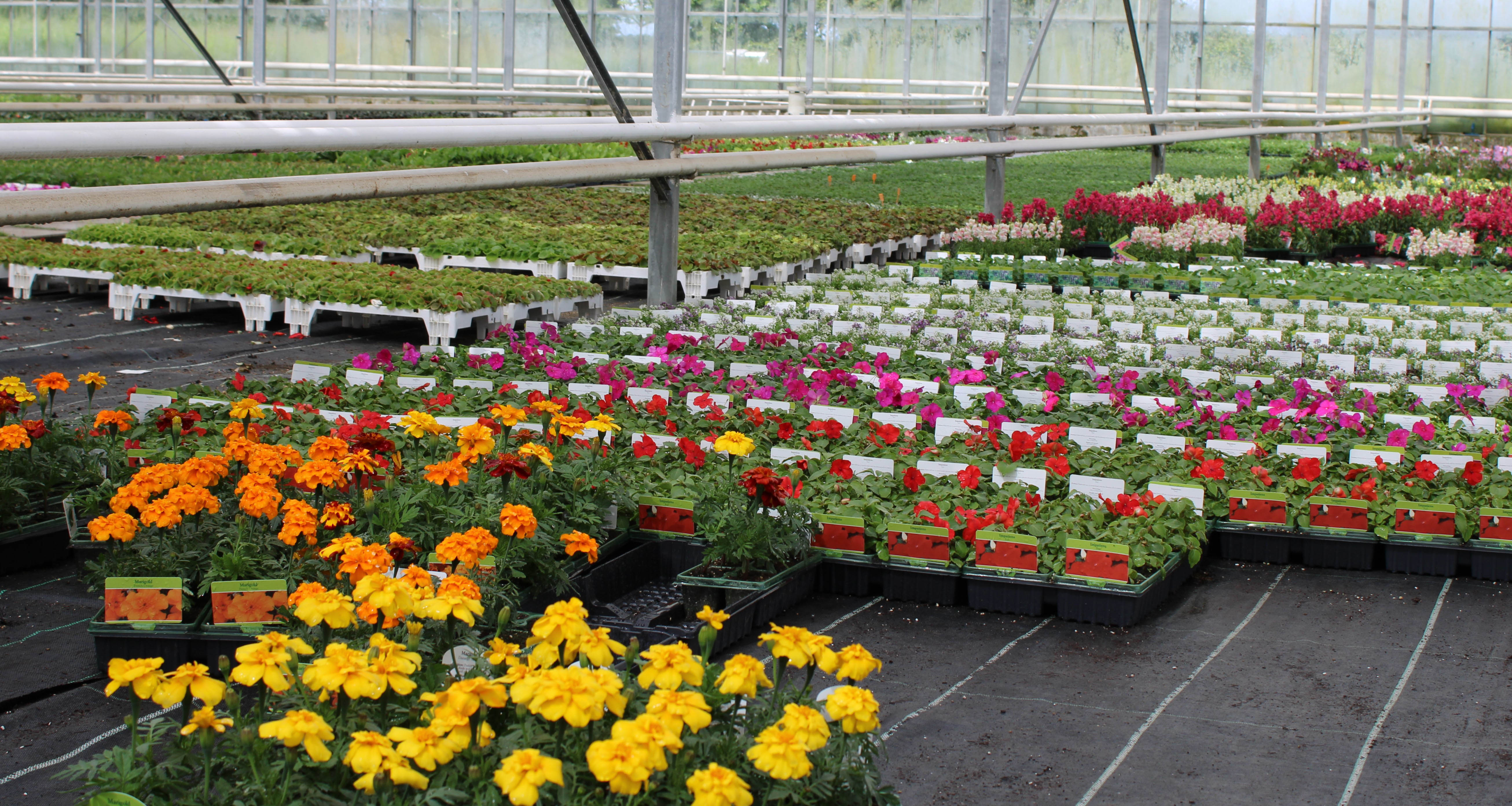
Hundreds of thousands of colourful bedding and pot plants are being sent to wholesale customers and shoppers are flocking to the retail plant nursery. All of the plants are grown in peat-free growing media, from rooted cuttings to mature plants.
The nursery, trading as L Mills, was founded in 1907. Ian now runs this 10-hectare enterprise, with 15,000 square metres of modern glasshouses and an area of polytunnels. Ian learned his trade alongside his late father, Lionel Mills, a leading NFU member who provided a strong voice for the ornamentals sector. Lionel passed away in August 2016.
Today, the business grows flowers, fruit and vegetable plants, ranging from plugs to pot plants, undertaking as much propagation as possible to ensure traceability and quality.
Ian says: “Our retail nursery has grown over the past 20 years from nothing to what it is today, and it’s now an important part of the overall mix.”
A loyal team of staff
Ian is a father of four who is both a hands-on grower and CEO.
He is ably supported by his wife Alena, who works on the accounts, and a loyal team of staff, who are key to the success of the business.
Ian says: “I opened our retail nursery in a small glasshouse that had been left derelict after a hailstorm. We had it reglazed and put a sign at the bottom of the drive.
“Dad and I were looking after it at weekends with one member of staff, and it’s just grown. I got a manager in to run the shop and we built our new retail plant nursery in 2019.”
“During the pandemic, we saw a huge increase in sales. I thought that it would drop off again, but it hasn’t, it’s continued to rise. We don’t do any PR, it’s all word of mouth and a little bit on Facebook.”
Two full-time staff are employed on the retail side, with some part-time workers at weekends. Much of the watering is undertaken by volunteers.
This small team helps to ‘keep prices sensible,’ says Ian. Plants are moved from one side of the nursery to another, so there are no transport costs.
“We don’t classify ourselves as a garden centre, we are very much a plant retail nursery, so we do try and grow as much as we can.
“We grow bedding plants and we are growing more herbaceous plants and shrubs. We’d rather grow it here than buy it in. If we do buy in, we’re trying to use English suppliers where we can,” he says.
Year-round production
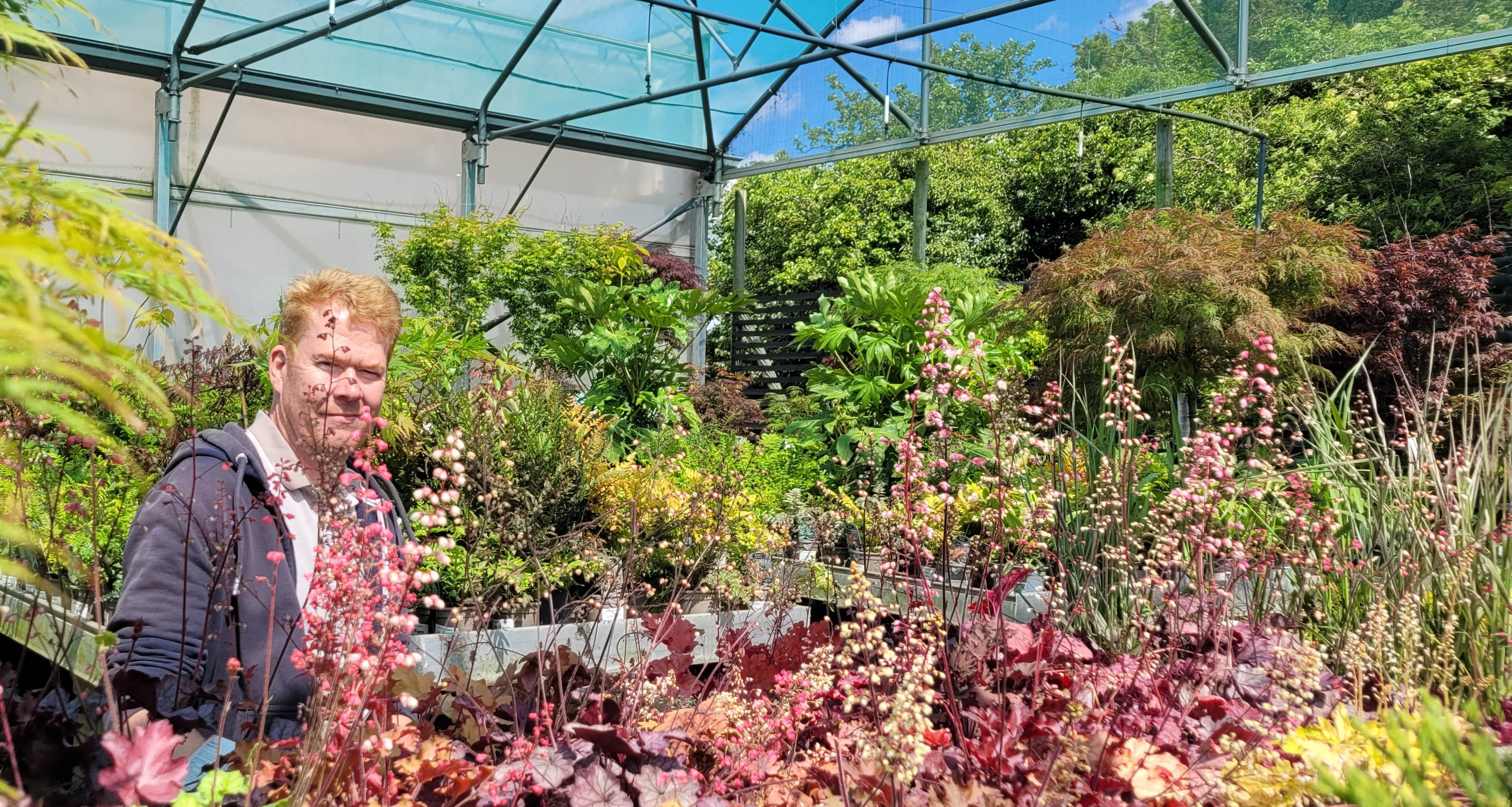
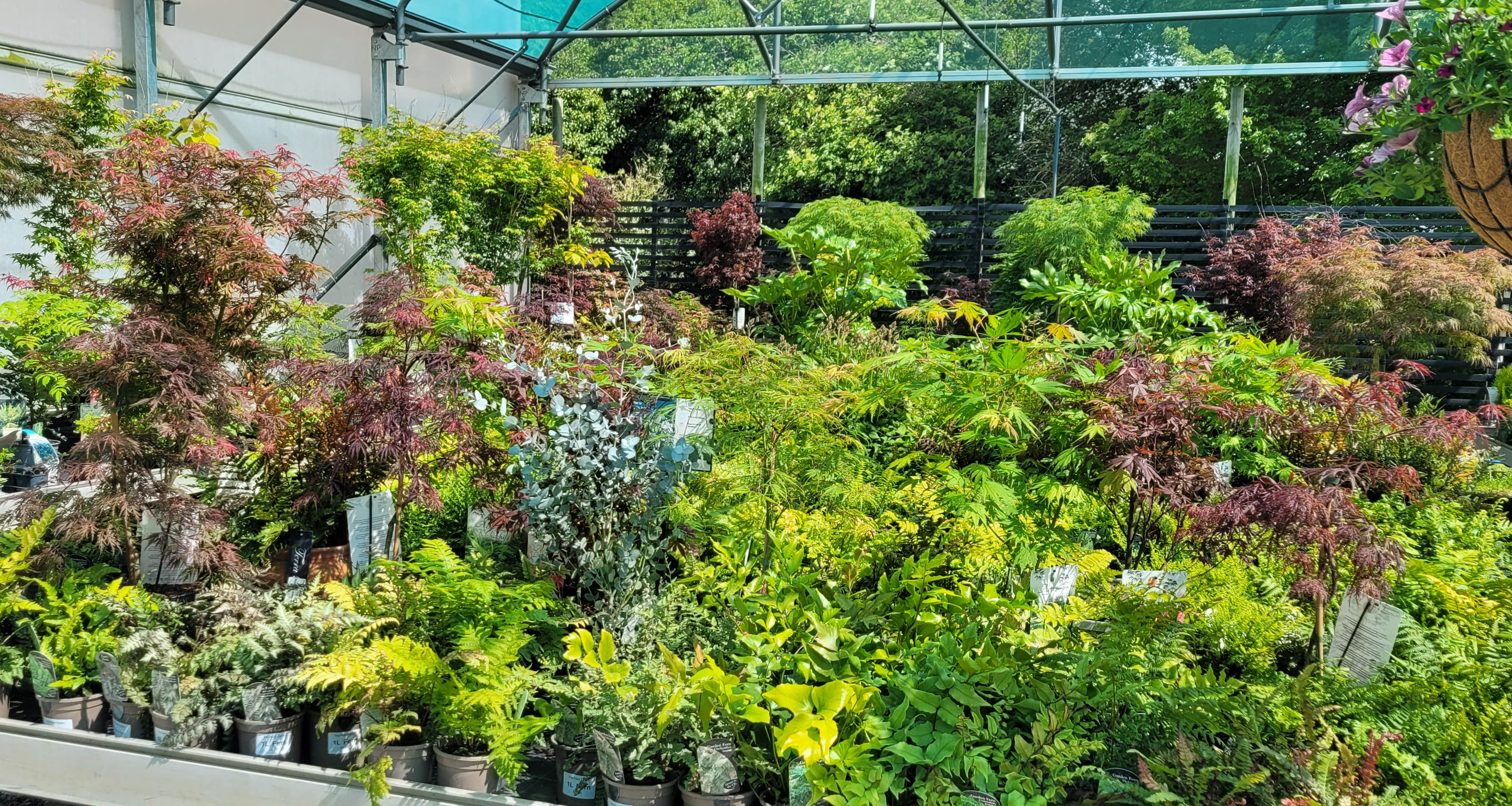
The perennials that Ian grows include ferns, foxgloves, lavender and heuchera, and he buys in stock from specialist growers where necessary, including roses, climbers such as clematis, shrubs and trees, including acer and eucalyptus. He also sells vegetable plants in modules and fruit, such as strawberries, growing as many types as possible.
Within the past three years, Ian has quit a century-old trading position, closing L Mills’ stall in Covent Garden, after a key salesman retired. He still trades in London and his own retail shop has almost made up the income.
“It was a big decision to stop, because we’d been in the market for over 100 years and we were the last proper grower/wholesaler in there,” he says.
The company remains focused on supplying wholesale customers, from small local outlets and florists, to nurseries and landscape gardeners, besides fulfilling ‘quite large landscape orders, including a private estate’.
The year-round production ranges from pelargoniums to phormiums, begonias to busy lizzie and calla, dahlias, fuchsias and snapdragons, all grown without peat.
Peat-free compost
Ian moved away from peat in the early 2000s. “We’ve probably been growing peat free for 20 years. We’ve done an awful lot of work with our Dutch supplier, Jiffy, to get compost that is good enough to produce quality plants. We’re one of the few growing from the very start to finish in peat-free compost,” says Ian.
“We’re 100% peat free – both the plants that we’re buying in and those we’re producing ourselves. One of our key customers is the National Trust and it insisted, from this year onwards, on peat-free. Even the plug – the young plant – must be produced without peat. Up until December, peat was used in the plug.
“It’s a massive challenge. We’re going into the production of young plants as well to achieve that, so we’re buying unrooted cuttings, mainly from Africa. They’re coming direct to us, and we’re rooting here.”
“Coco coir, a main ingredient, is becoming more expensive because more people are using it as a compost additive. We have done trial work with Jiffy to try out new products, to reduce our reliance on coco coir.”
The potting process involves a robot and ‘a machine that fills the pots with compost – the type of pot we use has to be able to be mechanised’.
Ian says: “While we are still using recyclable plastic pots, this week we’re looking at samples of a new product from Jiffy, which is a pre-formed coir pot that we’d be able to use with our mechanised potting machine.”
The customer will be able to ‘just plant the whole pot, as it will actually compost in the ground’. There is also a new heating system for the glasshouses.
Increasing energy efficiency
“During Covid, we replaced our old heating system, which was oil-based and steam, with a new ground source heat pump. We have two boreholes on site,” says Ian.
“We’re piping water out of the ground at 11°C, the pump does its magic and we get hot water at 50 degrees, running through the pipes in the glasshouse, that then radiate (heat).”
The water is returned to the ground.
“We do get some government funding for this system. It was funded up-front initially by a French firm who specialise in funding renewable projects. We’re still working with them on a new combined heat and power plant (CHPP),” says Ian.
This new plant will be gas powered, generating electricity for the heat pump and any waste heat will be used to heat the glasshouses.
Ian is working with a neighbouring fruit farmer to secure a new grid connection from UK Power Networks. He believes every grower should assess their energy consumption and plan for the long term.
“We do need to be more energy efficient and less reliant on electricity,” he says.