Uplands survey will help ‘get the narrative right’ and steer NFU lobbying work

Mat Cole
NFU Uplands South Group chair

Dave Stanners
NFU Uplands North Group chair
NFU Uplands South Group Chair Mat Cole and North Group Chair Dave Stanners explore the key issues facing the uplands sector and urge farmers to feed into future NFU lobbying work by completing the uplands survey.
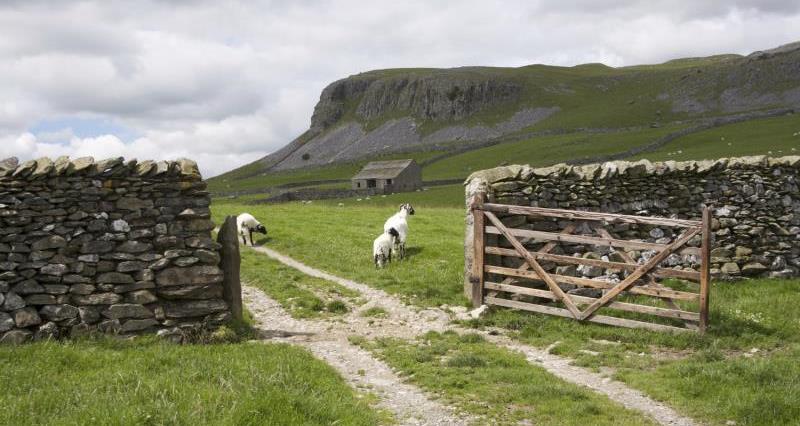
Upland farmers are the guardians of some of England’s most iconic and cherished landscapes. These spectacular and diverse areas are rich in natural beauty and cultural heritage, which is why 75% of Protected Landscapes – national parks and AONBs (Areas of Outstanding Natural Beauty) – are in the uplands.
Delivering for people and planet
Uplands deliver for the environment in many ways – three billion tonnes of carbon is stored in the UK peatlands alone, and that is not counting all the carbon stored in the organic matter rich permanent grass covering almost all of the rest of the uplands.
An indication of the high biodiversity and rare geology of the uplands is the fact they contain 53% of English SSSIs (Sites of Special Scientific Interest), whereas uplands represent only 12% of England.
The health benefits of recreation, both physical and mental, are widely known. The uplands contain 86% of English open access land which, along with thousands of miles of footpaths, gives ample opportunity for walking and running.
Uplands also deliver for productive agriculture. Through the stratified sheep production system that has evolved in the UK over centuries, hardy breeding stock, along with store progeny, are sold to lowland farmers for breeding and finishing.
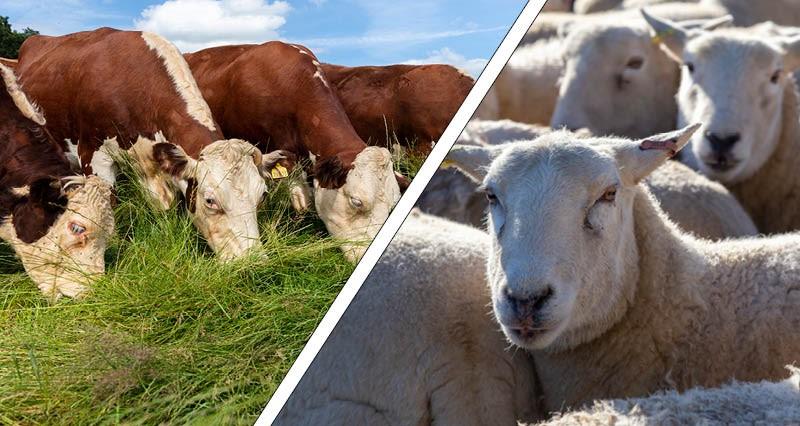
Currently, around 40% of England’s breeding ewes and 27% of beef breeding cows are based in upland areas and their fringes. This optimisation of land use supplies the market with premium, climate-responsible beef and lamb.
“This is a great opportunity to let the NFU know what makes your farm tick and what the challenges are.”
NFU Uplands Group Chairs Mat Cole and Dave Stanners
Feed into lobbying
Successful lobbying of decision-makers relies on landing simple messages.
The diversity of the English uplands and even more so the farms, commons and moorlands in the uplands, makes it challenging to get the narrative right for the majority of farmers.
That is why the NFU has launched a survey open to all upland farmers, not just NFU members, to understand their businesses better.
This is a great opportunity to let the NFU know what makes your farm tick and what the challenges are. We will be aware of the majority of opportunities and challenges but the survey will give us the all-important data which we can use in future lobbying work.
Please spend 10-15 minutes completing the survey and share it with your network, and of course you can contact your uplands county representatives at any time about any upland issues that affect you.
Existing support
LFAs (Less Favoured Areas) were designated in 1975 based on several criteria including altitude and climate – this was the start of specific upland support.
Agriculture has largely shaped the upland landscape, despite them being areas where the natural challenges make it more difficult for farmers to compete in the market place.
This support has evolved from headage payments to area-based environmental payments via agri-environmental schemes.
Gaps in support
There are farmers who are trapped in legacy agri-environment schemes such as HLS (Higher Level Stewardship) who can’t terminate their agreements early to enter CSHT (Countryside Stewardship Higher Tier) which offers better payment rates for similar options.
There is a huge injustice for those farming common land who are as of yet denied access to SFI and CSHT just because the land is designated as common.
All the previous support schemes since their inception in 1975 have been able to cope with the commons conundrum. The current RPA (Rural Payments Agency) and NE (Natural England) failure is in administration, with systems urgently needing an overhaul to overcome the complexities of commons.
Current Defra work
Granted, Defra has started a trial on ten commons to try and make the SFI and CSHT application processes work.
Commons are complicated, even with a working system in place – an individual CSHT scheme will take a year or more to develop for each common.
With finite budgets, will there be any money left in either the SFI or CSHT pots when the systems are revamped? Failure to have a sufficient budget will lead to a funding gap for hundreds of farmers and commoners who have been delivering environmental services for nearly 40 years in some cases.
“We should be finding a balance between farming and environment to create a sustainable future for our uplands.”
NFU Uplands Group Chairs Mat Cole and Dave Stanners
Wildfire risk
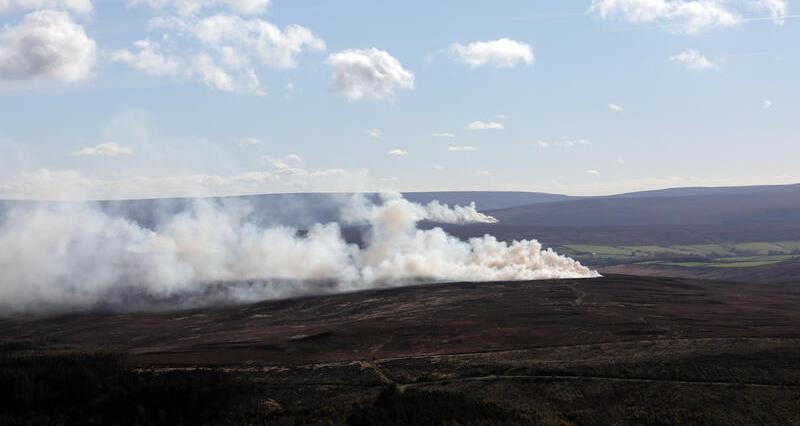
The increasing frequency of drier, hotter spells of weather that last longer is only increasing the risk of wildfires across the country and this is especially true in the uplands.
Reduced stocking incentivised by agri-environment schemes which started in some upland areas in the late 1980s has increased the volume of vegetation and thus fuel load on many moorlands and commons. This trend has accelerated recently as institutional land owners such as water companies, National Trust, Wildlife Trusts and also private investors, have tapped into schemes that pay for reduced or no stocking.
The danger of a high fuel load, the inability to do prescribed, controlled burning (cool burns) on any upland with more than 30cm of peat without a massive bureaucratic process, has led to no fire breaks on large tracts of moorland.
A number of moorland fires in the last couple of years have been declared major incidents and cost millions of pounds to fight. Let alone the millions that will be spent on restoration, in some cases for the second or third time.
It is finally cutting through, driven especially by fire chiefs who have experienced the ferocity of an out-of-control wildfire, that moorlands must be actively managed. The current laissez-faire attitude not only puts at risk very fragile moorland habitat but also communities and infrastructure downwind of a wildfire.
Many farmers are trained by the fire service and equipped to fight wildfires. They work in partnership with the fire service.
Proactive wildfire management using prescribed controlled burns creating fire breaks is so much more cost effective than fighting wildfire. It is also a lot safer for the moorland farmers and game keepers who assist. Fighting wildfires is a dangerous pastime!
It is vital that part of the assessment process of any moorland agri-environment scheme application, including LRS (Landscape Recovery Scheme), considers the impact on wildfire management.
Finding the balance
The farmer and more so the tenant are too often being asked to make a simple choice when faced with CSHT and LRS – either take the brown envelope and destock, losing generations of breeding and stewardship, or go farming and maximise their output.
Reducing stock numbers hits associated businesses including livestock marts, hauliers, and agricultural merchants.
Rural areas can’t survive on tourism alone.
As set out in the NFU’s Uplands Vision, we should be finding a balance between farming and environment to create a sustainable future for our uplands.
Complete the uplands survey by Monday 26 October to share the perspective from your farm and feed into our future conversations with policy-makers.