“It’s encouraging to see the Defra Secretary of State’s real ambition for a thriving agriculture industry, demonstrated by her announcements made today, as well as her commitment to working collaboratively with farmers and growers,” said NFU President Tom Bradshaw.
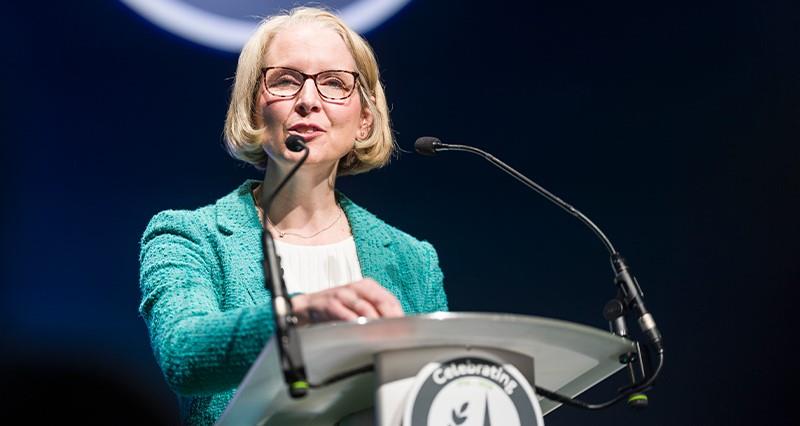
In her speech at the Oxford Farming Conference (Thursday 8 January), Defra Secretary Emma Reynolds said the government’s vision is “to help farmers improve their productivity and profitability; and to collaborate on delivering positive environmental change together”.
First SFI application window to open in June
Ms Reynolds outlined the reforms to SFI during her speech.
There will be two application windows this year. The first one will open in June and will prioritise ‘smaller farms’ and those without an existing ELMs agreement Defra has said.
The second round will open in September for a wider range of applications. Full scheme details will be published before the first application window opens.
The government has said it will ‘continue working with the sector’ to refine the proposals.
”I am pleased to hear the Secretary of State talk about the much-needed clarity coming ahead of each payment windows for SFI.”
NFU President Tom Bradshaw
NFU Deputy President David Exwood said it was positive to hear the Defra Secretary talk about “much-needed plans to reform the SFI” and her commitment to work with farmers and growers, particularly those in the uplands and protected landscapes.
“But there remains a huge lack of detail that farmers and growers urgently need and this uncertainty continues to undermine farmers’ confidence, ability to invest and do the best for their business,” he warned.
What will the new SFI offer look like?
Simplicity will be the key principle of SFI going forward; the Defra Secretary said there would be fewer actions in the reformed offer, but assured farmers that “you’ll still have plenty of choice”.
“We will limit how much land can be put into certain actions and review payment rates for others,” she said.
Ms Reynolds also said Defra was looking at an agreement value cap, which she said will help meet targets set out in the EIP (Environmental Improvement Plan) to double the number of farms delivering for wildlife.
Recognising that “mistakes were made in the past”, Ms Reynolds committed to provide stability going forward, and said clear budgets will be set for each application window, with regular updates to let applicants know when a window is close to being fully subscribed.
“For farming and growing businesses to deliver the public goods the scheme originally set out to achieve, it is vital that it is accessible and relevant to all food producing businesses.”
NFU Deputy President David Exwood
“There will be no more sudden, unexpected closures,” she added.
“Once these changes are in place, the main design of SFI will be stabilised for the rest of this Parliament. So you know what to expect in the years to come.”
NFU Deputy President David Exwood responded: “We recognise that the farming budget is finite and that SFI has to be spread more evenly across the industry, with a particular focus on the coming 12 months. But for farming and growing businesses to deliver the public goods the scheme originally set out to achieve, it is vital that it is accessible and relevant to all food producing businesses, no matter the size. That is why if there has to be an SFI funding cap, we support a cap per hectare for SFI agreements on farm.
“There are 27,800 farmers in agri-environment schemes whose agreements are set to expire at the end of the 2026/2027 financial year. With that deadline on the horizon, it is essential that we get a clear understanding from Defra about the SFI budget for the two application windows to allow continuity of environmental delivery that already exists of farm.”
What else was announced?
The Defra Secretary also announced a new £30 million Farmer Collaboration Fund, to be invested across three years, which will support farmer groups in growing their businesses, building partnerships and sharing best practice. The NFU welcomes the fund’s focus on growing farming businesses.
The FiPL (Farming in Protected Landscapes) programme which was due to expire in March 2026 will be extended for three years with £30m allocated for 2026/27. While we welcome that the programme is benefitting farms in these areas and delivering wider benefits, the NFU remains aware that this is a limited offer geographically and in how it can support farm profitability.
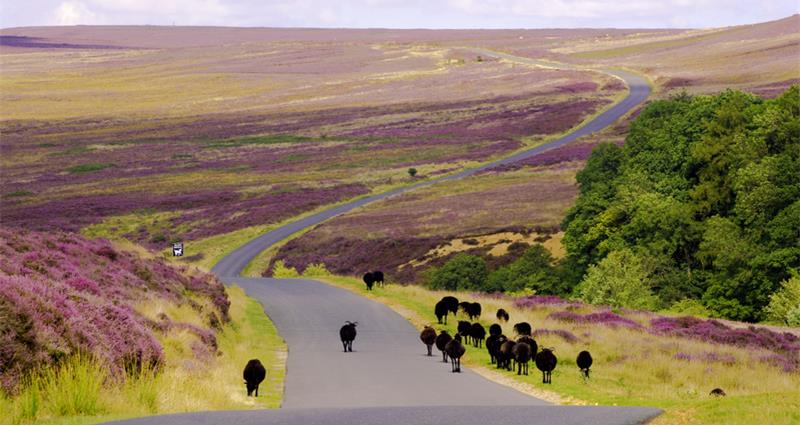
The government has also committed to a programme of transformation for the uplands, beginning in Dartmoor and then Cumbria. A place-based approach will be developed to co-design solutions around local challenges. The work will explore how public, private and third-sector funding can be better aligned to create new income opportunities and build the skills and networks communities need to shape their own future.
Detail and delivery
NFU President Tom Bradshaw responded: “Domestically, creating policies that support productivity and growth remain key and I am pleased to hear the Secretary of State talk about the much-needed clarity coming ahead of each payment windows for SFI. Farming is a long-term investment, measured in years, not months, and clarity is essential for confidence.
“Transparency around the farming budget is critical to this. Without transparency, farmers and growers are unable to plan for their businesses’ future.
“On a global scale, growing exports for British food abroad and ensuring imported products meet our productions standards will ensure our sector can compete on a level playing field.
“Important questions remain on the detail and delivery, from the 25-year Farming Roadmap to the roll out of the farming profitability review. We want to work with government to drive these policies forward to create confidence and profitability for farming and growing businesses and ensure 2026 sees British farming achieve all it is capable of.”