Yorkshire farmer 'serves something new' with padel diversification
Arable farmer Callum Stark tells Student Farmer how he took the plunge and turned modest storage units into a trendy sports hub
For many farms, diversification has become a crucial way to build financial stability.
From creating glamping sites and farm stays, to opening cafes, play centres, producing renewable energy and letting commercial property, the options to branch out and attract new revenue are endless.
In North Yorkshire, farm manager Callum Stark decided to tap into a rising trend by converting his potato storage units into something quite unique. Last year, Callum, who runs Fridlington Farms, with his dad Stuart, opened the UK’s first farm-based padel court. The concept has proved so successful, he’s now expanding further and franchising.
“I had other ideas for diversification, but we never really had to because of the size of the farm,” explains Callum, who lives on the 1,300-hectare estate with wife El and their two young children. But changes to inheritance tax laws now mean the farm will face a £6 million tax bill if Callum’s 93-year-old grandmother – who owns major shares in the company – was to pass away in the next seven years.
“We’d have to sell off nearly everything and it wouldn’t be the same farm,” he says.
In order to future-proof the business, Callum began considering what aspects of the farm could be monetised in a different way.
“I looked at things like wedding venues – but there’s already loads around North Yorkshire. And I’ve seen so many farm shops fail.
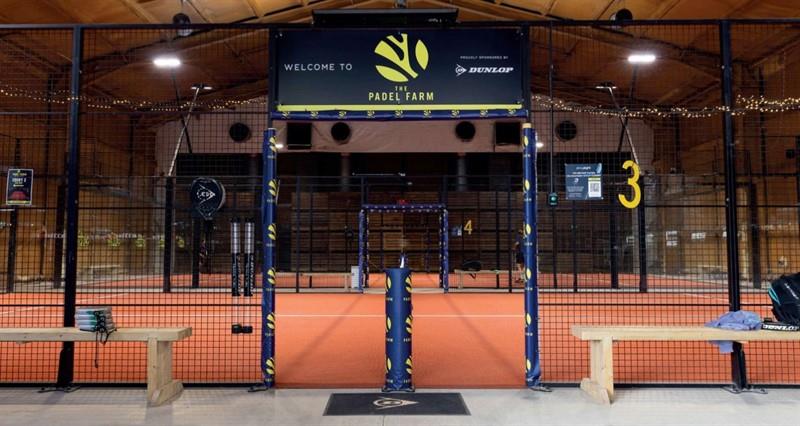
“A few of my mates in London said how much padel is flying down there and I worked out you could get two courts in one potato shed. I thought I’ve got nothing to lose, because if it doesn’t work I’ll rip it out and return it to what it was before.
“So I had a go and hey presto, we’re now ‘padelers’,” Callum laughs.
“I was lucky because I got it going at the right time – I was the first insulated, indoor court in the York area. I’d played at a local gym where there’s an outdoor court and a bit on holiday, but I’m more of a rugby and cricket man so never really took to it myself. But I thought if I’m the only one with a court in the area there must be something in it.”
"A few of my mates in London said how much padel is flying down there and I worked out you could get two courts in one potato shed"
Callum Stark
Callum admits it took more work to set up than he expected and after announcing the launch date in March 2025, he discovered some last-minute changes to the floor were needed, resulting in a tense race to get everything finished on time.
“The person I got the court from said it would be plug and play, all very easy, with an automated booking system. When I got into setting it up there was a lot more hard work than I expected. If people diversify they need to realise that. I’m lucky because of the scale of our farm and the other people we have working here – it meant I could work on setting up the padel business in the mornings, then farm in the afternoon. Starting a new business takes over.”
Despite its rural location, once open the padel courts attracted a steady stream of customers and Callum credits taking on a coach with helping to make it a success.
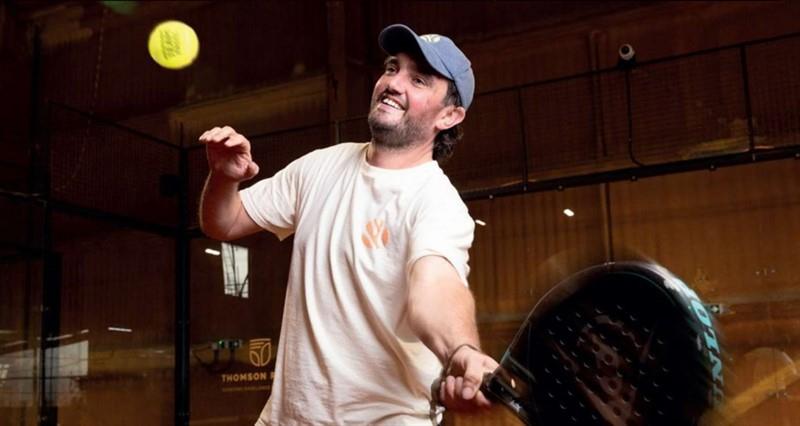
“I don’t have a clue about how to coach padel, or the time to do that. Because it’s a new sport not everyone knows how to play it, so we needed a coach in place and thankfully we have Andy who works on a self-employed basis with a revenue share.”
Callum is certainly not alone when it comes to diversifying. Government figures show 72% of farm businesses in England had some form of diversified activity in 2024-25. Half of those diversifying have chosen to do so by letting out buildings or land for activities not connected to the farm (and not including income from tourist accommodation). Offering something different has paid off for Callum.
"This is exciting to me because it’s bringing people together and it’s fantastic seeing your idea come to life."
Callum Stark
“At the start we were about 60% capacity and by the end of the year we were at 90% – that’s why having the insulation was so important, to maximise use all year round. We’ve got the height in the potato stores as well, because in padel doing a ‘lob shot’ is a huge thing and you need height for that.
“To get the word out I did a bit of advertising in the local area, hammered the socials and got onto TalkSport and in some of the newspapers. The interest was there because we’re one of the first farms to do it.”
Having started with two courts, Callum has expanded to five and his plans don’t end there. “I’m creating a seven-court facility with a HYROX gym, spin class, ice bath, sauna and hot tubs. Somewhere I can hide basically,” he laughs.
“If you’re going to do this, I’d recommend opening at least two courts to begin with because with just one you don’t get a social hub around it. You need to build a community.”
Callum’s new business venture has also given him a renewed sense of purpose in his professional life. “For me, farming had started to become a drain – you put all the hard work in and then look at the figures at the end and you’re scraping the tiniest bit of cream off the top.
“This is exciting to me because it’s bringing people together and it’s fantastic seeing your idea come to life. But it’s busy running two businesses and sometimes I have to work at night, but I’ve got two young kids as well. Nothing comes easy though and it will calm down.”
For farmers who are considering diversification, it’s important to strike a balance between taking a chance and making an informed decision.

Sign up for Student Farmer magazine
Get your free copy of Student Farmer magazine by signing up for the NFU Student & Young Farmer membership.
“Unfortunately, it’s a sign of the times in the farming industry that we have to diversify,” says Callum. “Farmers know their area, so look around and think what would I, or my friends, want around here – it might be yoga, pilates, a nice café. I think after Clarkson’s Farm people feel more connected with farming, so it’s a good time to have a go. The worst thing that could happen is you shut it down and sell off the assets.
“Some farmers don’t like dealing with the public, so look at an aspect of the farm you really love and put your heart and soul into that. You need to do something you’re interested in and just have a go – you’ve only got one life.”