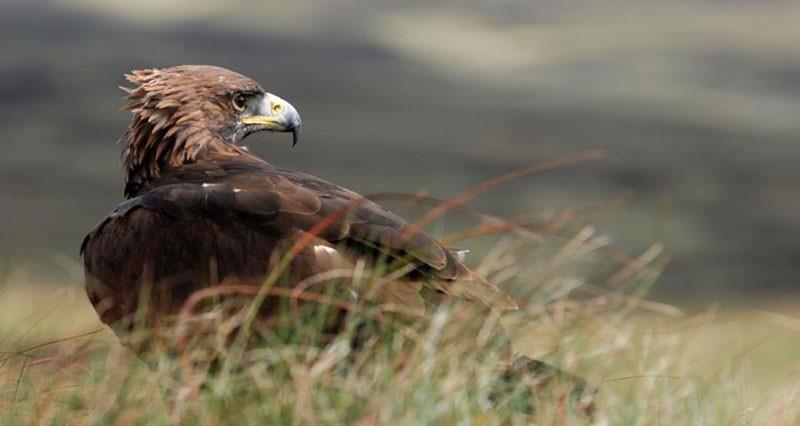
The golden eagle is a large bird of prey. In the UK, breeding pairs are found in parts of Northern Ireland, as well as the Scottish Highlands and islands.
The government has committed to providing £1 million to support a project exploring the reintroduction of golden eagles to northern England, with the potential for juvenile birds to be released as early as next year.
This was part of a wider suite of announcements which included the launch of Defra’s new campaign ‘Wild Again: Restoring England’s Wildlife’ and brings together the government’s existing and future species work, confirming its commitment to species recovery, including reintroductions.
“Farmers cannot be expected to carry the cost, risk, and responsibility of poorly implemented reintroduction projects.”
NFU North Regional Board Chair William Maughan
Risks must be understood
The announcement follows the publication of a feasibility study by Forestry England. The study looked at what areas of England are biologically and ecologically capable of supporting golden eagle populations, as well as the social approaches to this.
It identified eight potential areas, mostly in northern England, where golden eagle populations could be sustained. It also highlighted the need for a range of sustained and interactive engagement and consultation with landowners and managers.
While evidence in this report points to “no, or negligible, economic risk to sheep (lambs)”, if there is any risk to farming businesses, it is vital this is fully understood, communicated, and consulted on with farmers as part of the project.
Engage with farmers
Responding to the news, NFU North Regional Board Chair William Maughan said: “Farmers play a vital role in looking after nature and conserving species on farmland.
“It is vital that any project exploring the reintroduction of a species in particular golden eagles in the North of England is underpinned by thorough, meaningful and clear engagement with the farming community to hear their voices and address their concerns before a decision is made.
“Farmers cannot be expected to carry the cost, risk, and responsibility of poorly implemented reintroduction projects.
“Reintroduction projects should align with the government’s guidance and ambitions, be based on sound scientific evidence, and put in place a well-resourced management plan that works for nature, food production and the people who care for our landscapes every day.”
Next steps
The charity RUN (Restoring Upland Nature) will lead the project in partnership with Forestry England, drawing on the approach used by the south of Scotland golden eagle project, which has helped restore golden eagle populations there. Satellite tracking indicates that some of those birds have already begun to cross the border into northern England.
The next stage of the project will involve engagement with farmers, gamekeepers, and land manager communities, as well as further feasibility work which the government funding will help support.
The project will need to follow the government guidance and code on conservation translocations.
This is summarised, alongside the NFU’s key policy and projects asks for species reintroductions on our species reintroduction essential information page.
The NFU has had an initial meeting with those involved in the project and will keep members informed as this develops, including engagement and consultation opportunities.