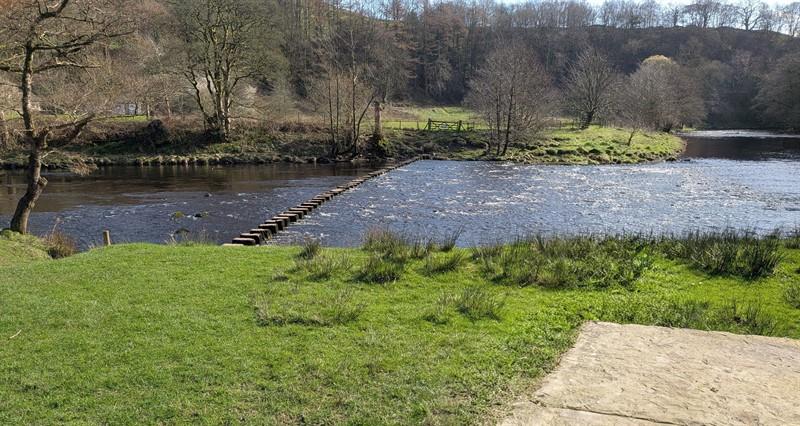
Why should we be interested in water quality? Over the next twelve months we plan to run a series of articles to look at answering this question! Our aim is to provoke some thought on the topic, as well as to dispel some common myths. You’ll hear from members, the Environment Agency, water companies and others working in this space.
Water quality is never far from the headlines. Water companies are facing intense public and regulatory scrutiny over raw sewage spills, rising bills, and executive pay while high profile groups like River Action are leading well documented legal challenges to save the ecologically declining River Wye from severe pollution they suggest is caused by industrial poultry farming. Persistent diffuse pollution from agriculture is also leading to increased numbers of inspections from the Environment Agency to check we’re complying with the rules in place that aim to prevent this.
From the NFU’s perspective good water quality is one of the most important environmental challenges for every farm business. Improving water quality is not something farmers can deliver alone. It requires practical, evidence-based solutions in managing land, as well as continued investment and collaboration between farmers, regulators, water companies, government and environmental organisations.
There are opportunities for every farm business to play its part.
So this month, our North sector board chairs share their thoughts on water quality in the sector they represent.
Next month, we’ll talk about preparing for winter with the Environment Agency!
Crops - Rob Conner
Water quality: a subject that affects us all, but that we often believe is someone else’s problem.
Farmers have a duty to protect and, where possible, try to improve the quality of water passing through our land. There are numerous methods at our disposal to prevent potential pollution incidents from whatever source, be it filed run off, fuel or pesticide spillages.
I am going to concentrate on nutrient management, as one of the biggest problems the water companies are facing is increasing levels of phosphates in drinking water supplies.
Phosphates are available from organic manures, and increasing applications over recent years have led to many areas reaching a soil index of three or above. At this level, phosphate availability is considered high enough to support crop growth without further application in the season. This creates a problem with applying manures when done so for the nitrogen requirements.
As it also contributes to phosphate levels, we should not be applying the manures on these fields with high phosphates as it leads to excessive levels which can then enter water bodies used for drinking supplies. It has been suggested that only half of the mineral phosphate applied is utilised in the production of food, so perhaps there is a place where cost savings can be made directly alongside environmental benefits – cut mineral applications, which allows for the continued use of organic manures which provide both phosphate and nitrogen benefits to crops.
As water quality standards are reviewed, the NFU will continue to back British farmers to enable them to produce high-quality food and deliver environmental benefits.
Livestock - Clare Wise
As expectations around environmental performance continue to increase, livestock farmers are seeing greater focus on issues such as ammonia emissions, manure management and water quality.
This began with the government’s Water White Paper in January outlining ambitions to extend environmental permitting regulations to cattle sectors.
For beef producers, maintaining public trust and protecting market opportunities will depend on continuing to improve environmental management while running productive, profitable businesses. As an industry, we have a real opportunity to take the lead in developing practical, farmer-led solutions that improve water quality without creating unnecessary red tape or costs.
This is about more than meeting regulatory requirements. It is about demonstrating that efficient beef farms of all sizes and systems can operate responsibly while continuing to produce high-quality British beef.
Examples of good practice include:
- Effective storage and use of manure and slurry
- Nutrient management planning and targeted nutrient application
- Protecting watercourses and reducing run-off from buildings, fields, forage stores and manure stores
- Making better use of farm records and environmental monitoring data
- Adopting practical technologies and best-available techniques, such as precision fertiliser spreading where appropriate.
Many of these actions also improve farm efficiency by making better use of nutrients and supporting soil health. This approach provides an opportunity for livestock farmers to work proactively with Defra and regulators to shape a realistic, evidence-based alternative to environmental permitting.
Any future approach to these issues must recognise the importance of maintaining viable livestock businesses and domestic food production, while continuing to deliver improvements in environmental performance.
Poultry - Matt Donald
Modern poultry sites are part of the water quality solution, not the problem. Across the industry, farmers are investing heavily in environmental protection, yet planning policy is increasingly preventing the very upgrades that deliver those improvements. Modern poultry units are designed to safeguard water quality, reduce resource use, and minimise flood risk. They are a world away from the older facilities still in operation.
Today’s units incorporate dirty‑water tanks, controlled wash‑water systems and drainage that captures, stores, and slowly releases stormwater. They use less water overall because birds perform better, sheds wash down more efficiently, and equipment is designed to limit waste. When managed correctly, wash water is applied to land at appropriate times, supporting soil health rather than threatening watercourses.
Organic poultry manure is another misunderstood asset. With fertiliser prices rising due to global conflict and carbon policy, manure has become a vital nutrient source for the arable sector. Good storage and a robust nutrient management plan ensure it is used safely and effectively. Funding exists for new muck stores, but planning restrictions often prevent farmers from building them.
The biggest barrier in some regions, particularly the Tees, Eden, and Derwent catchments, is nutrient neutrality. These are intended to protect waterways, but are currently blocking low‑impact agricultural development – including free range expansion – that offer clear environmental gains.
Farmers are ready to invest in cleaner, more efficient infrastructure. If the UK is serious about food security and water protection, planning policy must recognise that modern poultry systems are part of the solution, not the problem.
Dairy - Graham Young
Water quality regulations are becoming an increasingly important part of dairy farming, requiring farms to reduce nutrient losses and improve the protection of rivers, streams and groundwater.
Traditionally, many farms have responded by building larger slurry stores to increase the period between applications. While additional storage is beneficial, it is not the only solution.
Anaerobic digestion (AD), combined with slurry separation, offers an alternative approach that can help farms meet environmental requirements while improving nutrient management. Separation divides slurry into solid and liquid fractions. The solid material can be exported, composted or used as bedding where appropriate, reducing the volume that requires storage. The liquid fraction is easier to handle and can be applied more accurately to crops, helping to reduce nutrient losses.
Feeding slurry into an anaerobic digester produces renewable biogas for electricity or heat, while leaving behind digestate that retains valuable nutrients. Digestate can often be spread more precisely than untreated slurry, making better use of nitrogen, phosphorus and potassium and reducing reliance on manufactured fertilisers.
By reducing slurry volume and improving nutrient efficiency, AD and separation can lessen the need for major investment in additional storage capacity. These technologies also support wider sustainability goals by lowering greenhouse gas emissions, producing renewable energy and contributing to a more circular farming system.
As environmental regulations evolve, dairy farms should be encouraged to consider innovative solutions alongside conventional infrastructure. A combination of anaerobic digestion, slurry separation and precision nutrient management can provide a practical, environmentally responsible and economically sustainable alternative to simply increasing slurry storage.
More from NFUonline: