Water is one of those certainties for British farming – we’ll always need it to produce food, and we’ll always need to manage it as part of our role as custodians of the countryside.
While we demand clean and plentiful water, we also understand our role in achieving this goal.
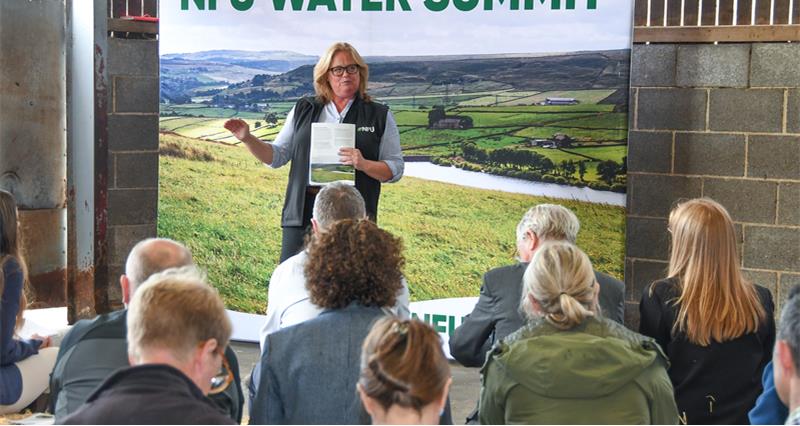
Our NFU Water Summit earlier this year, where we convened more than 50 stakeholders to focus on solutions to our biggest shared challenges, demonstrated our commitment to this.
And, we know our members play an active role in water management already. The list is endless, but in the past few months alone, we’ve seen farmers and growers volunteer to test Defra’s new nutrient management tool, attend slurry workshops held by AHDB and look at water solutions as part of industry groups and round tables.
Keeping members informed
From an NFU perspective, we’ve continued to update our water quality and nutrient management advice pages, signposting to other organisations that are experts in their field with their own training offering. And we continue to talk to scientific partners to support a pilot scheme in a defined catchment to test methodologies for farmers to undertake their own water quality testing.
And, of course, if farmers are to meet the ambitions on water, then we urgently need an SFI in place.
Defra review
We are pleased that, following recommendations by the Independent Water Commission (The Cunliffe Review) and the Independent Review of Defra’s Regulatory Landscape (The Corry Review), Defra is currently undertaking a review of agricultural water pollution regulations.
As part of this review, Phase One has seen stakeholder engagement workshops take place on subjects such as Nutrient Management, Manure Storage and Livestock Practices. Representing farmers’ views as regulations are developed is important to make sure that any new policy meets the needs of government and our industry.
The NFU has been a strong voice during those workshops, calling for future regulations to be clear, workable for farming businesses and promote growth within the sector while taking the risk of diffuse pollution from agriculture seriously.
Clarity is needed
Over the past few years, Farming Rules for Water has seen guidance updates which have been challenging for both regulators and farmers.
We call for future regulations to be clear and consolidated to ensure all parties working with the regulations have clarity on what is expected of them.
Phase Two of the agricultural water pollution regulatory review will involve Defra beginning to design and appraise new regulations. The NFU has not been informed of confirmed timescales on Phase Two, but we expect the process to begin early in 2026.
Those members who sit on an NFU Board, whether that is a regional, national or commodity board, have likely had this update from me on our policy work in this area.
Webinars
NFU Vice-president Rachel Hallos and I plan to hold member webinars in the new year. These will give members a chance to learn how future regulations may affect their farm business and ask any questions they may have.
Keep an eye on your weekly NFU Bulletin for further updates.
Regulations
The current agricultural water pollution regulations that members will be aware of are: