ADOPT trials – testing innovative technologies and biochar in orchard systems

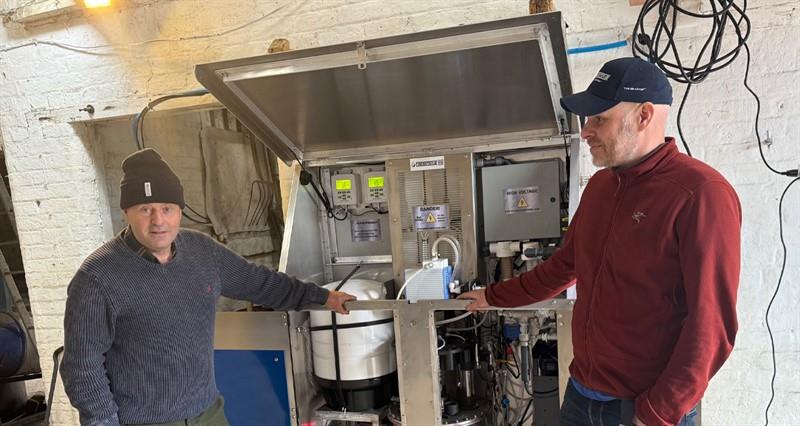
Photograph: Niab research staff
Two ADOPT trials run by British Apples and Pears and conducted by Niab research staff, alongside multiple grower partners, are exploring the applications of novel fertiliser use, soil amendments and biochar in orchard systems to increase resilience and efficiency and lower emissions.
ADOPT was created to give farmers and growers a practical route to test new ideas in real farm systems.
The ADOPT scheme provided the two trials the support needed to test on a larger scale and balance the risks against the potential rewards.
Ali Capper, Executive Chair of BAPL (British Apples and Pears), has been closely involved in the development of farmer‑led innovation programmes for more than a decade, including early work with Innovative Farmers. She explained that ADOPT is the “closest thing we’ve had to a programme that genuinely lets farmers roll their sleeves up and try something new in their own system”.
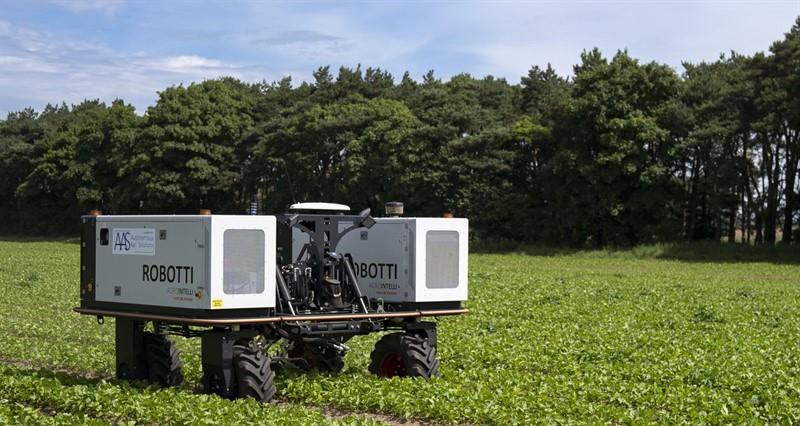
“It de‑risks the work and makes it accessible. Without a facilitator, farmers simply couldn’t apply.”
BAPL Executive Chair Ali Capper
Trial 1: Novel fertiliser use in apple orchards
Through the ADOPT programme, BAPL is running a major trial to test two innovative nitrogen‑use technologies in commercial apple orchards: a daylight‑activated foliar spray and a microbial biostimulant.
The project is delivered with Niab at East Malling and multiple grower partners across England.
Why the project matters?
Growers are under pressure to reduce nitrous oxide emissions, improve nitrogen‑use efficiency and maintain fruit quality.
Fertiliser costs remain volatile, and orchard systems are particularly sensitive to nutrition, especially where long‑term storage is involved.
Ali said the aim of the project is to understand whether these technologies “genuinely work in an orchard setting, and whether they can help us feed trees more efficiently”. She emphasised that orchard nutrition affects sugars, starches, class, yield and storage performance, and that getting the feed regime wrong can compromise storage right through to June or July.
The project also contributes to BAPL’s wider sustainability work, including greenhouse gas measurement and carbon footprinting.
What the trial involves
Two complementary technologies are being tested:
- Daylight‑activated foliar spray – this spray converts nitrogen pollutants from the air into plant‑available nitrate directly on the leaf surface. It is activated by daylight and aims to replace a proportion of synthetic nitrogen fertiliser.
- Microbial biostimulant – this supports natural nitrogen fixation in the root zone, helping trees access nitrogen they otherwise wouldn’t. It is designed to complement the foliar spray by improving below‑ground nutrient availability.
Trials are running across different commercial orchards, with Niab assessing impacts on:
- fruit sugars and starches,
- fruit quality and class,
- yield, and
- nitrogen‑use efficiency.
Culinary apples, which require high calcium, are a particular focus because storage performance is strongly linked to nutrition.
Farmer experience and the value of ADOPT
Ali highlighted that ADOPT’s structure is essential for making this type of work possible. The programme’s use of facilitators has made it much easier for growers to take part, helping them focus on the trials themselves rather than the administration.
She said: “It de‑risks the work and makes it accessible. Without a facilitator, farmers simply couldn’t apply.”
Growers involved in the project say ADOPT gives credibility, supports risk‑sharing, and provides a structured way to collect meaningful data. It also enables farmers to test technologies that would otherwise be too costly or uncertain.
Ali noted that successful ADOPT projects can strengthen a farm business’s profile, demonstrating leadership in innovation and giving customers confidence in the grower’s commitment to improvement.
What’s next?
Results will feed into BAPL’s wider sustainability work, including greenhouse gas measurement and carbon footprinting. The team expects early insights on the project’s success later this year.
Growers and BAPL will share findings through their R&D (research and development) technical day, Niab collaborations and grower networks, ensuring the whole sector can follow the progress of the trials.
Trial 2: Soil amendments and biochar for orchard establishment
BAPL is using ADOPT funding to run field‑scale trials focused on biochar, alongside a small number of supporting amendments that help it perform effectively in orchard soils.
The work builds on earlier Innovate UK feasibility research and aims to support a more circular, low‑carbon orchard system.
ADOPT enables growers to test soil amendments at a scale that would be difficult to justify without support.
What is biochar?
Biochar is a carbon‑rich material produced by heating biomass at high temperatures with limited oxygen.
Why the project matters?
At the end of an orchard’s life, trees are usually cut down and chipped or burned, releasing carbon back into the atmosphere.
Earlier feasibility work showed that turning old trees into biochar could return carbon to the soil and support a more circular orchard system.
That work established the potential benefits but also highlighted that fertile orchard soils behave differently, and that biochar must be prepared correctly to avoid nutrient lock‑up.
This ADOPT project builds directly on that foundation by moving the research into full field‑scale trials in commercial orchards.
It focuses on how biochar performs in productive soils and tests the supporting amendments needed to make it work effectively.
By assessing biochar under real orchard conditions, the project provides growers with practical evidence that the earlier feasibility study could not deliver, making it a meaningful next step in understanding how biochar can contribute to a more resilient, low‑carbon orchard system.
What the trial involves
The ADOPT project is testing:
- Charged biochar – we combined our biochar with nutrients, before application.
- Mycorrhizal fungi and trichoderma – these amendments support root development, and disease resistance.
The aim is to identify the combination that best improves orchard establishment, brings forward the time to full production and prevents diseases, such as canker, developing.
Ali noted that biochar remains a “cottage industry” in the UK, with Germany being the most established market. The UK market is still emerging, and orchard soils behave differently from the poorer soils where biochar is typically used.
Farmer experience and the value of ADOPT
Growers involved in the project say ADOPT has given them the confidence to test biochar under real orchard conditions, something they would not normally attempt due to cost and uncertainty. The programme’s structure has made it easier to coordinate trials, bring in technical expertise and gather consistent data across sites.
The use of facilitators has also been important, helping growers navigate the practicalities of running a collaborative project and keeping the work moving. For many participants, the value lies in being able to explore a new soil‑health approach in a supported environment, with clear learning shared across the group.
What’s next?
Field‑scale results will help determine whether charged biochar can be safely and effectively integrated into orchard establishment.
Findings will be shared across the sector through collaboration and grower networks. The project also links to wider work on carbon footprinting and sustainability.