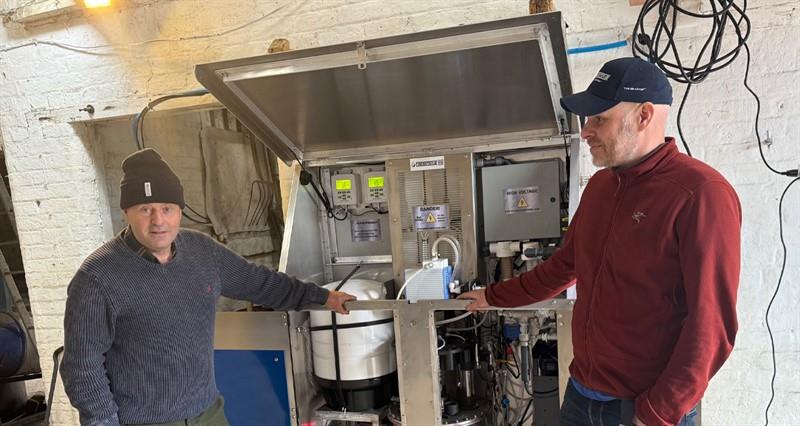
Farmers and researchers in Shropshire, Herefordshire and Worcestershire are working together to test whether engineered biochar can help reduce ammonia levels and improve litter quality in broiler sheds.
Supported through the ADOPT programme, the group is running a multi‑farm trial applying biochar directly to chicken bedding, a practical, farmer‑led innovation designed to tackle a long‑standing challenge in poultry production.
Understanding the use of biochar on ammonia
Broiler producers face increasing pressure to manage ammonia emissions, maintain bird welfare and keep sheds running efficiently.
Ammonia emissions affect air quality, litter condition and overall flock performance, and farmers are looking for solutions that are both effective and workable on farm.
Biochar has attracted growing interest as a potential tool to absorb and stabilise nutrients, but its use in poultry bedding is still relatively new. The team wanted to understand whether a high‑quality, engineered biochar could make a measurable difference in commercial sheds, and whether it could be applied in a way that fits normal farm routines.
Project criteria and timescales
The ADOPT‑funded trial focuses solely on applying engineered biochar to chicken bedding. The group is testing how different treatments influence ammonia levels, litter quality and bird welfare across four commercial farms: two in Shropshire, one in Herefordshire and one in Worcestershire.
To support the trial, ammonia sensors have been installed in sheds to capture real‑time data. The first trial run begins in early August, with standardised parameters agreed across all participating farms.
This project brings together three partners:
- Kevin Fryer, who has worked with biochar for more than 30 years and understands the importance of producing material that is safe and consistent for agricultural use.
- Dr David Redpath, an academic specialising in sustainable utilisation of livestock by‑products, bringing scientific rigour and experience from previous biochar research.
- Rob Collins, a farmer and project lead, who has previously worked on Innovate UK projects and wanted to use ADOPT to test a practical on‑farm innovation.
Farmer experience with ADOPT
A key purpose of ADOPT is to make innovation more accessible to farmers, and this project highlights how the scheme is helping to simplify the process.
Rob explained that the ADOPT programme has been “a meaningful step forward” compared with earlier funding streams, making it easier to engage with, more responsive, and supported by facilitators who guide farmers through the process.
The group emphasised the importance of choosing the right facilitator. Their facilitator has played a central role in coordinating partners, managing paperwork and ensuring the project stays on track.
Communication with Innovate UK has also been positive. The group highlighted how helpful it was that the ADOPT funding cap was recently doubled, after the original pot proved too small for their multi‑farm bedding trial. The increase meant the project could proceed at the scale needed, and the facilitator worked closely with Innovate UK to ensure the updated budget was approved.
For Kevin, ADOPT provides a route for farmers to test biochar in a controlled, evidence‑based way. After decades of working with the material, he sees the scheme as an opportunity to demonstrate what high‑quality biochar can achieve in real farm settings.
David noted that ADOPT allows applied research to move beyond the lab and into commercial sheds, essential for understanding how engineered biochar performs under practical conditions.
The trial – what’s involved?
The project is testing engineered biochar produced from spruce wood and processed through pyrolysis (heating to a high temperature). This process creates a stable, highly porous material. The material is applied directly to bedding, with farms following a shared protocol to ensure results can be compared.
Sensors will track ammonia levels throughout the crop cycle, while farmers will assess litter condition, ease of handling and any noticeable changes in bird behaviour or welfare.
The trial design reflects the group’s aim to generate robust, farmer‑relevant evidence. By running the project across four farms, the team hopes to understand how biochar performs under different shed environments and management styles.
Emerging impact
Although results will come later in the year, early indications from previous small‑scale work suggest potential benefits:
- Reduced ammonia emissions
- Improved litter quality
- Better air conditions for birds
- Practical feasibility for farmers
- A possible route to more circular, on‑farm nutrient management.
The group is keen to see whether these benefits can be demonstrated consistently across commercial sheds.
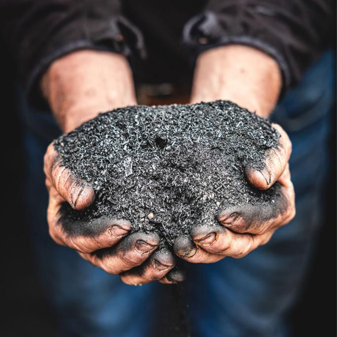
What is biochar?
Biochar is a carbon‑rich material produced by heating biomass at high temperatures with limited oxygen.
Looking ahead
The team hopes the trial will provide clear evidence on whether engineered biochar can become a practical tool for poultry producers. If successful, the approach could help farmers reduce emissions, improve welfare and strengthen on‑farm sustainability.
For Kevin, David and Rob, ADOPT has provided the structure, support and funding needed to test an emerging technology in a real‑world setting. Their experience shows how the scheme is helping farmers explore new ideas, and how collaborative projects can drive innovation across the sector.