Defra has published its long-term plan for how the government will work in partnership with farmers to ensure that farming, and the farming communities that support it, can thrive for generations to come.
‘Farming Roadmap 2050: Growing England’s Future’ also sets out the practical steps government says it will take over the next five years to meet the immediate challenges ahead together.
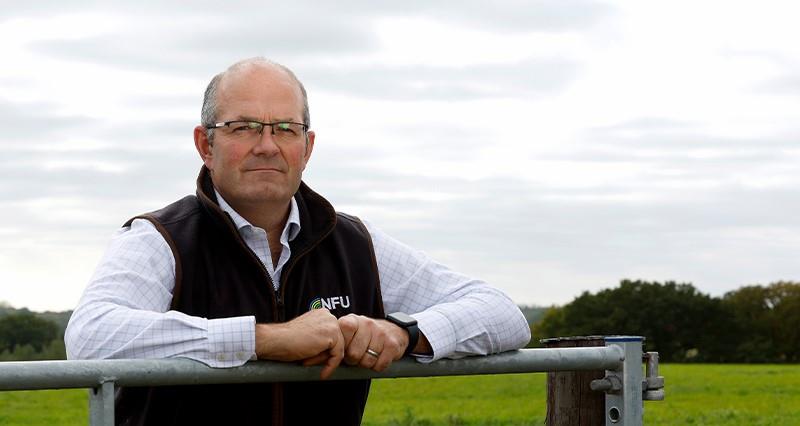
And while the NFU has welcomed the roadmap after two years of waiting, saying it addresses areas the NFU has long called for, NFU President Tom Bradshaw has expressed concerns over the government’s means to deliver on its ambition.
“It’s good to see resilience, profitability, productivity and sustainability at its heart – all areas we’ve been urging the government to focus on,” Tom said.
“The government is right to say that the national security context has changed. Combined with climate and economic shocks, the fragilities of our food system now feel very exposed, and we need to move rapidly into delivery mode to turn this around.”
“While the roadmap is full of ambition, it falls short on action and even shorter on the means of delivery.”
NFU President Tom Bradshaw
Roadmap ‘falls short’
Tom continued: “However, while the roadmap is full of ambition, it falls short on action and even shorter on the means of delivery.
“The roadmap sets out a multi-year direction for farming, yet there is no long-term funding to go with it. Intent alone won’t deliver a secure and affordable supply of homegrown food for the nation, nor will it care for 70% of England’s landscape.
“The Treasury is conspicuously absent in this plan. Instead, it tips the balance of risk even more onto the shoulders of farmers, with much of the investment expected to come from business bank accounts which have been sucked dry over recent years due to soaring costs and unsustainably low margins.
“There has to be a greater partnership between Defra, the Treasury and farmers if we’re to realise this vision for farming.
“This isn’t just about growing the basic value of food and farming, but building a resilient food system which can protect the 29 million UK households from future food shocks.
“We will work with ministers to ensure the priorities and vision are delivered through the new Farming and Food Partnership Board.”
Government’s ambition
Government’s ambition is for profitable farms that maintain domestic food production, fair rewards for the farmers who produce that food, good jobs in farming with clear career paths into farming, and a sector that helps restore nature and meet our climate goals while contributing to the growth of the British economy.
By 2050, the farming system will be firmly established on a consistently profitable, resilient and environmentally secure footing, underpinned by early reforms enabling steady, cumulative progress across the sector.
England will have a dynamic, multifunctional landscape in which productive farming, nature recovery and climate resilience are delivered side-by-side, strengthening the long-term stability of the sector, enabling farms to thrive and to weather any global or local shocks that arise.
Food production will remain the primary purpose of farming and central to national identity and security.
England will have maintained, and in some key sectors increased, overall food production by improving productivity and profitability in a sustainable and resource efficient way.
This is increasingly delivered through nature-friendly farming approaches, where environmental improvement and food production reinforce one another.
Most farm income will come from the market, supported by diverse and resilient business models, while public funding will focus on outcomes that markets alone do not reward.
“It’s also vital that food production is given equal legislative weight to the UK’s climate and environmental targets.”
NFU President Tom Bradshaw
Flexibility to adapt
The roadmap combines the most important government strategies, commitments and reforms that affect farmers into a single, coherent document.
The aim is to help farmers, investors and participants in agri-food supply chains see how different policies fit together, so they can plan with greater confidence.
The roadmap is not a detailed, year-by-year delivery plan or a fixed set of milestones until 2050. It does not prescribe a single pathway for farms or pre-determine how individual businesses should change. Instead, it allows flexibility for different farming systems, places and businesses to adapt and respond in ways that work for them as markets, technology and conditions evolve.
It also relies heavily on assumptions of productivity growth and private finance which, while important elements to work towards, risk being over-simplified.
UK farmers and growers are working in a very different world to 50 years ago; war, geo-political tensions and climate extremes are wreaking havoc on economies, the flow of trade and food production around the world.
Meanwhile, the overhaul of domestic farming policy and the volatile political situation at home has only added to the deep uncertainty felt by farm businesses, hindering confidence and investment.
Tom added: “Today’s record temperatures show what we’re up against. Resilience isn’t just about maintaining profitability in times of challenge, but being able to adapt to changing circumstances, including a more volatile climate.
“Let’s review abstraction licensing rules to ensure they’re fit for purpose, let’s stimulate investment in on-farm water storage, and reform the planning rules to make building reservoirs easier – these are all things the government could do right now to help boost productivity growth.”
‘Equal legislative weight’ for food production
Tom also stressed that government must prioritise food production and security.
“It’s also vital that food production is given equal legislative weight to the UK’s climate and environmental targets,” Tom said.
“The roadmap states that ‘food production will remain the primary purpose of farming and central to national security’ – the government must be given a clear mandate to drive this forward, or our ability to produce the nation’s food will simply succumb to the whims of future governments.”
Farming Profitability Review
The Farming Roadmap has been published alongside the government’s response to the Farm Profitability Review.
Tom added: “I’d like to thank Baroness Batters for the work she has done on the Profitability Review. She is right to outline the need for closer collaboration between farming and government, and for greater clarity and certainty for farm businesses looking to grow and invest.
“It’s good to see that the government has picked up many of the recommendations, which were also reflected in the NFU’s submission, and we continue to work with government to deliver these.”