Today’s announcements on budgets for SFI (Sustainable Farming Incentive) 2026 and CSHT (Countryside Stewardship Higher Tier) give some welcome certainty.
But they come as farmers face sharply rising costs of fuel, fertiliser and electricity, driven by the conflict in the Middle East.
Against this backdrop, the NFU says the funding is not enough to meet demand or cover the investment farm businesses are making in the public goods being delivered for the environment.
Significant gap
In recent weeks, the NFU has increased its call for budget transparency and clear scheme detail to allow farmers and growers to confidently invest in schemes and enable them to deliver public goods.
“At a time when farm businesses are already hard pressed by the Middle East conflict, we urge Defra Ministers to step up funding to meet demand from farmers to deliver for the environment and food security.”
NFU Vice-president Robyn Munt
Responding to today’s the announcement, NFU Vice-president Robyn Munt said the agri-environment schemes budgets “provided welcome certainty for farmers and growers, giving them a clearer basis to plan for their businesses”.
However, Robyn added: “It is becoming abundantly clear that there is a significant gap between government and farmers’ ambition for ELMs (Environmental Land Management schemes) and the funding to deliver it.
“At a time when farm businesses are already hard pressed by the Middle East conflict, we urge Defra Ministers to step up funding to meet demand from farmers to deliver for the environment and food security.
What’s been announced?
With the application window for SFI26 expected to open on 30 June, the government has announced a budget of £240 million for a SFI26. From this, £60 million has been allocated to the first window of applicants, with unspent budget being reallocated to Window 2.
‘At least’ £50 million of the budget has been set aside for new CSHT agreements.
Funding fails to meet farmers’ environmental ambitions
But with thousands of Countryside Stewardship Mid-Tier scheme ending this year, the NFU is warning the budget is insufficient to allow farmers with existing agreements to continue with their existing environmental delivery on farm.
Independent modelling commissioned by the NFU suggests these agreements are valued at £183 million.
“With over 13,000 Countryside Stewardship Mid-Tier schemes ending this year, there is a real risk the budget won’t stretch far enough to support those already delivering for nature to move into SFI26, ” Robyn continued.
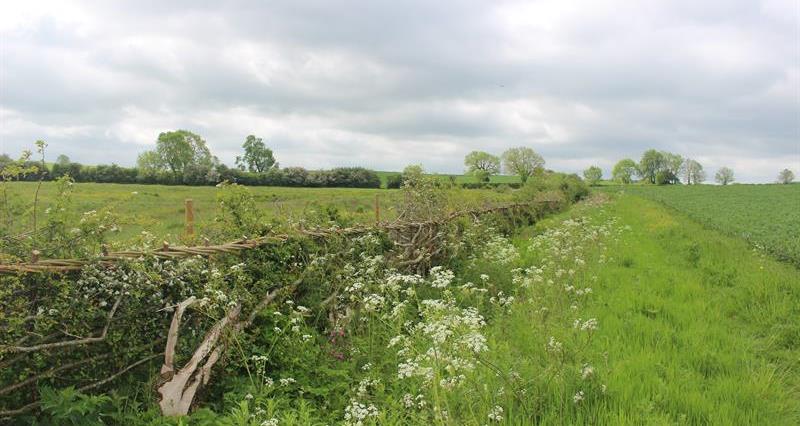
“These are farmers who have spent years investing in hedgerows, looking after our waterways and creating habitats. This contract with government must not be broken at such a critical time, bearing in mind the legislative targets government itself has set for environment delivery.
Funding doesn’t match ambition
Despite the lack of long-term plans, British farmers and growers have remained committed to delivering for the environment.
But government support schemes are crucial to the work farmers do. Together with the added pressures faced by farming businesses, under-funding support schemes could be detrimental to the positive environmental work already achieved.
“We are incredibly frustrated that farmer ambition isn’t being met by government funding to deliver on all our agri-environment objectives.
“We’ve always been clear that a £5.6 billion agriculture budget is needed to maintain that contract for public money to be spent on public goods. Ministers must ensure there is sufficient funding to keep pace with demand for sustainable farming and with government policy to invest in farming for the delivery of those public goods.”