The NFU Combinable Crops Board understands member concerns around quality, cleanliness and traceability of environmental seed mixes being used by growers across England.
As the number of growers engaging in environmental schemes such as the SFI has increased, so too has the demand for seed from a finite source of established and trusted suppliers.
NFU Crops Board Vice-chair Andrew Williamson said: “This lack of traceability could result in the import of unknown weed species into the rotation, creating long term weed burden, undermining crop performance, and creating costly remediation efforts in future seasons.
“This issue is only heightened when the available toolkit of plant protection products continues to decrease and input costs increase. As such we cannot overlook the importance of growers using trusted seed merchants.
“Maintaining a transparent relationship remains the most effective method of ensuring that environmental seed mixes meet the standards necessary for long term farm resilience.
Product confidence
“Growers need to have confidence in the mixes they purchase and that what they are drilling meets the requirements of the options they are signed up to.
“As the uptake of SFI has evolved, the increase in demand for environmental seed has at times outpaced the available supply of domestically produced seed, which requires significant lead times to plan, cultivate, harvest, and process. As a result, a growing proportion of environmental seed mixes are now being imported.”
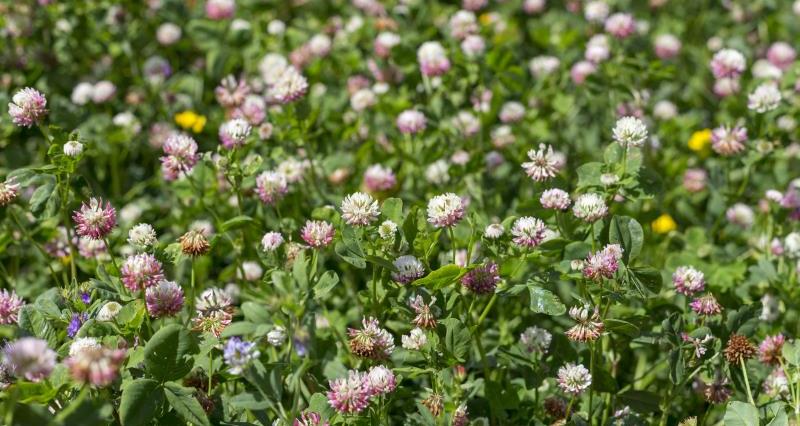
HTLF (Herbage Technical Levy Fund) Chair Michael Brown, added: “Behind this issue lies a challenge, in that some less common elements of seed mixes sold for environmental options may not fall under the Seed Marketing Regulations 2010. This means that in some rare cases, these species may have poor germination rates and/or low physical seed purity and minimal traceability.
“It is always best practise to check with your merchant what the provenance of the seed is to understand the quality and how it might react to the conditions on your farm.”
How to ensure that your seed mix is what it says on the bag
- Use a reputable merchant that has a history of delivering high quality seed.
- Check your seed when it is delivered; if you are ordering a mix check the constituents to make sure the right seed is in the bag.
- Retain a sample of any seed batch you drill.
- Report any concerns you may have to the merchant you purchased from, to help them identify an issue with a batch and to receive guidance on remedying the issue.
- Discuss the constituent parts of the mix, and request information on the provenance, germination quality and cleanliness to understand the quality of the straights used to create the mix.
- Some constituent seeds may have a lower germination rate than others based on the variety.
- Talk to your merchant and agronomist for recommendations on establishing a mix in the right soil conditions.
United efforts
The HTLF plays a crucial role in funding research into the management of herbage seed, supporting testing, research, and quality across the herbage seed sector, and helping to safeguard the integrity of seed entering the marketplace.
The NFU supports the HTLF in their work, with the combinable crops team working closely with the group and offering them a seat on the national Combinable Crops Board.
The efforts of the HTLF provide an additional layer of confidence for growers seeking assurance that the British sourced seed mixes they purchase are fit for purpose.
If you have questions about a seed mix you have purchased, contact your merchant for further information on the constituent parts and the quality of the mix. Working together with the supply chain, we can ensure that the investment growers are making, delivers the desired outcomes.