
World market developments: Brazil remains strong, but the market is looking ahead
For most of this year, the global sugar market has been driven by expectations of a strong Brazilian harvest.
The Centre-South harvest has made a particularly strong start, supported by good cane yields, strong crushing rates and favourable conditions. Although mills continue to allocate a sizeable share of cane towards ethanol production, the sheer size of the crop has allowed both sugar and ethanol output to remain high.
As a result, global sugar supplies have remained abundant. Combined with lower oil prices and weaker ethanol economics, this has helped keep pressure on world sugar values.
However, recent price movements suggest the market is beginning to look beyond Brazil, with the October 2026 No.11 rallying from below 14c/lb in mid-June to more than 15c/lb in early July. This has pushed the UK 2026/27 index linked beet price back above £25/tonne in recent days.
While Brazil remains the dominant force in determining the global balance, increasing attention is being paid to weather developments elsewhere. Concerns about rainfall deficits in India and Thailand, together with dryness affecting parts of Europe, have prompted a reassessment of production prospects later in the season.
Weather risks move into focus
Until recently, weather concerns were viewed largely as a risk for later in the year. That is beginning to change.
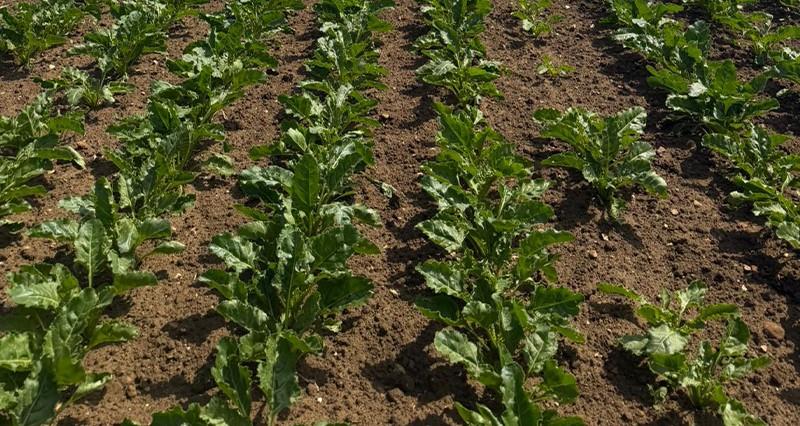
Across the EU and UK, a dry spring followed by below-average rainfall in many regions during June has increased pressure on crops as they move through the important bulking phase. Rainfall between now and the end of August will play a major role in determining final yields.
In addition to moisture stress, growers continue to monitor disease risks. Higher aphid populations across some regions have increased concerns around virus yellows, although the eventual impact on yields remains uncertain.
Internationally, attention is focused particularly on India and Thailand. Rainfall deficits in both countries have raised questions about cane development and future production potential. Some analysts have noted similarities with previous El Niño years, increasing uncertainty around the global supply outlook.
Weather may not yet have changed the global balance, but it is becoming increasingly important in shaping expectations for the months ahead.
EU/UK market developments: High stocks still matter
Despite growing weather concerns, the current EU and UK market remains relatively well supplied.
European sugar stocks remain elevated following last season’s strong crop, helping to limit the potential for a sharp recovery in prices. Imports have also remained reasonably firm, although recent policy measures may reduce some inflows over time (see May’s Beet Brief for an analysis of the IPR suspension).
Looking ahead, reduced beet area across several EU countries points towards a tighter balance for 2026/27. However, the production outlook is now increasingly dependent on weather conditions during the remainder of the summer.
What does this mean for prices?
The outlook has become more balanced than it appeared earlier in the summer.
On one hand, strong Brazilian supplies continue to weigh on the market. Ethanol is providing less support than many expected, and high EU and UK stocks remain an important constraint.
On the other hand, markets are becoming increasingly willing to price in weather-related production risks. Recent gains in the No.11 sugar price suggest traders are paying closer attention to developments in India, Thailand and Europe than they were only a few weeks ago.
For now, the market sits between these competing forces. Current supplies remain ample, but uncertainty around future production has increased.
Looking ahead
The key focus for markets over the coming weeks will be weather developments.
The amount of rainfall across Europe during July and August will play a critical role in determining yield outcomes, while developments in India and Thailand will shape the global supply outlook.
These factors are likely to determine whether recent firmer prices develop into a more sustained recovery or prove temporary.
A trader’s view
Courtesy of Paul Harper, NFU Sugar Board appointee and sugar trader.

NFU Sugar Board appointee Paul Harper
Paul has spent his entire career in commodities and has been in sugar since 1976. He joined C Czarnikow in 1973 working in their London, New York and Singapore offices. Paul has a huge amount of consultancy experience, having consulted for a hedge fund, major bank and a large trade house in sugar during that time.
During the period under review, the market remained within its established trading range. The market declined towards 13c/lb in the spot month, with the speculative element again increasing their short position. However, reports that rain in South Brazil was hampering production and that the crop was running behind last year’s numbers encouraged short covering which quickly saw the market trade back up to 15c/lb.
The white sugar market saw significant buying, and this has pushed the white premium in the spot month August towards $170 over the recently expired July No.11. The October premium has also moved to more than $140 over the No.11 equivalent. These high levels could encourage standalone refineries to produce more white sugar thereby increasing raw sugar buying.
Statistically the market remains in over supply, but weather issues appear to be playing more of a role in production areas, particularly in Brazil, and this could have a major impact on the supply chain should it continue.
With the market returning to the higher end of the recent trading range producer hedging is apparent, which has slowed the advance. Any disruption to supply could see the market trade higher and it would appear, at least for the short term, the market is unlikely to return to the 13 c/lb level seen recently.
The beet price on the index-linked contract having traded at the low of £21/tonne currently sits at just over £25/tonne.