The CCC's (Climate Change Committee) latest report, 'A Well-Adapted UK', makes a strong case for proper attention to be given to adaptation and how farm businesses can prepare for a climate that is rapidly changing. The report also offers something else, hope. Hope that many adaptation measures are known, cost-effective, and can help sustain domestic food production.
That matters because climate change is not theoretical. On my own farm, the signs are plain. My son celebrated his 15th birthday at the end of May this year, and at the same time, we were cutting, collecting and silaging grass for the second time this year.
When he was born in 2011, we were only just cutting for the first time in the year. In just 15 years, the growing season has shifted by around five weeks. That is a remarkable change, and it shows how quickly weather patterns are moving.
The CCC is right to highlight water availability as a priority. It says water supply should be resilient to a 1 in 500-year drought by 2040, and it is clear that on-farm and landscape-scale water storage will need to be part of the answer.
The CCC report confirms what farmers have been experiencing on the ground, and those weather extremes will continue to grow.
Adapting to weather changes
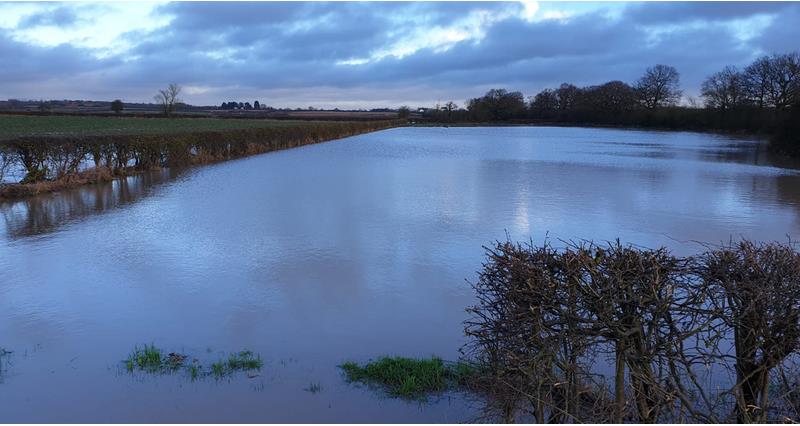
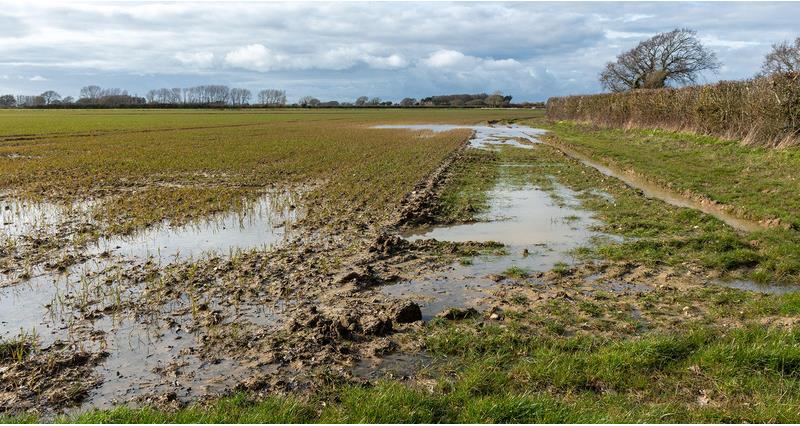
By around 2050, it is widely expected that even if our global ambitions to reduce emissions are successful, the average global temperature will still rise by around 2°C. This will induce weather that is fundamentally different from today’s. Summers will be hotter and, on average, drier. Heatwaves above 40°C could become regular in southern England. Heavy rainfall events are expected to become more intense, increasing flood risk.
For farming, these projections are not just statistics. They are a direct challenge to food production, water security and business resilience. But what is important about this report is that it does not simply set out the scale of the problem. It also shows that solutions exist and how we should measure our success at adapting.
Maintaining domestic food production
The report recommends that the UK should maintain domestic food production at least at 60% of food consumed through to 2050, and whilst this target should be the bare minimum, it is good to see others recognising the NFU’s long-held ask of a food production target.
That is where the hope lies. For years, the debate has been framed almost entirely around the need to reduce emissions. That remains non-negotiable. But we must also face the reality that some climate change is now locked in, and we must adapt accordingly.
The good news is that we do not have to stand still in the face of it. We can store more water, improve soil resilience, invest in flood protection, develop more climate-resilient crop systems and remove the regulatory barriers that hold farmers back from doing these things.
Long-term investment in water management
The CCC is right to highlight water availability as a priority. It says water supply should be resilient to a 1 in 500-year drought by 2040, and it is clear that on-farm and landscape-scale water storage will need to be part of the answer. It is also right to stress the need for long-term investment, better skills, a planning system and more support to help farmers make the changes that are needed.
These are not abstract policy asks; they are the foundations of a more resilient food system.
There is also a wider opportunity here. Adaptation is now a core part of climate action.
It is the practical work of making sure British farming can keep producing food in a more extreme world. It is about resilience, confidence and long-term viability. And crucially, it is about giving farmers the tools to continue feeding the nation while also supporting nature and the environment. Environmental Landscape Management Schemes must also reflect the reality of farming in a changing climate and help farmers adapt.
Looking at the policy changes we need
The government will respond to the CCC’s report next year. Ahead of that, the NFU will work with our members to set out clearly the policy changes needed to farm successfully in the future.
So yes, this report is a warning. But it is also an opportunity. It tells us that the climate challenge is real, but it also tells us that we are not powerless. If we also take adaptation seriously, we can help ensure that British farming not only survives in a changing climate but continues to thrive.