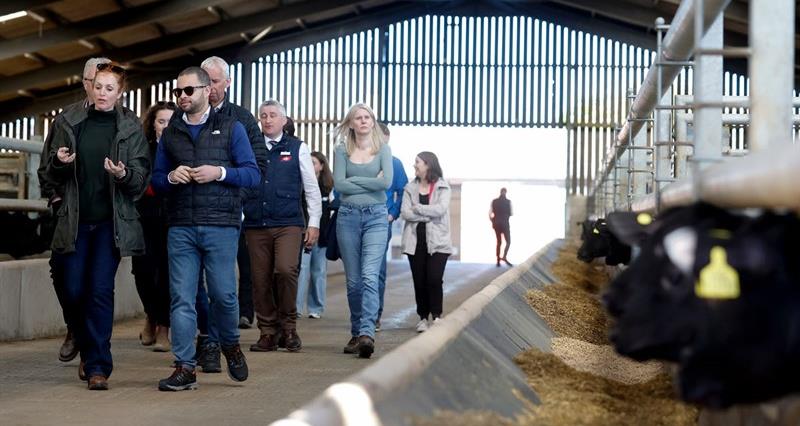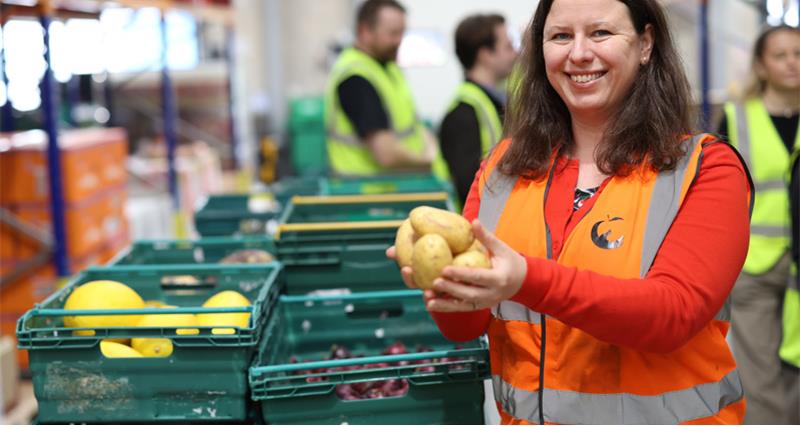
The NFU’s Food and Farming Fellowship Scheme showcases the industry to MPs and provides the opportunity to better their understanding of UK farming and food.
Jamie Burrows, the NFU National Combinable Crops Chair attended the visit alongside MPs from the Labour Party, the Conservative Party and the Liberal Democrats and Ed Barker, Head of Policy and External Affairs at the AIC (Agricultural Industries Confederation).
The group visited an arable family farm, E J Barkers & Son, spanning around 545 hectares in Westhorpe, Mid Suffolk.
The farm has been run by the Barker family for three generations since the 1950s.
The visit on Friday 12 June, was part of this year’s Food and Farming Fellowship scheme, which showcases the industry to MPs and provides the opportunity to better their understanding of the UK food and farming industry.
Explaining the issues
Discussion during the visit focused on the pressures facing arable farms due to conflict in the Middle East, which has led to significant increases in inputs vital to food production.
As of 29 May 2026, European and UK gas prices had risen by 47% and 45% respectively.
As natural gas accounts for around 60-80% of the cost of producing fertiliser, high gas prices are driving significant increases in fertiliser prices. For example, the price of urea, a key nitrogen fertiliser, has risen 50% since the start of the year.
“It is always great to get MPs out on farm so they learn more about the industry and the role it plays in feeding the nation, as well as supporting rural communities and the wider economy.”
NFU Combinable Crops Board Chair Jamie Burrows
Working closely with politicians
NFU National Combinable Crops Board Chair Jamie Burrows said: “It is always great to get MPs out on farm so they learn more about the industry and the role it plays in feeding the nation, as well as supporting rural communities and the wider economy.
“It is really difficult for the arable sector at the moment. The war in the Middle East has driven up input costs, adding to an already extremely pressured time for farmers who will soon be going into harvest.
“We will continue to work closely with politicians so they better understand what they can do to support British farmers and growers and shape policies that help strengthen the resilience of our domestic food production system, so it can continue to feed the country now and into the future”.
130388,130389,130390,130391
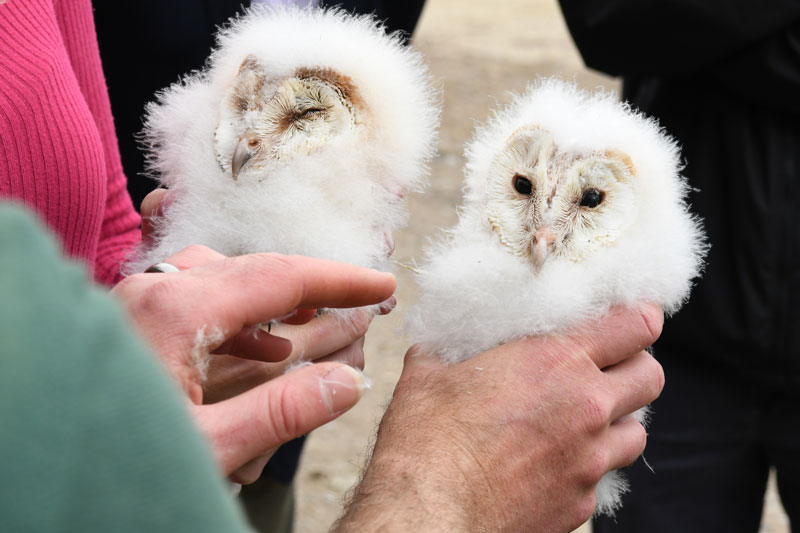
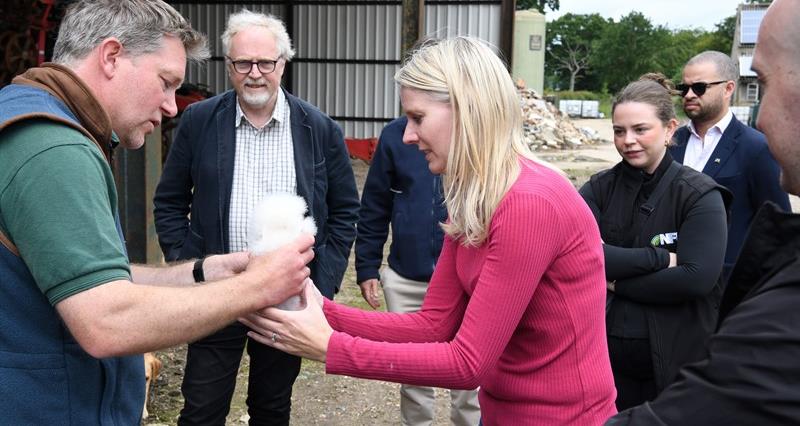
Patrick Barker introduces some new young barn owl chicks to the group
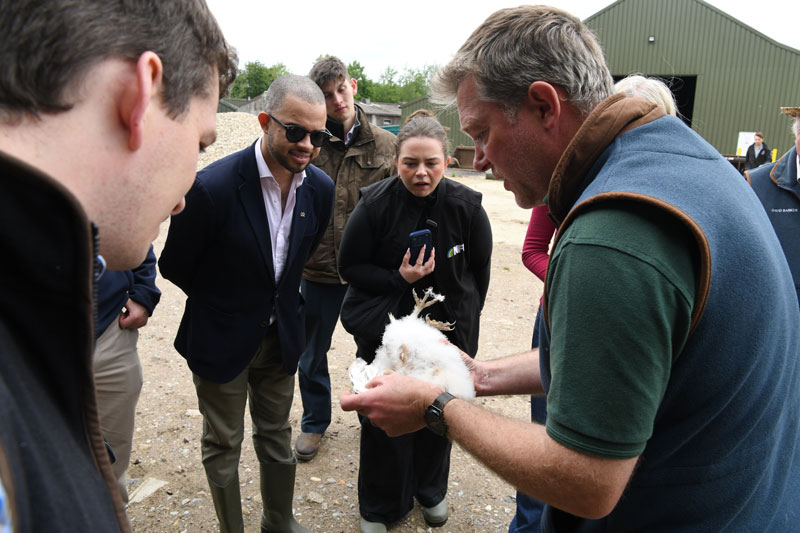
Studying the barn owl chicks
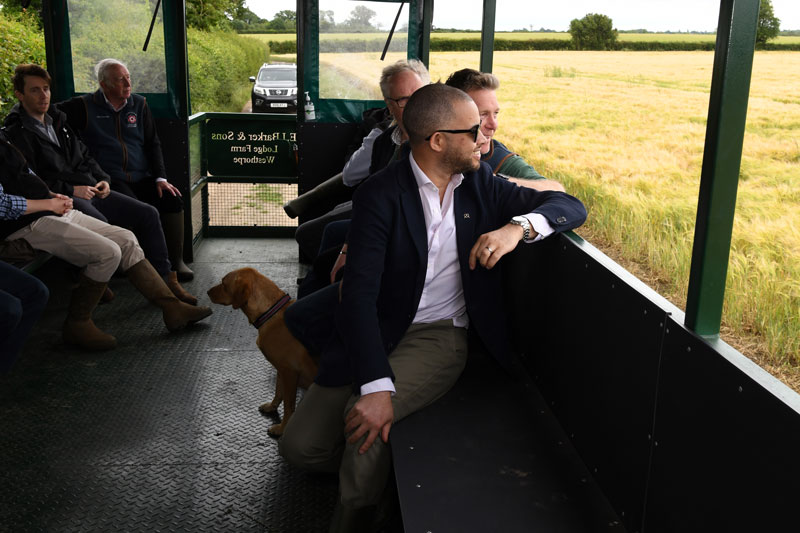
Fellowship take a farm tour
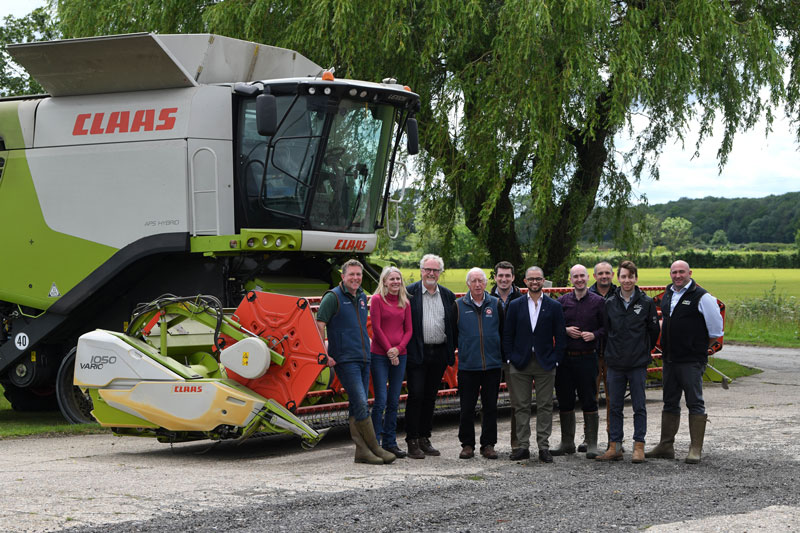
The Food and Farming Fellowship 2026 cohort
Providing a platform for MP engagement
Head of Policy and External Affairs at the AIC Ed Barker said how please he is that the AIC is working closely with the NFU on the scheme.
He explained, “The scheme allows the arable supply chain to demonstrate to MPs the dynamics and challenges in farm inputs, and its variety of customers in food manufacturing, malting, milling, animal feed and energy sectors.
“Explaining these through the perspective of an arable family farm builds knowledge and provides a platform for further engagement with parliamentarians.”
Delivering on environmental and productivity
The visit’s hosts also showed the MPs how government ELMs (Environmental Land Management schemes) can work alongside food production, demonstrating how E J Barkers & Sons operates a successful and productive farming business that balances food production with environmental delivery.
Patrick Barker, who manages the farm alongside his family, highlighted how their CSHT (Countryside Stewardship Higher Tier) and SFI (Sustainable Farming Incentive) agreements have delivered both environmental and productivity benefits.
These schemes have enabled the farm to enhance biodiversity through the establishment of wildflower areas, while also improving soil health and farm performance through cover cropping – both supported under their ELMs agreements.
Clear ELMs policies are essential
The group also emphasised that clear and consistent ELMs policies are essential to give farmers the confidence to continue delivering environmental outcomes.
While the NFU has welcomed the clarity and the announcement of the SFI budget for 2026/2027, it has warned that the budget falls short of farmers’ environmental ambitions, as it will not be enough to meet demand or cover the investment farm businesses are making in protecting the countryside and environment.