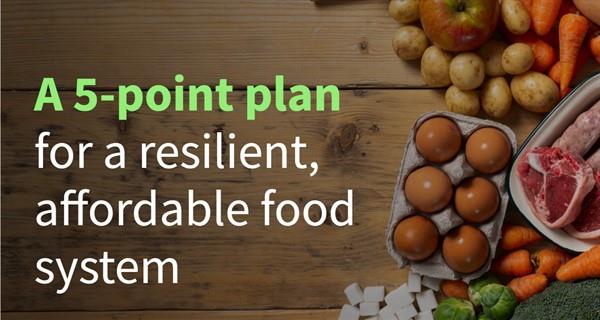
The NFU has co-signed an open letter with the British Retail Consortium, the Food and Drink Federation and UKHospitality, calling on candidates for Prime Minister to back a five-point plan for a more resilient and affordable food system.
The letter lands as nominations open, putting food and farming firmly in front of whoever takes the top job.
Swift action needed
The organisations outline the swift action that is needed in key areas, such as:
- delivering value for the public
- a well-negotiated EU realignment
- improvement to planning
- securing workers
- supporting investment and growth
Getting these things right will deliver long-term food security and address vulnerabilities in our food system, which are putting both businesses and households under pressure.
Farmers are the foundation
NFU President Tom Bradshaw said: “British farmers and growers are the foundation of our food system. With 70 million people reliant on us to produce their food, we must act now to secure a resilient, affordable food system in the coming years.
“To drive success, farmers and growers need to know they’ll have the workforce they rely on, regulation which supports efficiency and growth, and a planning system that drives investment in much-needed farm infrastructure such as poultry sheds, storage for valuable manures and reservoirs.
“I urge the incoming Prime Minister and their team to get behind this plan and lead the charge.”
NFU President Tom Bradshaw
“These are all things that will build resilience in food production, and these investments will help both hard-pressed farmers and struggling consumers. I urge the incoming Prime Minister and their team to get behind this plan and lead the charge.”
What industry allies say
Andrew Opie, Director of Food & Sustainability at the BRC, said: “Food retailers are proud to support British agriculture and already source the vast majority of their food from the UK. In order to grow this investment, government must work to remove some of the hurdles which hold back British farmers, including on costs, planning restrictions, and reducing friction in EU realignment.
“This would allow the UK to build a more resilient and affordable food system that can deliver for both consumers and the economy long into the future.”
Driving growth
Karen Betts, Chief Executive, The Food and Drink Federation, said: “Food and drink is the largest manufacturing sector in the UK, contributing £42 billion to the economy and employing more than half a million people in great jobs over long careers.
“Our industry should be driving growth and creating new jobs in every postcode across the country. But instead, many businesses are struggling with the cost of rising bills and complex regulation.
“We want government to work with our sector to incentivise investment, particularly in new technologies, advanced skills, and the R&D necessary to make our food system more resilient and our diets healthier.
“Too often food and drink has been overlooked by government and our industry’s work to ensure households everywhere have access to a wide range of fresh, nutritious and affordable food has been taken for granted.
“The new Prime Minister should seize this opportunity to partner with us to strengthen and safeguard the UK’s food system today and into the future.”
Sustainable, resilient food system
Kate Nicholls, Chair of UKHospitality, said: “Hospitality feeds millions of people every day, whether it’s a quick bite to eat, lunch at work, or dinner with friends.
“Our pubs, restaurants, cafes, hotels and contract caterers, to name a few, are reliant on a sustainable and resilient food system to continue feeding the nation. It’s critical that the next Prime Minister supports the food supply chain by reducing its tax burden, cutting red tape and enabling businesses from farm to fork to grow.”
The 5-point plan in full
Share our 5-point plan that helps government focus on the industry responsible for 1 in 9 jobs across the UK, across your network, and see how by working together we can back British farming at the highest level.
Read our 5-point plan for a resilient, affordable food system
Read the open letter

Open Letter to candidates for the leadership of the Labour Party
As nominations open for the next Leader of the Labour Party, and therefore our next Prime Minister, we are writing as the leading representatives of the UK's food and drink industry with a clear plan to strengthen our food system for the 70 million people who rely on us.
The UK's food and drink sector is one of the nation's greatest economic strengths, worth more than £153 billion and employing four million people across the supply chain - one in every nine jobs in the UK. The safe, secure and affordable supply of food and drink matters to every household, every business and every community in the country.
Recent years have exposed the pressures facing the system. From global conflict and volatile weather to rising costs for businesses and consumers, food security can no longer be taken for granted. A more resilient food system will not only strengthen our national resilience, it will also protect households from future food shocks and unlock investment in every constituency, particularly in rural and coastal areas.
Food security is national security. We have heard that sentiment from government. The next Prime Minister has the opportunity to match those words with action.
We urge them to back our five-point plan and work with industry to build a food system that is fit for the future.
Tom Bradshaw
President
National Farmers’ Union of England and Wales
Helen Dickinson OBE
Chief Executive
British Retail Consortium
Karen Betts OBE
Chief Executive
Food and Drink Federation
Kate Nicholls OBE
Chair
UK Hospitality