NFU Council: Horticulture and potatoes update
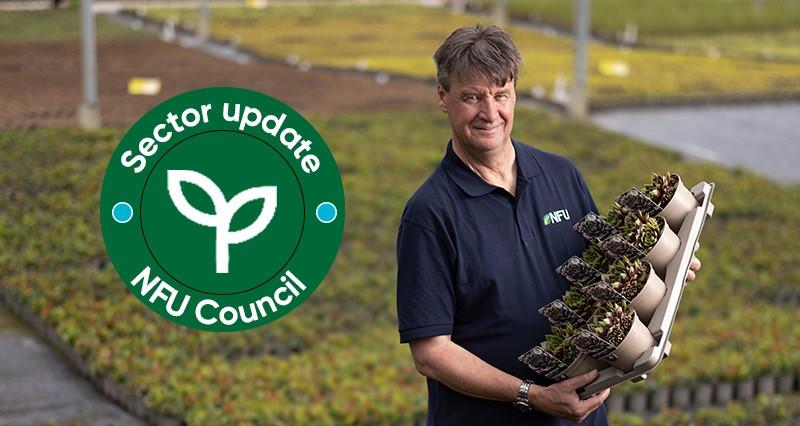

Martin Emmett
NFU Horticulture and Potatoes Board Chair
NFU Horticulture and Potatoes Board Chair Martin Emmett explores the importance of securing sector resilience amid increasing climate pressures and uncertainty, and how this could be achieved through the highly anticipated Horticulture Sector Growth Plan.
The 2026 growing season has been a season of extremes. Extreme heat and prolonged drought have put enormous pressure on yields, quality and production schedules across the country.
At the same time, increasing pest pressure and growing uncertainty around imported supply have highlighted the importance of maintaining a strong and resilient domestic sector.
Climate pressures
Growers have faced record levels of pests such as whitefly and aphids, with significant impacts on crops.
The British Leafy Salads Association has estimated that around 30 million lettuce heads were left unharvested over a four-week period, resulting in losses of approximately £10 million.
These challenges are unlikely to be isolated events. Climate pressures are expected to increase, both in the UK and overseas.
Research suggests that by 2050, many of the countries supplying the UK with fruit and vegetables could face severe water stress and increased flooding risks, raising further questions about long-term food resilience.

“With the right investment, policies and long-term commitment, the sector can continue to deliver high-quality British produce while strengthening the UK’s food security and resilience.”
NFU Horticulture and Potatoes Board Chair Martin Emmett
NFU presses for practical solutions
Against this backdrop, the NFU continues to press for practical measures that help businesses adapt. Recent government announcements on planning, abstraction and funding for on-farm water storage are welcome.
However, growers need greater clarity on how these measures will be delivered and whether they will provide the support needed to invest with confidence.
Water security remains one of the most important issues facing the sector.
Dynamic approach to labour needed
Labour availability is another key concern. The NFU secured confirmation of 41,000 Seasonal Worker visas for 2027, providing valuable certainty for businesses planning ahead.
However, labour demand continues to evolve, and the sector needs a more dynamic approach that reflects future requirements and supports continued growth.
Looking ahead
The development of the Horticulture Sector Growth Plan offers an important opportunity.
Industry representatives and Defra are working together to develop a strategy that can support productivity, investment and long-term growth, with publication expected in early 2027.
For the plan to succeed, competitiveness must be at its heart.
English growers have lost access to support previously available through the EU Fruit and Vegetable Aid Scheme, while competitors in Scotland and the EU continue to benefit from dedicated funding programmes.
Without equivalent support, there is a real risk that English growers will be placed at a disadvantage in both domestic and international markets.
Challenges and opportunities abound
The challenges facing horticulture are significant, but so too are the opportunities.
With the right investment, policies and long-term commitment, the sector can continue to deliver high-quality British produce while strengthening the UK’s food security and resilience.
More from NFU Council: