State of Agricultural Research and Innovation report – what it could mean for farmers

Charlotte Nott
NFU Science and Innovation Adviser
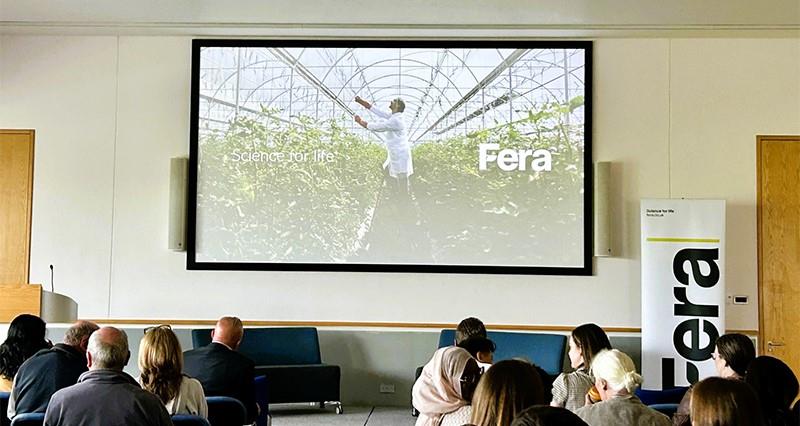
NFU Science and Innovation Adviser Charlotte Nott attended the launch of the State of Agricultural Research and Innovation report in Westminster and reflects on what its findings could mean for farmers and the wider agricultural sector.
The UK has a world-class agricultural science base. That was not disputed by anyone at the launch of the SARI (State of Agricultural Research and Innovation) report, produced by Ag.Impact.
The central message was not that the sector lacks good science, but that its impact could be strengthened through better coordination, clearer priorities, greater farmer involvement and stronger links between research and practical farming.
Drawing on analysis of more than £1.2 billion of publicly funded agricultural research projects awarded between 2022 and 2026, alongside extensive engagement with farmers, researchers and other stakeholders, the report assesses how well the current research landscape aligns with sector needs.
Its central conclusion is that the challenge facing UK agriculture is not a lack of scientific excellence. Rather, there are opportunities to strengthen impact through better coordination, clearer priorities, greater farmer involvement and stronger routes from research into practical use.
A shared concern across the sector
One of the most striking messages from the launch was the level of agreement between farmers and researchers.
It was perhaps unsurprising that farmers felt research was not always joined up, sufficiently coordinated or focused on the issues that matter most to farm businesses. More notable was that researchers raised many of the same concerns.
Researchers spoke about challenges around coordination, collaboration and timeliness, suggesting there is broad recognition across the sector that the research system is not working as effectively as it could.
The report identifies six expectations that stakeholders have of an effective agricultural research system. Research should be relevant, joined up, useful, grounded in practical farming experience, timely and future proof.
Across each of these areas, the report identifies gaps between what farmers and researchers want from agricultural research and the way the current system functions.
“The challenge is not whether the UK produces high-quality agricultural science, but how the sector can work together to ensure that science delivers maximum value on farm.”
NFU Science and Innovation Adviser Charlotte Nott
Research and real-world farming
The findings reinforce the importance of ensuring that research remains closely connected to the needs of farm businesses.
For many farmers, profitability and productivity remain fundamental priorities. The report notes that while significant investment goes into developing new technologies, farmers often see the greatest impact coming through improved knowledge, skills and changes to farming practice.
A recurring theme throughout the report launch event was adoption. Generating new knowledge is important, but ensuring that innovations are accessible, relevant and adopted in practice may be an even bigger challenge.
Both academia and farming highlighted the importance of involving farmers earlier in the design of research projects. There was also discussion about better recognising farmers’ expertise and ensuring that participation in research is worthwhile and practical for farm businesses.
Gaps in coordination and systems thinking
The report also raises questions about strategic coordination across the agricultural research landscape.
Only around one in ten survey respondents believed agricultural research is currently coordinated efficiently. Meanwhile, just 7.3% of funding analysed was classified as systems research, despite widespread recognition that many agricultural challenges require whole-system approaches.
User-centred research accounted for only 0.3% of public investment, although the report notes that this is expected to increase through initiatives such as Defra’s ADOPT fund.
Participants at the launch discussed how research priorities are currently identified and coordinated across the sector, and whether there are opportunities for a more strategic approach to leadership and priority setting.
The discussion also considered whether SARI could evolve beyond a retrospective assessment of funding and activity to play a role in identifying future priorities and supporting greater coordination across the sector.
“The SARI report provides a valuable evidence base. Its longer-term impact will depend on whether government, funders, research organisations and industry bodies use its findings to align priorities and translate insight into action.”
Charlotte Nott
Looking ahead
The report identifies four broad priorities for strengthening the research system: greater strategic coordination, regular foresight activity, innovation in funding programmes and strategic investment in research infrastructure.
There was strong recognition throughout the event that agriculture faces significant long-term challenges, including climate change, productivity pressures, environmental delivery and resilience.
Meeting those challenges will require not only excellent science, but also better connections between researchers, farmers, funders and policymakers.
Why this matters to NFU members
For the NFU, the report provides useful evidence to support discussions about future research priorities and investment.
Its findings reinforce the importance of ensuring that research is practical, accessible and relevant to farm businesses. They also highlight the need to consider adoption from the outset rather than as an afterthought.
Perhaps the most significant message from the launch was that many of the concerns raised by farmers are increasingly shared by researchers themselves. The challenge is not whether the UK produces high-quality agricultural science, but how the sector can work together to ensure that science delivers maximum value on farm.
The SARI report provides a valuable evidence base. Its longer-term impact will depend on whether government, funders, research organisations and industry bodies use its findings to align priorities and translate insight into action.