Undercutting British producers undermines food security, says NFU Poultry Board Chair
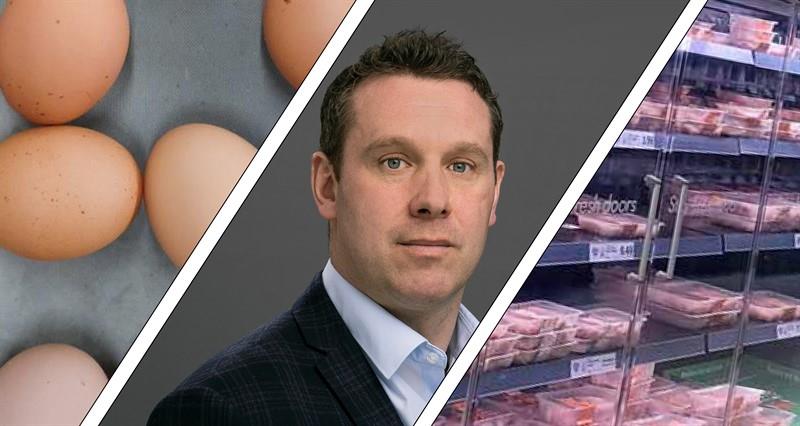

Will Raw
NFU Poultry Board Chair
Food security starts with backing British producers – but are we being taken seriously? NFU Poultry Board Chair Will Raw reflects on the two recent food security threats linked to poultry meat and egg imports and how they undermine our resilience and the rhetoric of government.
“Food security is national security” – it’s a phrase we’ve heard repeatedly from politicians in recent years, and it’s one I welcome. But if food security really is a national priority, then we need to start seeing policies that match the rhetoric.
As poultry meat and egg producers, we know food security isn’t just about having food on supermarket shelves. It’s about maintaining the ability to produce safe, affordable and nutritious food here in the UK. It’s about resilience and it’s about ensuring British farmers aren’t undercut by imports produced to standards that wouldn’t be allowed on our own farms.
Recent events have reinforced why the NFU continues to push government on import standards, domestic production and fairness for British farmers.
"For me, both the imported egg outbreak and growing concerns around Brazilian poultry imports point to the same fundamental problem: the UK still lacks a robust system of core production standards for imported food."
NFU Poultry Board Chair Will Raw
Salmonella outbreak a wake-up call
The ongoing Salmonella Enteritidis outbreak linked to imported eggs has been deeply concerning and should serve as a wake-up call. Investigations have identified imported eggs, mainly used within the foodservice sector, as a potential source, while there remains no evidence linking the outbreak to UK-produced eggs or poultry.
For British egg producers, this situation is understandably incredibly frustrating.
Our sector has spent decades investing in biosecurity, vaccination programmes, traceability and assurance schemes to build a world-leading reputation for food safety. Producers have continually raised standards and delivered exactly what consumers expect from British food.
Yet when food safety incidents are linked to imported products, confidence in the wider sector can still be affected.
That’s why the NFU has been clear in its response. We are calling on government to strengthen import checks, implement a more robust testing regime for eggs entering the UK and take swift action when imported products pose a risk to public health. This needs to be done urgently before anyone else loses their life.
We’re also encouraging consumers to ask where their food comes from and urging foodservice businesses to prioritise British sourcing. The standards our members work to matter, and consumers deserve to know the difference.
One solution: Core production standards
While the salmonella outbreak is concerning, it also highlights a bigger issue.
For me, both the imported egg outbreak and growing concerns around Brazilian poultry imports point to the same fundamental problem: the UK still lacks a robust system of core production standards for imported food.
The principle is simple. If British farmers are required to meet standards on food safety, animal health and welfare, responsible antibiotic use and environmental protection, then imported food should be expected to meet equivalent standards.
That isn’t protectionism. It’s common sense.
British producers invest significant time and money meeting these requirements because regulators, customers and consumers expect them to. Yet products produced using standards that would be illegal in the UK can still enter our market and compete directly with British produce.
That creates an uneven playing field and undermines confidence in our food system.
The NFU has long argued that core production standards should apply equally to imported and domestically produced food. If government is serious about food security, this should be a priority. It would help protect consumers, support domestic production and ensure trade policy doesn’t work against the very farmers responsible for feeding the nation.
"For me, this comes back to a simple point: food security starts with domestic production. If the government is serious about food security, it must be serious about backing British producers."
NFU Poultry Board Chair Will Raw
Learning the lessons from Brazil
The recent action taken by the European Union on Brazilian imports has brought this debate into even sharper focus. The EU has announced that Brazil will be removed from its list of approved exporters of products of animal origin because of concerns around demonstrating compliance with antimicrobial rules.
In response, the NFU has called on the UK government to take a precautionary approach and ban imports of Brazilian poultry and beef unless Brazil can demonstrate that antibiotics are being used responsibly and in line with standards expected of UK producers.
Our asks are clear:
- Government must take action where there is insufficient confidence that imported products meet equivalent standards.
- Testing and surveillance of imports from higher-risk countries must be strengthened.
- Greater transparency through clear country-of-origin labelling is needed, particularly in foodservice settings where consumers often have little information about where products have come from.
The NFU has also warned of the risk that products originally destined for the EU could instead be diverted into the UK market if similar safeguards are not introduced here. That would place further pressure on British producers already operating in a challenging economic environment and this risk is imminent with the EU’s ban coming in from next week.
Back British producers
UK poultry producers have worked incredibly hard to reduce antibiotic use while maintaining high standards of bird health and welfare. The poultry meat sector has reduced antibiotic use by more than 86% since 2012.
Our members should be proud of that achievement and it’s also why it’s entirely reasonable to ask why products produced under conditions that would not be permitted here should be allowed to compete directly on British supermarket shelves and foodservice menus.
For me, this comes back to a simple point: food security starts with domestic production.
The NFU will continue to champion policies that back British farmers, strengthen border controls, improve import testing and deliver meaningful core production standards. Most importantly, we’ll continue making the case that food produced to standards that would be illegal here has no place undermining British agriculture.
If the government is serious about food security, it must be serious about backing British producers.